






Contents
TL;DR
Across Southeast Asia, every country has its own street food identity:
- Thailand: Pad Thai, som tam, moo ping, khao soi, and pad krapow.
- Vietnam: Banh mi, pho, bun cha, bun bo Hue, and cao lau.
- Cambodia: Nom banh chok, bai sach chrouk, lort cha, and grilled seafood.
- Laos: Sticky rice, laap, tam mak hoong, sai oua, and or lam.
- Myanmar: Mohinga, laphet thoke, samosas, and teahouse snacks.
- Malaysia: Nasi lemak, char kway teow, laksa, and satay.
- Singapore: Hainanese chicken rice, laksa, bak chor mee, and other hawker classics.
- Indonesia: Nasi goreng, mie goreng, bakso, sate, and regional specialties.
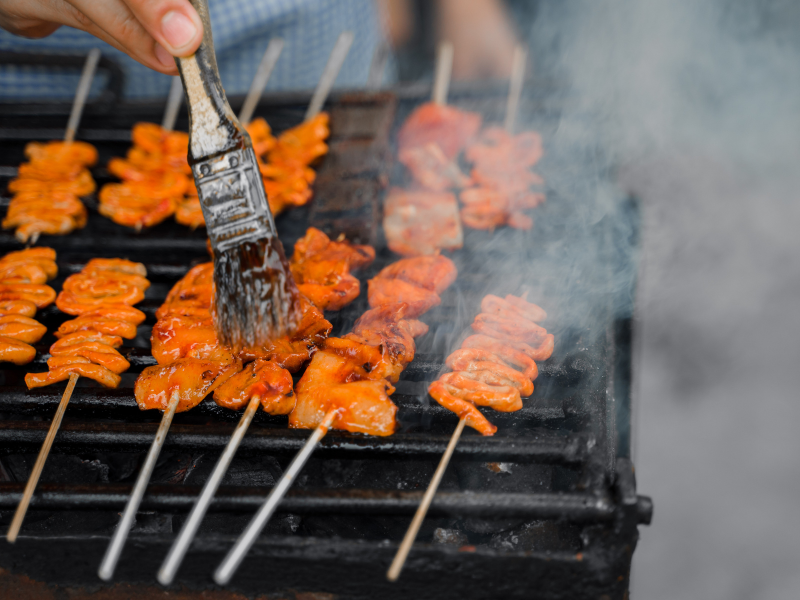
- Philippines: Isaw, kwek-kwek, fish balls, balut, turon, and regional seafood dishes.
- Brunei: Nasi katok, ambuyat, satay, and traditional kuih.
- Timor-Leste: Batar da’an, grilled fish, and Indonesian- and Portuguese-influenced dishes.
For a quick street meal, expect to spend roughly $1–$4 USD, although prices vary considerably by country, city, market, and tourist area.
How Much Does Street Food Cost in Southeast Asia?
Street food is one of the easiest ways to eat well while backpacking Southeast Asia without spending restaurant prices. Local markets and neighborhood stalls are generally the best value, while food in major tourist areas can cost more.
| Country | What to Try | Typical Price |
|---|---|---|
| Thailand | Pad thai | 40–100 THB ($1.20–$3 USD) |
| Vietnam | Banh mi | 20,000–40,000 VND ($0.80–$1.60 USD) |
| Cambodia | Nom banh chok | 7,000–15,000 KHR ($1.75–$3.75 USD) |
| Laos | Laap with sticky rice | 30,000–60,000 LAK ($1.50–$3 USD) |
| Myanmar | Mohinga | 2,000–5,000 MMK ($0.50–$1.25 USD) |
| Malaysia | Nasi lemak | RM3–8 ($0.70–$1.90 USD) |
| Singapore | Chicken rice | S$3–7 ($2.30–$5.30 USD) |
| Indonesia | Bakso | IDR 15,000–30,000 ($0.90–$1.80 USD) |
| Philippines | Isaw / kwek-kwek | ₱20–80 ($0.35–$1.40 USD) |
| Brunei | Nasi katok | B$1–2 ($0.75–$1.50 USD) |
| Timor-Leste | Batar da’an | $2–$4 USD |
Prices are approximate street-level ranges and can change by city, market, portion size, and exchange rate. Check local prices before ordering, particularly at markets where food is priced by portion or weight.
What Should You Eat on the Street in Thailand?
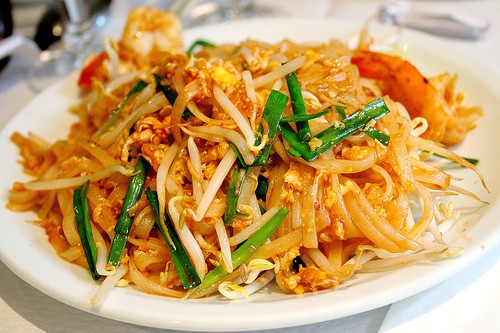
Thailand’s street food changes by region, so don’t stop at pad thai. Pad thai is the familiar starting point: rice noodles stir-fried with tamarind, palm sugar, fish sauce, egg, tofu, and toppings such as crushed peanuts.
But everyday Thai food goes much further. Pad krapow, stir-fried meat with holy basil and chili, is a common quick meal, while moo ping, grilled pork skewers served with sticky rice, is an easy snack to find around the country.
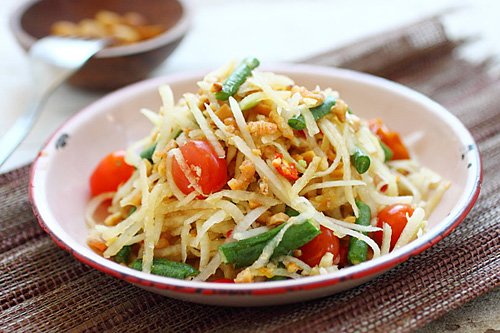
In northeastern Thailand, try som tam, the spicy green papaya salad associated with Isaan, and laap, a minced meat or fish salad mixed with herbs, lime, chili, and toasted rice powder.
Head north to Chiang Mai for khao soi, egg noodles served in a rich curry broth and topped with crispy noodles.
Where to Try Street Food in Thailand
- Bangkok Old City: Explore local markets and food streets around the historic centre.
- Yaowarat: Bangkok’s Chinatown is especially lively after dark, with seafood, noodles, grilled meats, and Chinese-Thai dishes.
- Chana Songkhram: Close to Khao San Road, with plenty of casual food stalls and neighborhood eateries.
- Chiang Mai Old City: A good place to try northern dishes such as khao soi and sai ua.
- Pai: Walking Street and local markets are easy places to sample northern Thai snacks and grilled food.
- Phuket: Look beyond the main resort areas for local markets, noodle shops, and southern Thai dishes.
- Krabi: Explore Krabi Town and local night markets for southern Thai food and grilled snacks.
What to Order First?
Try pad krapow with a fried egg, moo ping with sticky rice, and khao soi if you’re heading north.
Local tip: Order one familiar dish and one you’ve never tried. Thai street food is at its best when you stop treating the menu like a checklist.
Staying with Mad Monkey in Thailand? Mad Monkey locations across Thailand put travelers within reach of different local food scenes, from Bangkok’s Old City and night markets to northern Thai specialties and food stalls in beach destinations.
What Should You Eat on the Street in Vietnam?
Vietnamese street food is regional, so what you eat depends heavily on where you are.
Northern Vietnam is known for pho, bun cha, and banh cuon. Hanoi’s bun cha combines grilled pork, rice noodles, fresh herbs, and a light dipping broth.
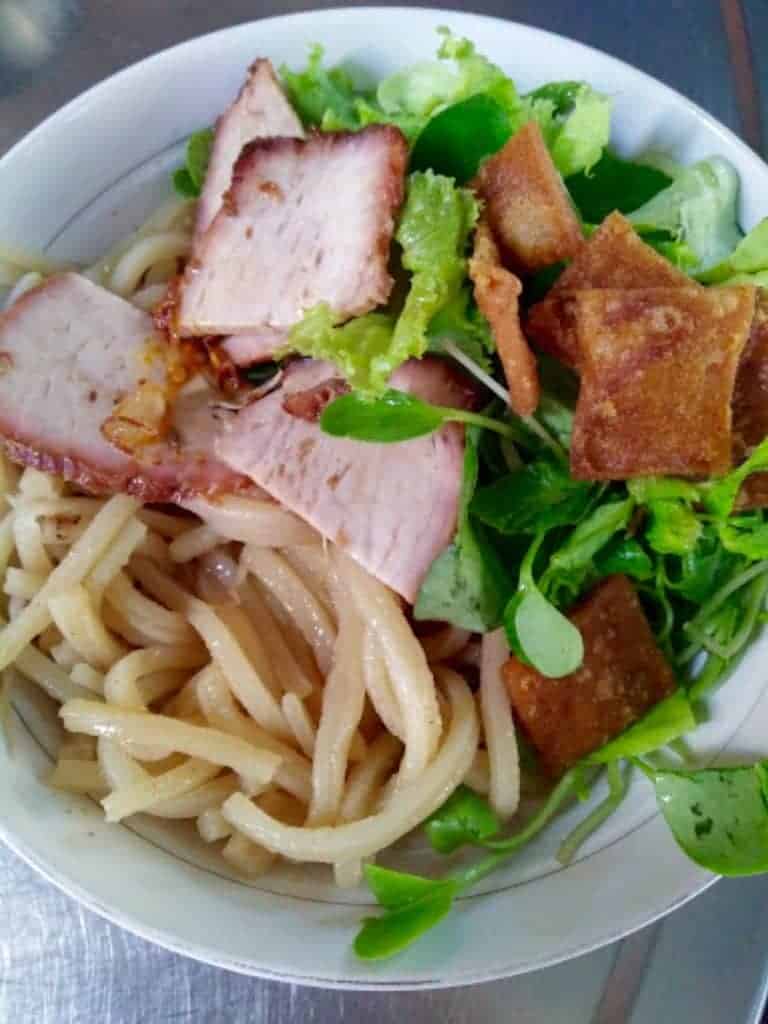
Central Vietnam turns up the flavor with bun bo Hue, a spicy beef noodle soup from Hue, and mi Quang, turmeric-tinted noodles served with herbs, meat or seafood, peanuts, and a small amount of broth.
Southern Vietnam brings dishes such as com tam, broken rice served with grilled pork and other toppings, and hu tieu, a noodle soup influenced by Vietnamese, Chinese, and Cambodian cooking.
Where to Try Street Food in Vietnam
- Hanoi Old Quarter: Start here for pho, bun cha, banh mi, and small sidewalk eateries.
- Dong Xuan Market: A stop for market snacks and local dishes.
- Ta Hien: The surrounding streets combine nightlife with plenty of food.
- Hue: Look for bun bo Hue and other central Vietnamese specialties.
- Hoi An Old Town: Try cao lau, banh mi, and local noodle dishes.
- Da Nang: Explore local markets and neighborhood food streets.
- Ho Chi Minh City: Districts 1 and 3 are packed with southern Vietnamese food and street snacks.
What to Order First?
Try bun cha in Hanoi, bun bo Hue in Hue, and com tam in Ho Chi Minh City. Together, they show just how much Vietnamese food changes from north to south.
Staying with Mad Monkey in Vietnam? Mad Monkey locations across Vietnam give travelers easy access to different food cultures, from the Old Quarter in Hanoi to the central and southern food scenes further south.
What Should You Eat on the Street in Cambodia?
Cambodian street food is built around rice, noodles, grilled meats, fresh herbs, fermented flavors, and ingredients from the country’s rivers and countryside.
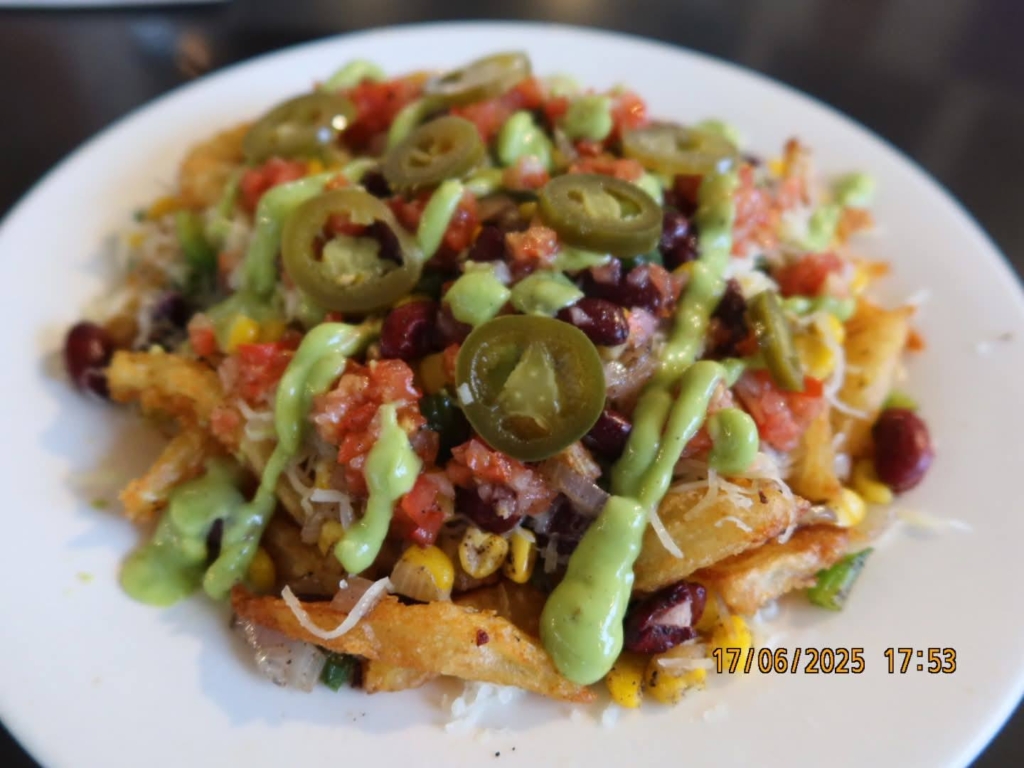
Start in the morning with nom banh chok, fresh rice noodles topped with green fish curry, herbs, cucumber, and banana blossom.
Another everyday favorite is bai sach chrouk, thinly sliced grilled pork served with rice and pickled vegetables.
For something quick later in the day, look for lort cha, short rice noodles stir-fried with vegetables, egg, and meat.
Along the coast, Kampot and Kep are known for seafood, particularly crab prepared with Kampot pepper.
Where to Try Street Food in Cambodia
- Phnom Penh Central Market: A useful starting point for Cambodian food and snacks.
- Russian Market: Browse local food alongside the market’s wider selection of goods.
- Central Phnom Penh: Explore the streets around the city’s markets for small local eateries.
- Siem Reap: Look beyond the busiest tourist streets for Cambodian food and local markets.
- Kampot: Try seafood and dishes featuring Kampot pepper.
- Kep: Head toward the seafood market and coastal food stalls for fresh crab and fish.
What to Order First?
Try nom banh chok for breakfast, bai sach chrouk for lunch, and Kampot pepper crab if you’re heading south.
Local insight: Cambodian food isn’t always about heat. Fermented flavors, fresh herbs, sour notes, and Kampot pepper are just as important to the country’s food identity.
Staying with Mad Monkey in Cambodia? Mad Monkey locations across Cambodia give travelers different starting points for exploring the country’s food culture, from Phnom Penh’s markets to Siem Reap and the southern coast.
What Should You Eat on the Street in Laos?
Sticky rice sits at the centre of Lao food culture, usually eaten by hand alongside grilled meats, salads, and dishes such as laap.
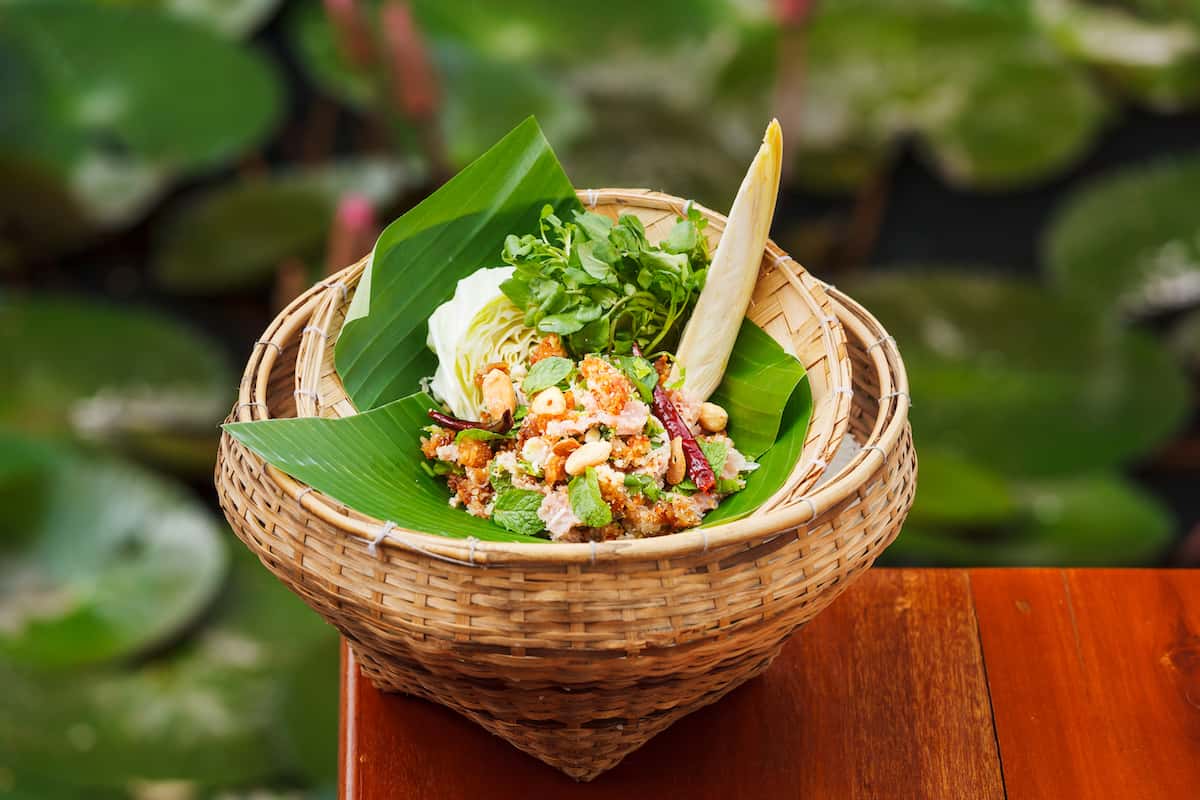
Laap combines minced meat or fish with herbs, lime, chili, and toasted rice powder. Tam mak hoong, Lao green papaya salad, gets much of its distinctive flavor from padaek, a fermented fish sauce.
For grilled food, look for sai oua, an aromatic sausage packed with herbs and spices. In Luang Prabang, try or lam, a thick local stew, and kaipen, crispy Mekong riverweed.
Where to Try Street Food in Laos
- Luang Prabang Morning Market: Go early for breakfast dishes, sausages, sticky rice, and snacks.
- Luang Prabang Night Market: An easy evening stop for local food and snacks.
- Vientiane: Explore local markets and riverside food stalls.
- Vang Vieng: Look around the town centre and night market for casual Lao food.
- Mekong Riverside: Evening vendors offer grilled foods, snacks, and simple meals.
What to Order First?
Start with laap and sticky rice, then try sai oua or tam mak hoong.
Staying with Mad Monkey in Laos? Mad Monkey locations in Laos give travelers easy access to different local food scenes, from Vang Vieng’s riverside stalls to the markets and traditional dishes of Luang Prabang.
What Should You Eat on the Street in Indonesia?
From Java to Bali and Lombok, Indonesia’s street food reflects the different ingredients, cultures, and cooking traditions found across its islands.
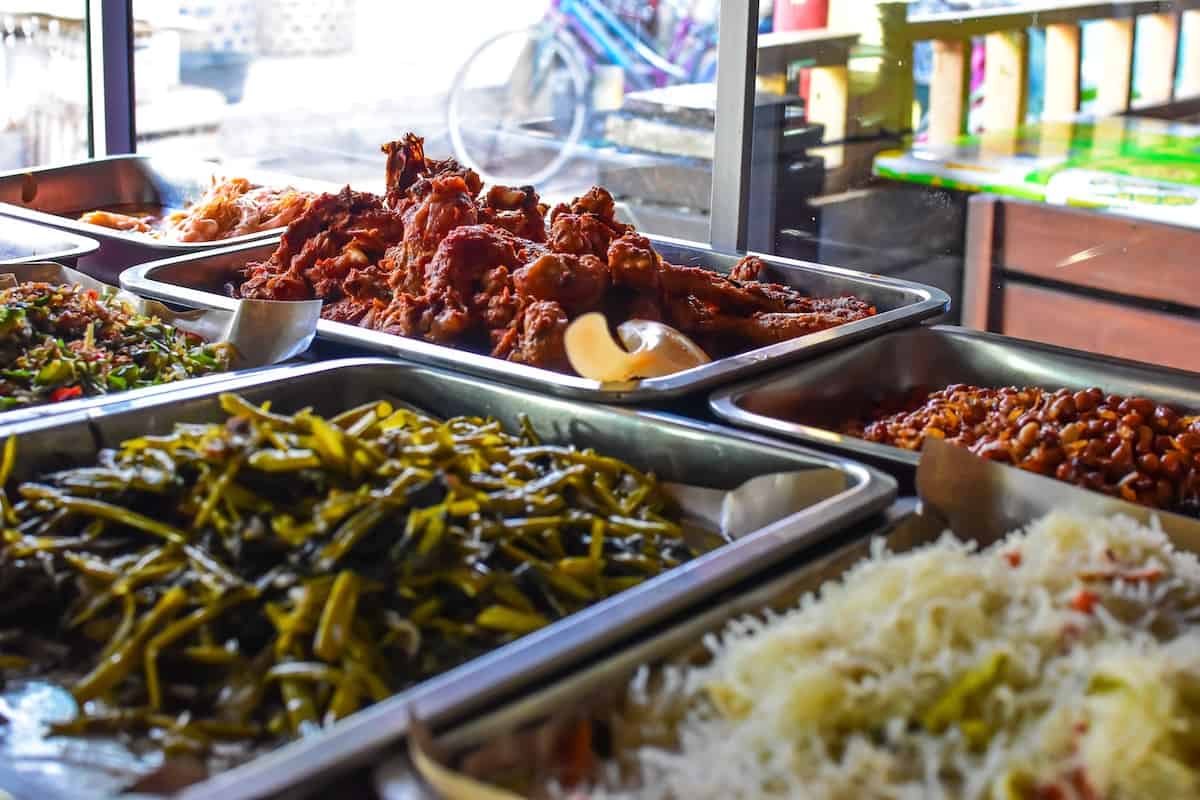
Nasi goreng, mie goreng, bakso, and sate are found throughout the country, but regional dishes are where Indonesian food gets particularly interesting.
On Bali, look for sate lilit, minced meat wrapped around a lemongrass or bamboo skewer, and babi guling, Balinese-style roast pork. In Java, try dishes such as gudeg, soto, and different versions of nasi campur.
Where to Try Street Food in Indonesia
- Jakarta: Explore neighborhood warungs, markets, and evening food stalls.
- Yogyakarta: Look for gudeg and traditional Javanese market food.
- Ubud: Explore local warungs beyond the busiest tourist streets.
- Gianyar: The evening market is a good place to explore Balinese food.
- Nusa Lembongan: Jungutbatu has plenty of small warungs serving grilled fish, nasi goreng, satay, and fried snacks.
- Lombok: Look for local markets and warungs for Sasak dishes and grilled food.
What to Order First?
Start with nasi goreng, bakso, and sate. In Bali, add sate lilit to the list.
Local tip: At a warung, look at what local families are ordering. The dish you don’t recognize may be the one worth trying.
Staying with Mad Monkey in Indonesia? Mad Monkey locations across Indonesia put travelers close to local food scenes, from Bali’s warungs and markets to the smaller island food cultures around destinations such as Nusa Lembongan.
What Should You Eat on the Street in the Philippines?
Filipino street food combines grilled meats, seafood, fried snacks, sweet treats, and bold vinegar-based sauces, with each island adding its own regional specialties.
Start with isaw, grilled chicken or pork intestines served on a skewer with sawsawan, the Filipino dipping-sauce tradition that ranges from spiced vinegar to sweet and savory blends.
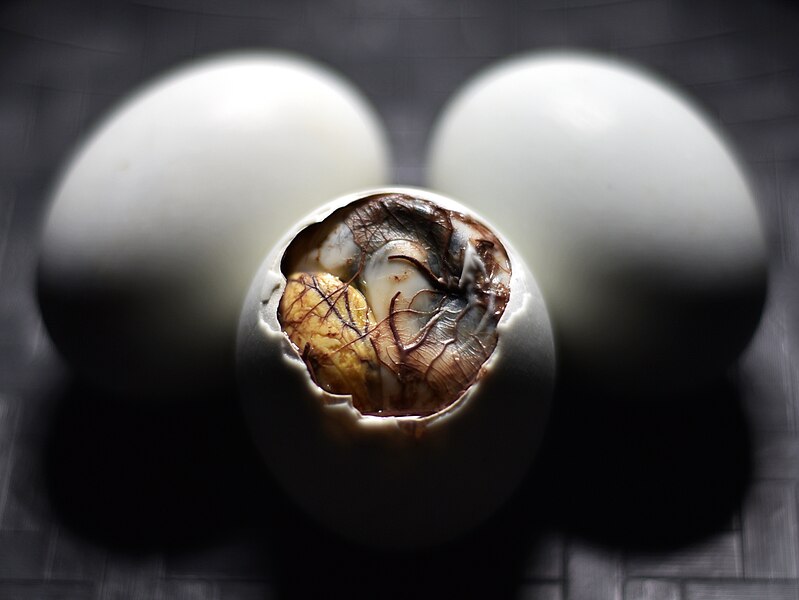
Kwek-kwek, quail eggs coated in orange batter and fried, and fish balls are other classic street snacks. For something more adventurous, try balut, a boiled fertilized duck egg.
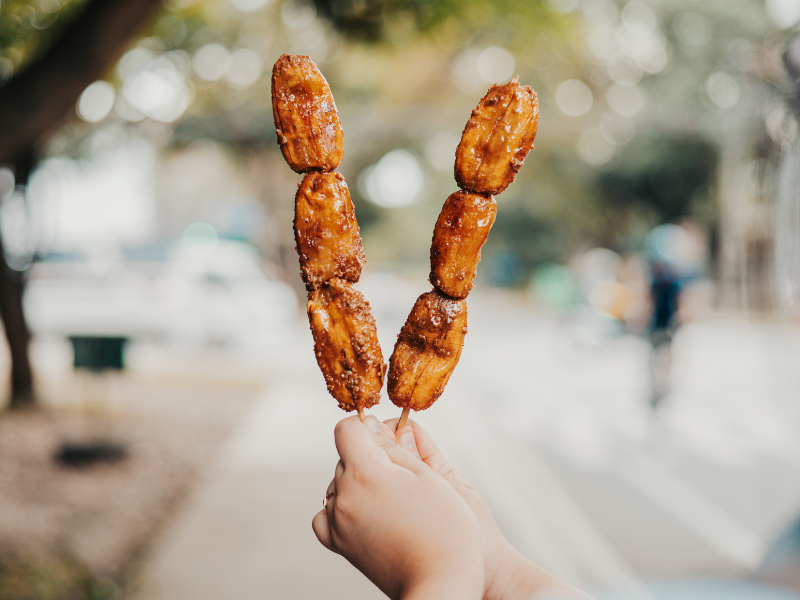
For something sweet, look for turon, banana wrapped in a spring-roll wrapper and fried with sugar, or banana cue, caramelized banana served on a skewer.
Once you leave Manila, the food changes with the island. Seafood becomes more prominent in coastal destinations, while smaller cities and towns have their own local specialties.
Where to Try Street Food in the Philippines
- Manila: Try isaw, kwek-kwek, fish balls, balut, turon, and banana cue around Poblacion, Quiapo, and local markets.
- Cebu: Look for lechon, puso, ngohiong, grilled chicken, and Cebuano-style barbecue at local markets and roadside stalls.
- Siquijor: Try kinilaw, grilled fish and seafood, barbecue, pancit, and coconut-based dishes at local carinderias, markets, and roadside stalls.
- Nacpan Beach, Palawan: Look for grilled fish, seafood barbecue, chicken barbecue, pancit, and fresh coconut at small local eateries and roadside vendors.
- Panglao, Bohol: Try chicken inasal, grilled seafood, kinilaw, calamay, and peanut kisses at local food stalls, markets, and carinderias.
- Dumaguete: Explore the public market and local food stalls for grilled seafood, squid, lumpia, puso, silvanas, and sans rival.
- Binondo, Manila: Try siopao, dumplings, noodles, lumpia, and Filipino-Chinese street snacks around the historic Chinatown.
- Quiapo, Manila: Explore the market streets for grilled snacks, rice cakes, fried food, and traditional Filipino street food.
- Salcedo and Legazpi Markets, Makati: Sample Filipino regional dishes, grilled food, desserts, and snacks from different local vendors.
What to Order First?
If you’re exploring the Philippines, make time for both classic street food and regional specialties. In Manila, look for isaw, kwek-kwek, and turon; Cebu is the place for lechon and puso; while Siquijor is known for kinilaw and grilled seafood. Around Nacpan Beach, fresh grilled fish and seafood are easy choices, while Panglao is worth exploring for chicken inasal, kinilaw, and calamay. In Dumaguete, explore the local market for savory snacks before trying the city’s famous silvanas or sans rival.
Staying with Mad Monkey in the Philippines? Mad Monkey locations across the Philippines put travelers close to diverse local food scenes, from Manila’s neighborhood stalls to seafood markets and regional dishes found across the country’s islands.
How Does Street Food Ordering Work in Southeast Asia?
Street food in Southeast Asia rarely follows one system. At a noodle stall, you might simply name the dish and choose your toppings. In a market, you may point at several dishes and build a plate yourself. Satay stalls often charge by the skewer, while hawker centres usually have numbered stalls where you order first and find a table afterward. The easiest way to order is to watch what everyone else is doing for a few seconds before stepping in
Know What You’re Actually Ordering
A dish name doesn’t always tell you exactly what arrives in the bowl or on the plate.
A noodle order may come with a choice of meat, noodles, broth, or toppings. A rice stall may let you choose several dishes to go with one portion of rice. At grilled-food stalls, the price may be per skewer rather than per serving.
If you’re unsure, ask whether the price is per piece, per skewer, per bowl, or per plate before ordering several items.
Expect to Customize Your Food
You may be asked whether you want chili, extra herbs, a particular type of noodle, more sauce, or a different protein. In Thailand and Laos, spice levels can change considerably depending on how much chili is added. Sambal in Indonesia may be mixed into the dish or served separately. For Filipino street food, the dipping sauce can be just as important as the grilled food itself.
Watch How Locals Eat It
Some street foods come with their own way of eating them.
Sticky rice in Laos is traditionally pinched into small pieces by hand. Vietnamese noodle dishes are eaten with chopsticks and a spoon. Filipino grilled snacks are often dipped into vinegar or another sawsawan. Indonesian meals may come with sambal on the side.
Watching the person next to you is usually the quickest tutorial.
Check the Price Before You Order
If you’re choosing several items, check the price first. This matters most at seafood stalls, mixed rice stalls, and markets where you select food from a display rather than ordering from a fixed menu.
Keep some small bills and coins on you. It’s much easier when you’re grabbing a few skewers, a snack, or a quick bowl of noodles from a street stall.
Leave Room for the Next Stall
A night market might have grilled meat at one stall, noodles at the next, fresh fruit further down the street, and a dessert waiting around the corner. Ordering smaller portions lets you try several dishes instead of filling up on the first thing you see.
That’s one of the best ways to experience street food in Southeast Asia: one neighborhood, several small bites, and no need to decide on your entire meal before you start walking.
How Do You Eat Street Food Safely in Southeast Asia?
Busy stalls can be a starting point because food is less likely to sit around for long periods, but a busy stall is not automatically a safe one.
Look for food being cooked thoroughly and served hot. Pay attention to how raw ingredients are stored and whether preparation surfaces and utensils look reasonably clean.
A few practical rules:
- Choose stalls with steady local customers.
- Favor food cooked fresh and served hot.
- Be cautious with raw meat and seafood.
- Wash or sanitize your hands before eating.
- Use sealed bottled water or properly filtered water where tap water is not considered safe.
- Carry small amounts of local currency.
- Be cautious with food that has been sitting uncovered for long periods.
Safety tip: Don’t judge a stall only by how popular it looks. Watch the preparation too. Fresh ingredients, proper cooking, clean utensils, and high turnover are better signals than a long tourist queue.
Final Thoughts on Street Food in Southeast Asia
One of the best parts of backpacking Southeast Asia is realizing how quickly the food changes once you cross a border — and sometimes, even when you cross a neighborhood. You can eat khao soi in northern Thailand, bun cha in Hanoi, bai sach chrouk in Phnom Penh, laap in Laos, nasi goreng in Indonesia, and isaw in Manila, and still have a completely different plate waiting for you at the next stop.
So don’t spend the whole trip chasing the dish everyone says you have to try. Start there, then follow the smell from the next food cart, point at something you’ve never seen before, or ask the person beside you what they’d order. Some of the best meals you’ll have in Southeast Asia won’t come with a recommendation, a review, or even a name you can pronounce — just a plastic stool, a hot plate of food, and another country to eat your way through.
Frequently Asked Questions
Thailand, Vietnam, Cambodia, Laos, Indonesia, and the Philippines are some of the best countries for exploring street food while backpacking with Mad Monkey. Each has a different food culture, from Thai grilled meats and regional curries to Vietnamese noodles, Cambodian market dishes, Lao sticky rice, Indonesian warung food, and Filipino street snacks.
Street food generally costs around $1–$4 USD per meal, although prices vary depending on the country, city, and whether you’re eating in a local market or a busy tourist area. Thailand, Vietnam, Cambodia, Laos, Indonesia, and the Philippines can all be very affordable for backpackers.
Start with pad krapow and moo ping in Thailand, banh mi and bun cha in Vietnam, nom banh chok and bai sach chrouk in Cambodia, laap and sticky rice in Laos, nasi goreng and sate in Indonesia, and isaw, kwek-kwek, and regional seafood in the Philippines. Each destination also has local specialties worth trying beyond the dishes most commonly recommended to travelers.
Mad Monkey locations are within easy reach of local markets, food streets, night markets, hawker areas, and neighborhood eateries. The exact food options depend on the destination, but staying at Mad Monkey can make it easier to explore local food without having to travel across the city just to find a meal.
Some of the most popular street foods include pad thai and moo ping in Thailand, banh mi and bun cha in Vietnam, nom banh chok in Cambodia, laap in Laos, nasi goreng and sate in Indonesia, and isaw and kwek-kwek in the Philippines. The best dishes to try also depend on the city or island you’re visiting, as regional food traditions can be very different within the same country.
Pin Now Read Later.


