





Contents
How to get around Bangkok: Take the trains
The BTS Skytrain and MRT Subway are two of the easiest and cheapest ways to get around Bangkok. Not only are they affordable, but they also help you avoid the city’s notorious traffic. Both systems are clean, air-conditioned, and reliable, making them popular with both locals and visitors
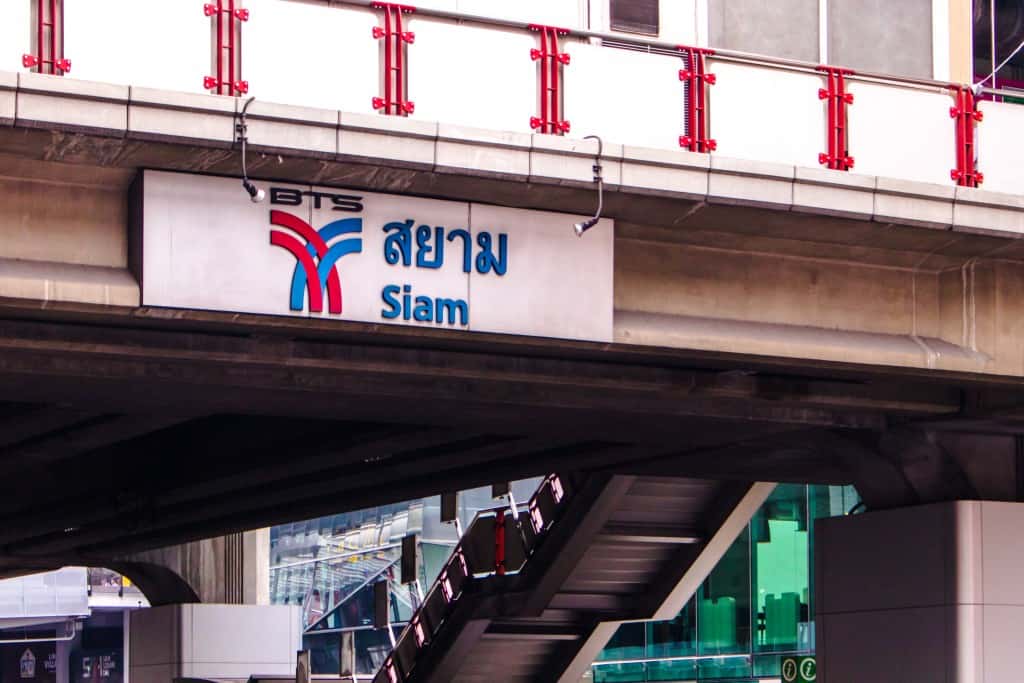
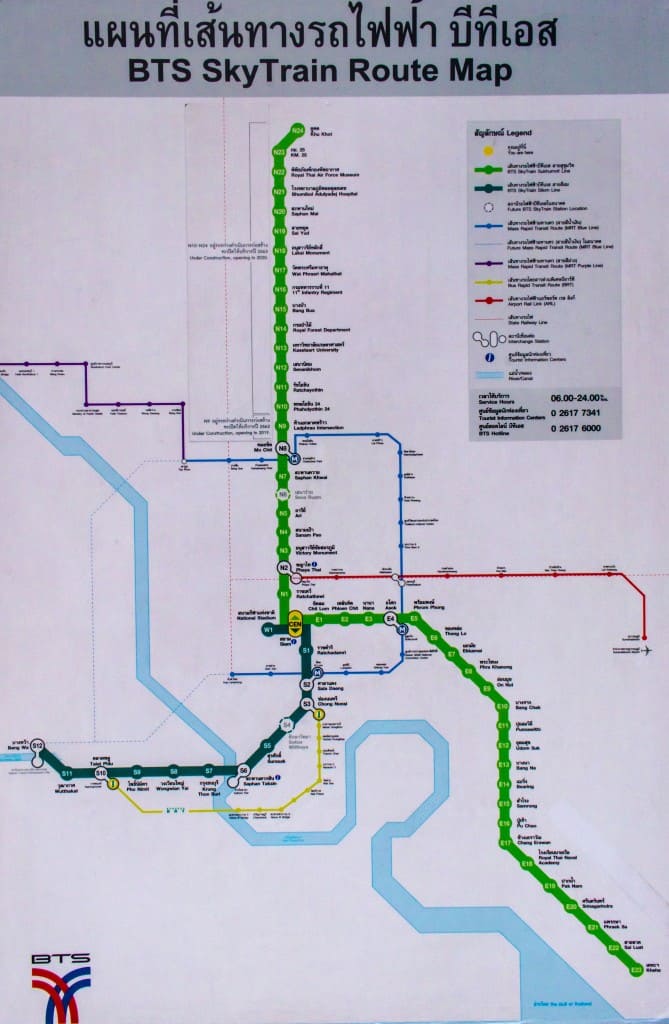
The BTS Skytrain, which opened in 1999, continues to expand across the city. The two main lines are the Sukhumvit Line and Silom Line, which connect at Siam Station, one of the busiest transport hubs in Bangkok. From the BTS network, travelers can also connect to other rail lines, including the Airport Rail Link, which runs directly to Suvarnabhumi Airport.
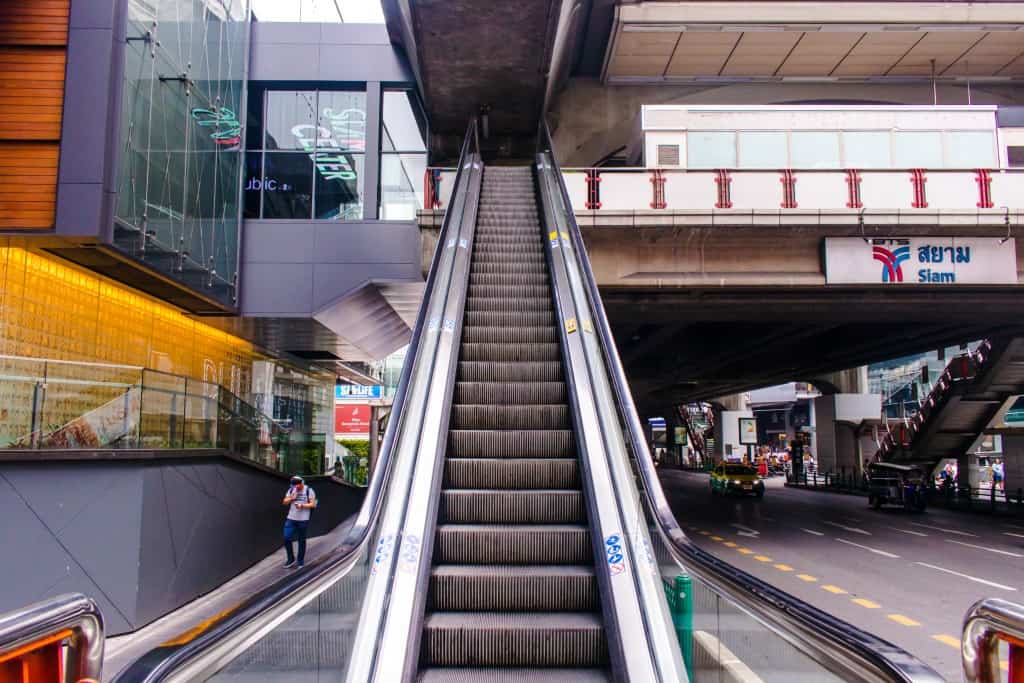
A BTS Skytrain ticket typically costs ฿16–65 (around $0.45–$1.80 USD) depending on distance. Travelers planning to ride multiple times in one day can purchase an unlimited one-day pass for ฿150 (about $4–$5 USD). The BTS operates daily from 6:00 a.m. to midnight.
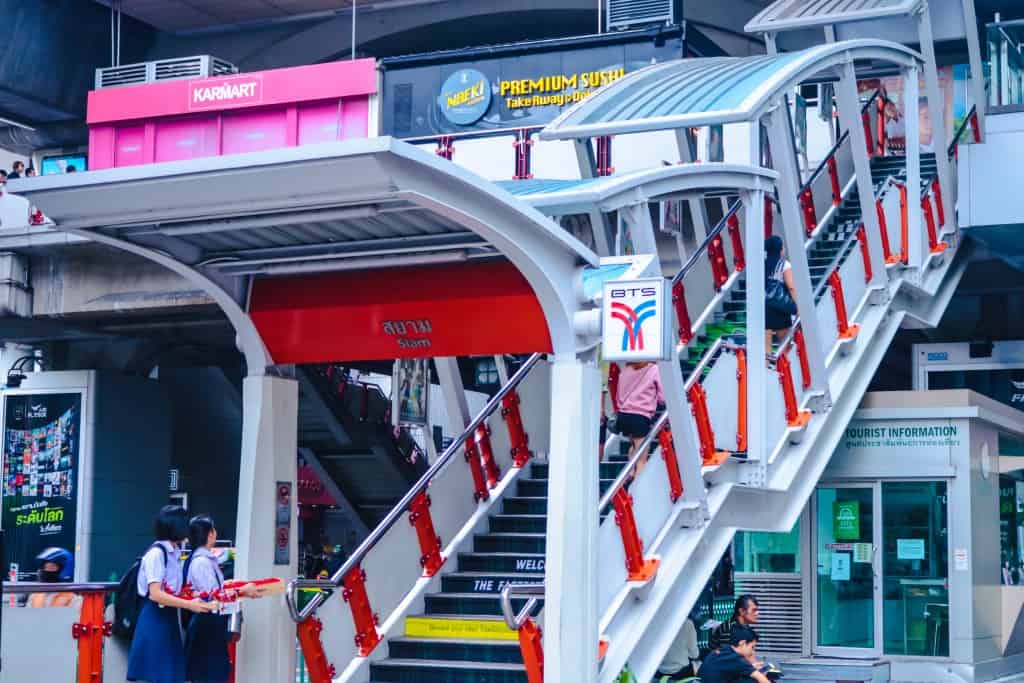
The MRT Subway is Bangkok’s underground rail system. While it does not cover as many tourist areas as the BTS, it is still extremely useful for reaching places like Chinatown, Chatuchak Weekend Market, and Khlong Toei Market.
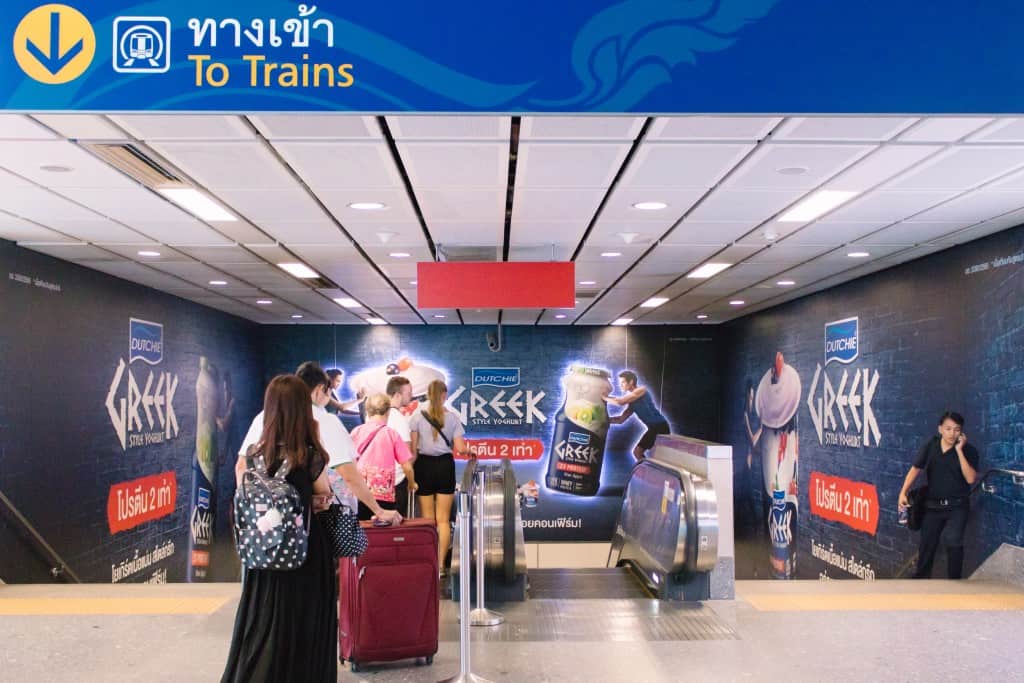
The MRT currently operates several lines, with the Blue Line being the most useful for travelers. Tickets typically cost ฿17–฿45 (around $0.50–$1.30 USD) depending on distance. Like the BTS, the MRT runs daily from 6:00 a.m. until midnight.
Travel Tip: If you plan to visit several attractions in one day, the ฿150 ($4.67 USD) BTS day pass can save time and money since you can hop on and off the train without buying separate tickets.
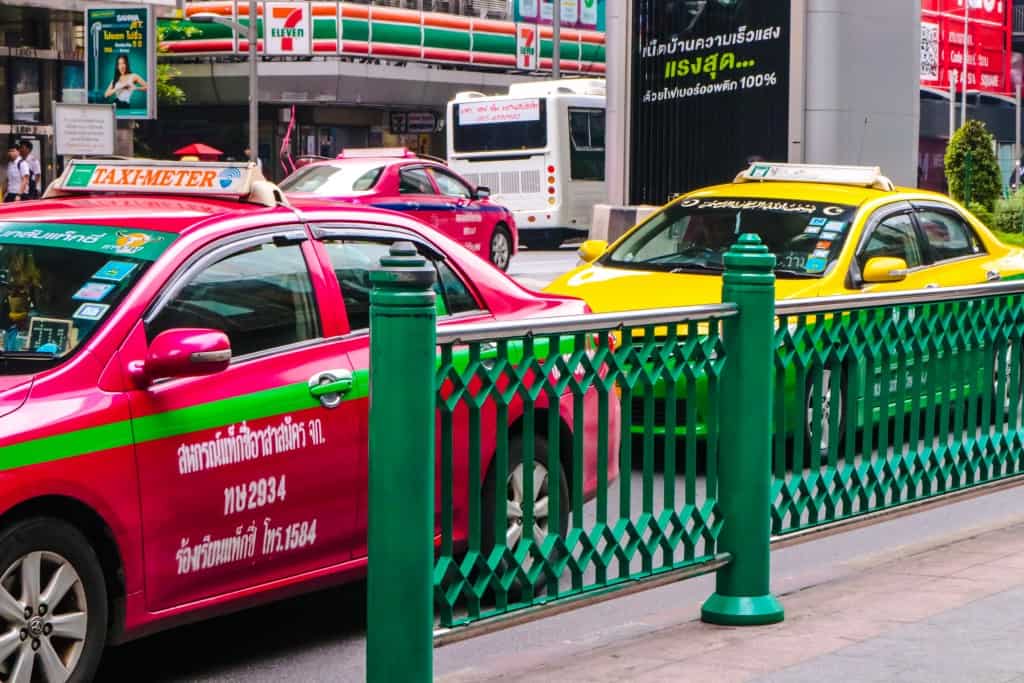
How to get around Bangkok: Always get a metered taxi
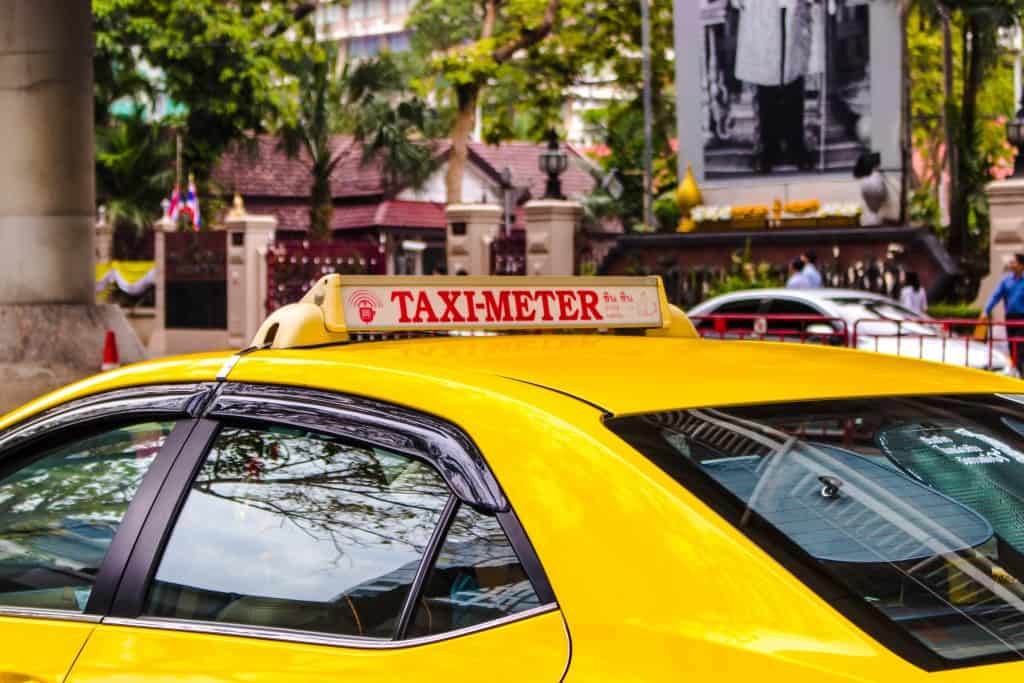
By law, taxis in Bangkok must use a meter. Some drivers may try to negotiate a fixed price when you first get in, often claiming traffic or distance as the reason.
If this happens, it is usually best to politely decline and find another taxi. It may take a few extra minutes, but it helps avoid paying far more than the actual fare.
Metered taxis in Bangkok start at ฿35 (about $1.09 USD). If you are traveling from the airport, there is also a ฿50 airport surcharge added to the meter fare.
Travel Tip: Many taxi drivers prefer cash, so it’s helpful to keep small bills like ฿20 ($0.62 USD) or ฿100 ($3.11 USD) with you to make paying easier.
How to get around Bangkok: Avoid travelling by car during rush-hour
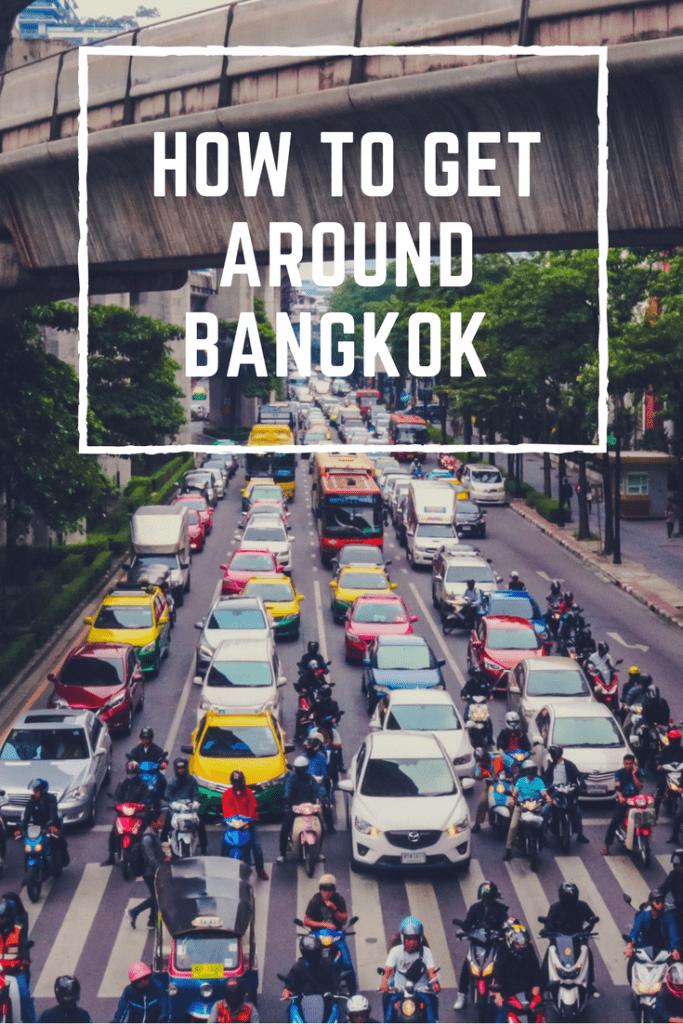
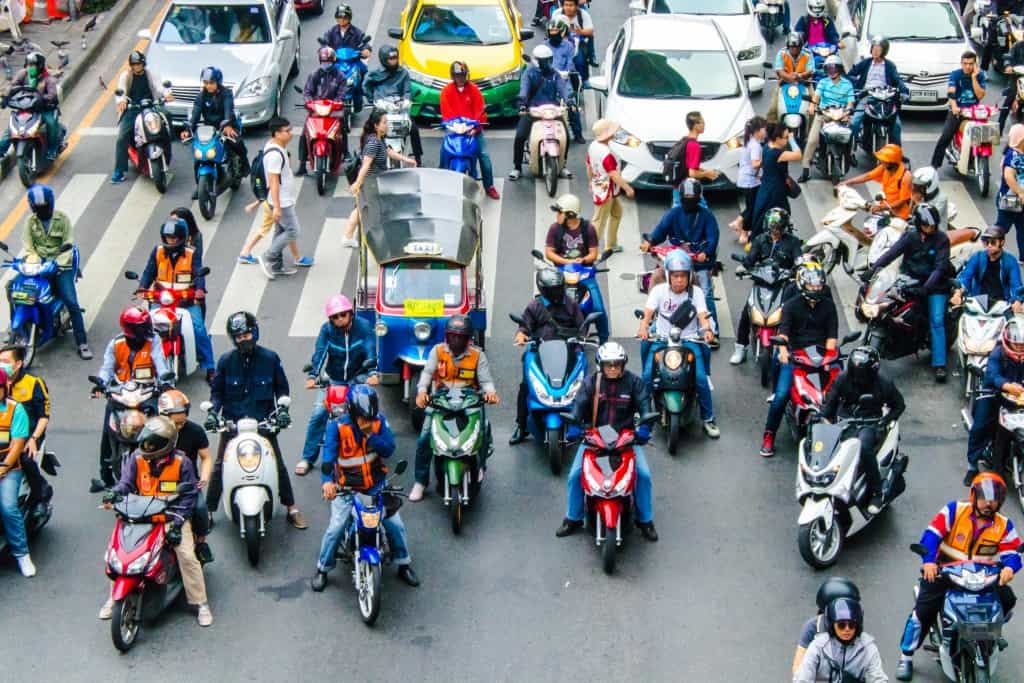
Bangkok is known for having some of the worst traffic in the world. During peak hours, what should be a short journey can easily take an hour or more.
Rush hour generally occurs:
- 7:00–9:30 a.m.
- 4:30–7:30 p.m.
If possible, try to plan longer taxi journeys outside these hours and rely on trains when traffic is heavy.
Before you hop on a car: If you need to cross the city during rush hour, the BTS Skytrain is almost always faster than taking a taxi.
How to get around Bangkok: Split a taxi when possible
Regular taxis in Bangkok can hold up to four passengers. When you are traveling with friends, splitting the cost of a taxi can be surprisingly affordable.
While taxis are generally inexpensive, they are still more cost-effective when shared among multiple people rather than traveling alone.
Taxi Tip: When traveling late at night with friends, splitting a taxi is often cheaper than multiple Grab rides.
How to get around Bangkok: Hop on a motorbike taxi if you are running late
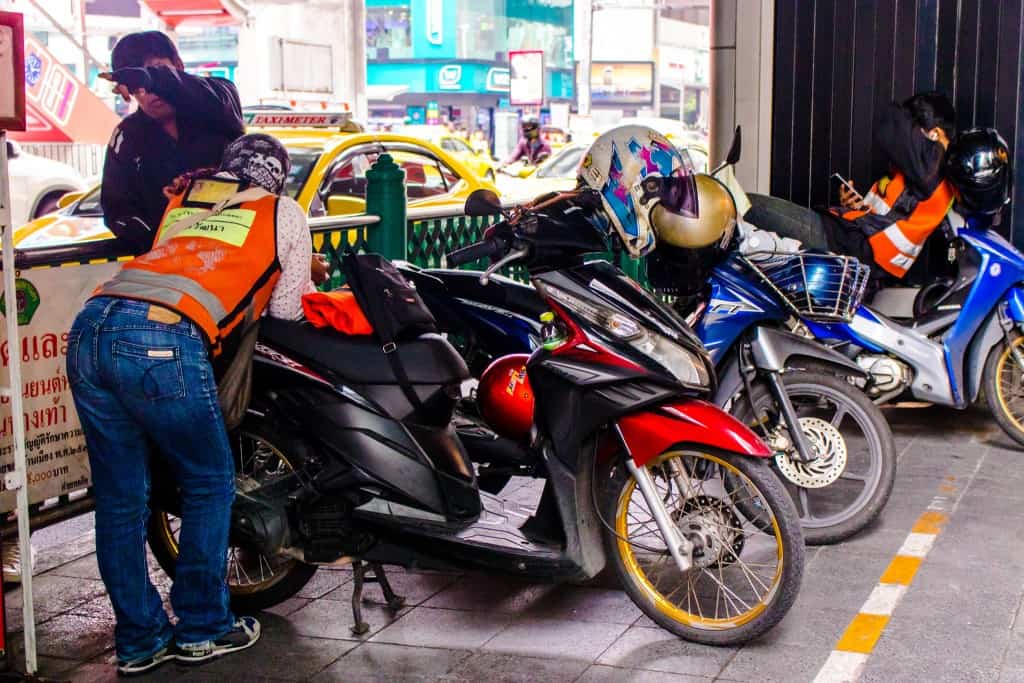
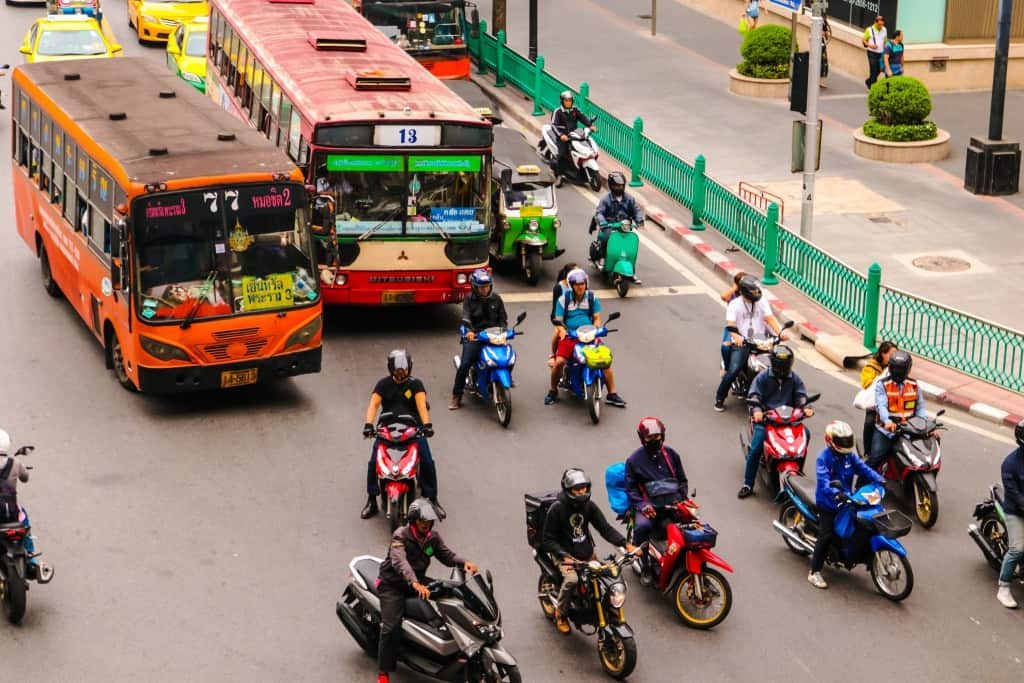
One of the fastest ways to move through Bangkok’s traffic is by taking a motorbike taxi. Drivers are easy to spot thanks to the bright orange vests they wear and are usually stationed near train stations, busy intersections, and shopping areas.
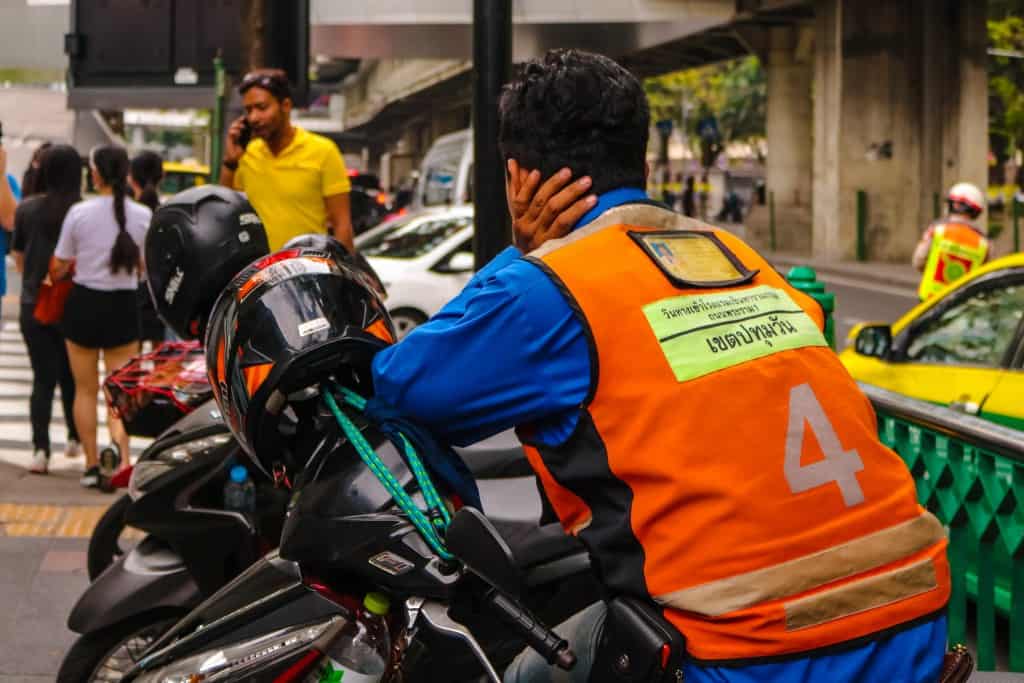
All you have to do is approach a driver and tell them your destination.
Prices can vary depending on distance, but motorbike taxis are often used for short trips or quick connections between train stations and nearby streets.
Helpful tip: Motorbike taxis are especially useful for short distances from BTS stations to small streets (sois) where cars cannot easily enter.
How to get around Bangkok: Take a tuk-tuk … but only once
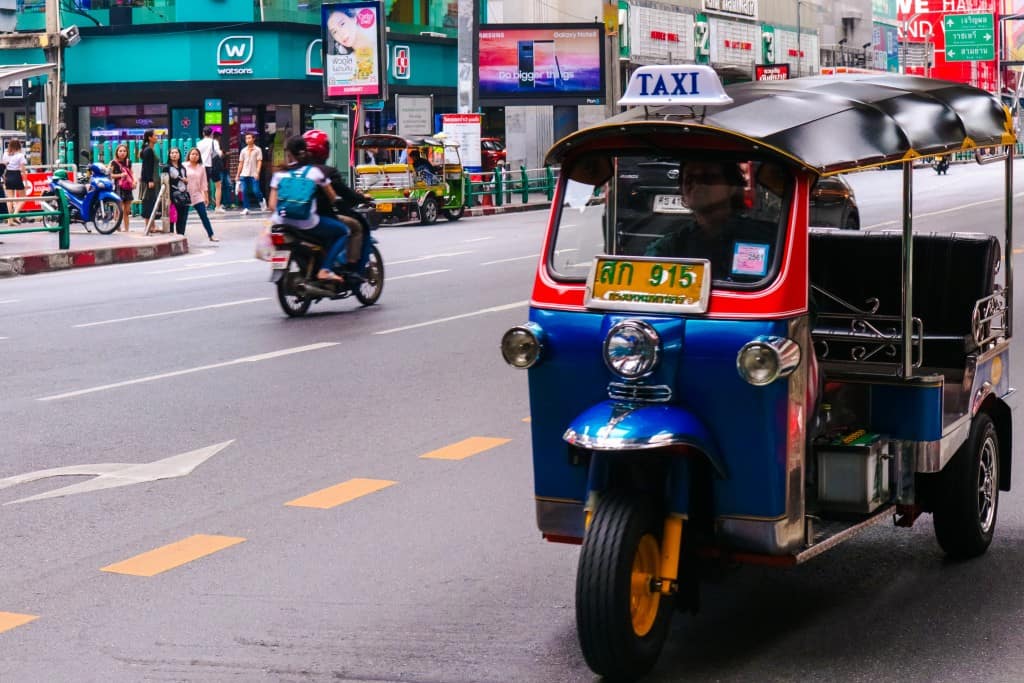
For many travelers, riding in a tuk-tuk is part of the Bangkok experience. These three-wheeled vehicles are fun, colorful, and iconic.
However, they are rarely the cheapest way to travel. Tuk-tuks usually operate on fixed prices rather than meters, meaning fares can be higher than taxis.
Take one ride for the experience, but for regular transport, taxis or trains are usually more comfortable and affordable.
Tuk-tuk Tip: Always agree on the price before getting into a tuk-tuk to avoid misunderstandings.
How to get around Bangkok: Get around the city via boat
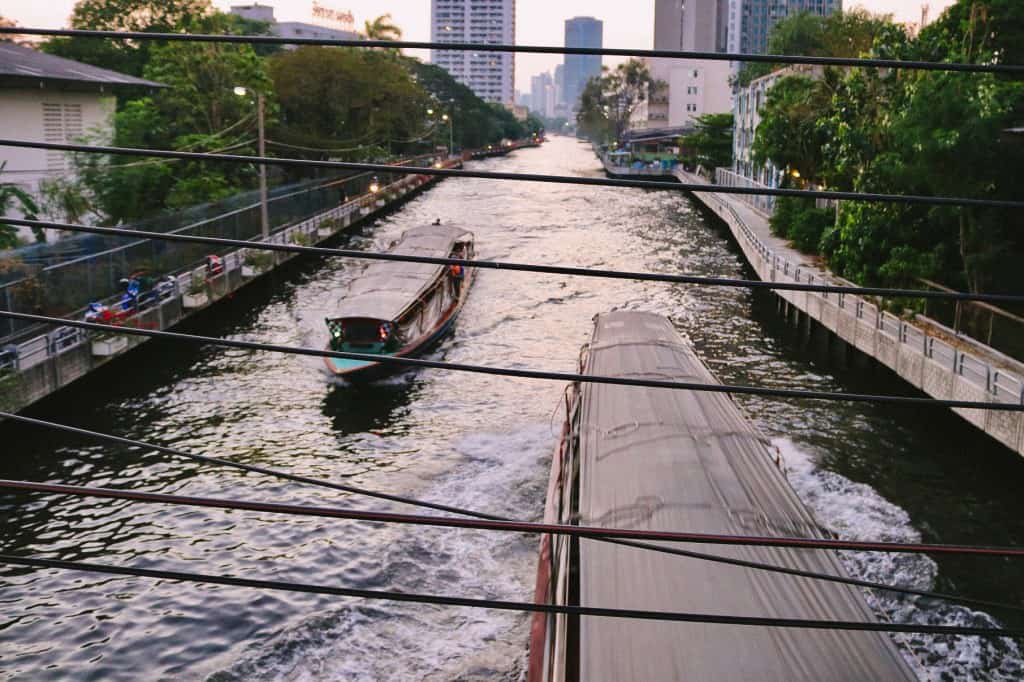
The capital of Thailand used to be referred to as the Venice of the East, and for good reason. During the 19th century, the city was a crisscrossed pattern of waterways before the need for more urban décor replaced and covered up these canals. Today, the Chao Phraya River continues to run through the heart of the city and is teeming with boats ready to take you to your next destination. There are also plenty of khlongs (canals) with piers at some of the most sought-after destinations in town. Some destinations that can be reached via waterway include Wat Pho, Wat Arun, Asiatique, and even Mad Monkey Hostel Bangkok!
The orange flag boat is the most commonly used by travelers and typically costs around ฿16 ($0.50 USD) per ride.
Those of you who do opt to take this form of transportation must be wary, as some boat drivers hardly give passengers enough time to hop on and off the vessel before heading to the next pier!
Before your boat ride: The easiest place to catch the river boats is Sathorn Pier, which connects directly to Saphan Taksin BTS Station.
If you want to stay near Bangkok’s major transport connections, check availability at Mad Monkey Bangkok before your trip.
How to get around Bangkok: If you are willing to pay more, take the highway
Throughout the city, some highways and expressways can help you reach your destination much faster. These toll roads allow drivers to bypass some of Bangkok’s heavy traffic, though they do come with an additional fee.
The cost of using an expressway usually ranges from ฿25–90 (about $0.78–$2.80 USD) depending on the route and distance. If you are taking a taxi, the driver will typically ask if you would like to take the expressway, and the toll fee will be added to your final fare.
If you do not have much time but do have the baht, it is often worth asking your driver to take the highway when possible.
Highway Reco: Expressways are especially useful when traveling to Suvarnabhumi Airport, as they can significantly reduce travel time during peak traffic hours.e.
How to get around Bangkok: Have a map or mobile data and use GPS
Having internet access on your phone makes navigating Bangkok much easier. With Google Maps or other navigation apps, you can track your route, find nearby train stations, and make sure your driver is heading in the correct direction.
Mobile data is also helpful when using ride-hailing apps like Grab or checking public transportation routes across the city.
Travel Tip: Many travelers now use Thailand eSIMs, which can be purchased online before arriving in Bangkok from providers like Airalo or Holafly. These eSIMs activate instantly and allow you to use maps, transportation apps, and GPS as soon as you land. Physical SIM cards are also widely available at Suvarnabhumi Airport and Don Mueang Airport if your phone does not support eSIM.
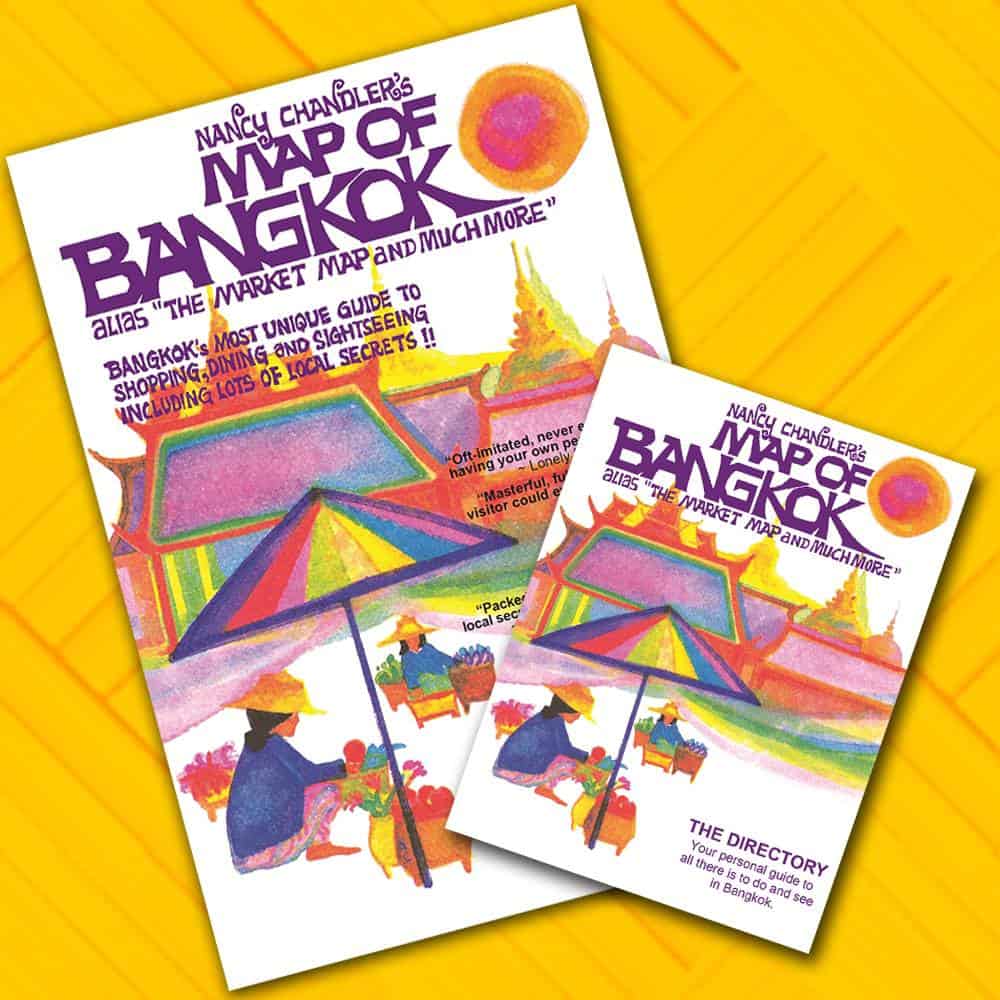
Nancy Chandler’s Maps of Thailand are another extremely helpful resource for those exploring the city of Bangkok and beyond. However, the business has been closed since 2019, so if you happen to stumble across a seller, be sure to grab yourself one of these beautiful, unique maps.
How to get around Bangkok: Know these Thai phrases to help you get around town
Knowing a few Thai phrases will help you be able to give a driver directions. Below are some of the most useful phrases we have found that will help you get to your final destination.
| Do you use a meter? | Chai meeta mai? |
| Go straight | Dtrong bpai |
| Turn left/right | Leo sai/qua |
| Stop/go | Yoot/bpai |
| U-turn | Glap rote |
| Please slow down | Kaap cháa cháa noi |
| Traffic jam | Rotdtit |
| Nearby | Glai glai |
| Here | Tîinîi |
How to get around Bangkok: Download a few helpful apps
There are a handful of apps you should consider downloading before venturing to Bangkok. Some are specific to a certain public form of transportation while others will help you get a taxi while one seems impossible to flag down.
- Trainsity Bangkok BTS MRT: helpful maps of the BTS, MRT Blue, MRT Purple, and Airport Rail Link train network
- Grab: taxi service that is incredibly cheap for motorbike taxis but a bit more expensive for an actual taxi
- Uber: Uber is normally a bit more expensive than metered taxis, but if you are going somewhere that is remote or you need a taxi at an odd hour, it can be useful
- UPDATE: Uber Thailand has been purchased by GRAB, so while Uber is no longer available in Thailand, GRAB offers services for booking real taxis, private cars (like Uber), motorbike taxis, and delivery (food and courier service)
- Bangkok Transit Guide: this guide allows users to see where top attractions fall on the major forms of transportation around the city
Want more helpful tips on traversing the capital?
If you read this article but want to know even more about how to travel in the capital like a local, then be sure to check out the following helpful articles. We only recommend blogs and websites that we read, as well. Enjoy!
- Bangkok: Getting Around by TripAdvisor
- 10 Amazing Ways to Get Around Bangkok by Christine Kaaloa for Grrrltraveler
- Get Around In Bangkok – A Transportation Guide by Sebastian Canaves for Off The Path
- The Top Transportation Tips for Getting Around the City of Bangkok by Kelly Iverson for Decorated Passport
- Getting around Bangkok like a local for Expique