





Contents
TL;DR
- The best day trips from Chiang Mai are Doi Inthanon National Park for Thailand’s highest peak and cloud forest, Bua Tong Sticky Waterfalls for climbable limestone cascades, Chiang Dao Cave for shrine-filled limestone passages, and Elephant Nature Park for ethical elephant encounters.
- Closer options like Huay Tung Tao Lake and Doi Suthep suit a half day, while Chiang Rai and the Golden Triangle need a full day of travel each way.
- Most routes are reachable by taxi, songthaew, or organized tour from Mad Monkey Chiang Mai, a short walk from Tha Pae Gate and the Night Bazaar.
Best Day Trips From Chiang Mai at a Glance
| Day trip | Best for | Time needed | Approx. travel time from Chiang Mai |
|---|---|---|---|
| Doi Inthanon National Park | Mountains + waterfalls | Full day | 1.5-2 hrs |
| Huay Tung Tao Lake | Relaxing outdoors | Half day | ~20-30 min |
| Doi Suthep | Temple + mountain views | Half day | ~30-45 min |
| Bua Tong Sticky Waterfalls | Adventure | Half day | ~1.5 hrs |
| Chiang Dao Cave | Caves + mountains | Full day | ~1.5-2 hrs |
| Elephant Nature Park | Wildlife + conservation | Half/full day | ~1-1.5 hrs |
| Chiang Rai + Golden Triangle | Culture + northern Thailand | Full day | ~3 hrs |
| Mae Sa Valley | Gardens + waterfalls | Half/full day | ~30-60 min |
| Grand Canyon Chiang Mai | Swimming + activities | Half day | ~40 min |
Travel times are approximate and can change with traffic, weather, and your starting point.
1. Doi Inthanon National Park
Doi Inthanon National Park is one of the best full-day trips from Chiang Mai. It is home to Doi Inthanon, Thailand’s highest mountain at 2,565 meters, along with waterfalls, high-altitude forests, nature trails, viewpoints, and the King and Queen Pagodas.
The national park covers roughly 482 square kilometers, so there is far more to see than the summit itself.
Location: 119, Ban Luang, Chom Thong District, Chiang Mai 50160, Thailand – MAP
What to See at Doi Inthanon
One of the main stops is the pair of royal pagodas:
- Naphamethinidon, commonly known as the King Pagoda
- Naphapholphumisiri, commonly known as the Queen Pagoda
Both sit on the mountain with landscaped gardens and wide views across the surrounding landscape.
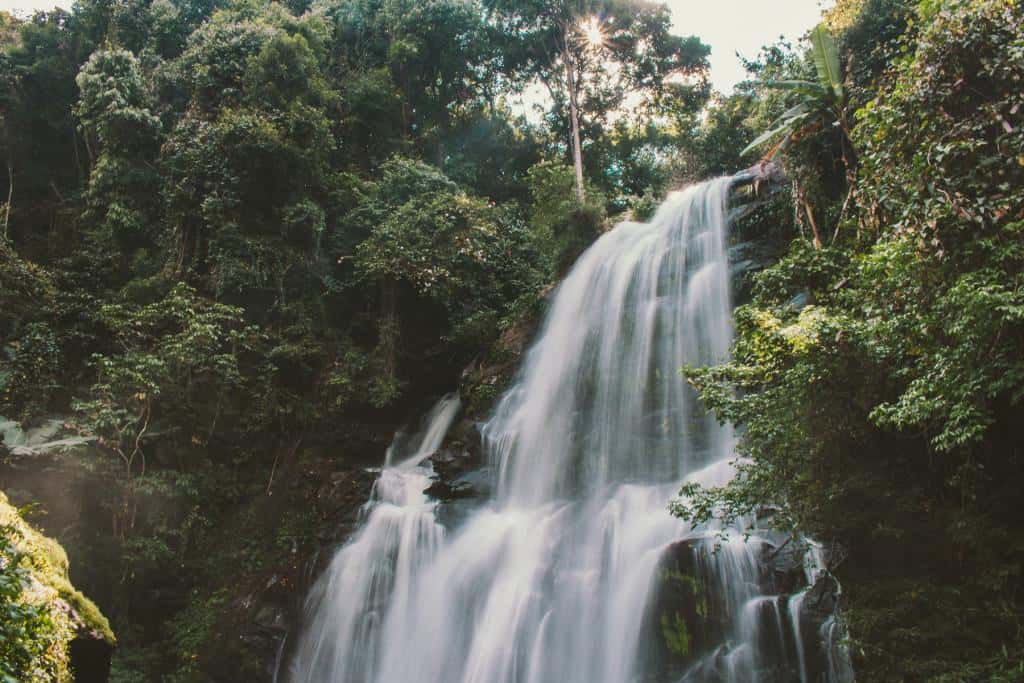
The park is also home to waterfalls, including Wachirathan Waterfall, as well as several walking trails.
What the Ang Ka Nature Trail Is
The Ang Ka Nature Trail is a short boardwalk through the high-altitude cloud forest near the summit of Doi Inthanon.
The environment changes noticeably at this elevation, with moss-covered trees, dense vegetation, and misty conditions creating a cooler atmosphere than Chiang Mai below.
Allow extra time for the trail if you’re visiting during wet weather, when the boardwalk and surrounding vegetation can be damp.
Local tip: Pack a light jacket even if Chiang Mai feels hot when you leave. Temperatures around the summit can be significantly cooler, especially in the early morning.
How Long to Spend at Doi Inthanon
Plan a full day. The drive from Chiang Mai takes time, and the national park is large enough that trying to rush between the summit, waterfalls, pagodas, and trails can make the trip feel more like a road transfer than a mountain day.
2. Huai Tueng Thao Lake
If you want a day trip that requires less planning and more sitting around, Huai Tueng Thao Lake is an easy escape from Chiang Mai.
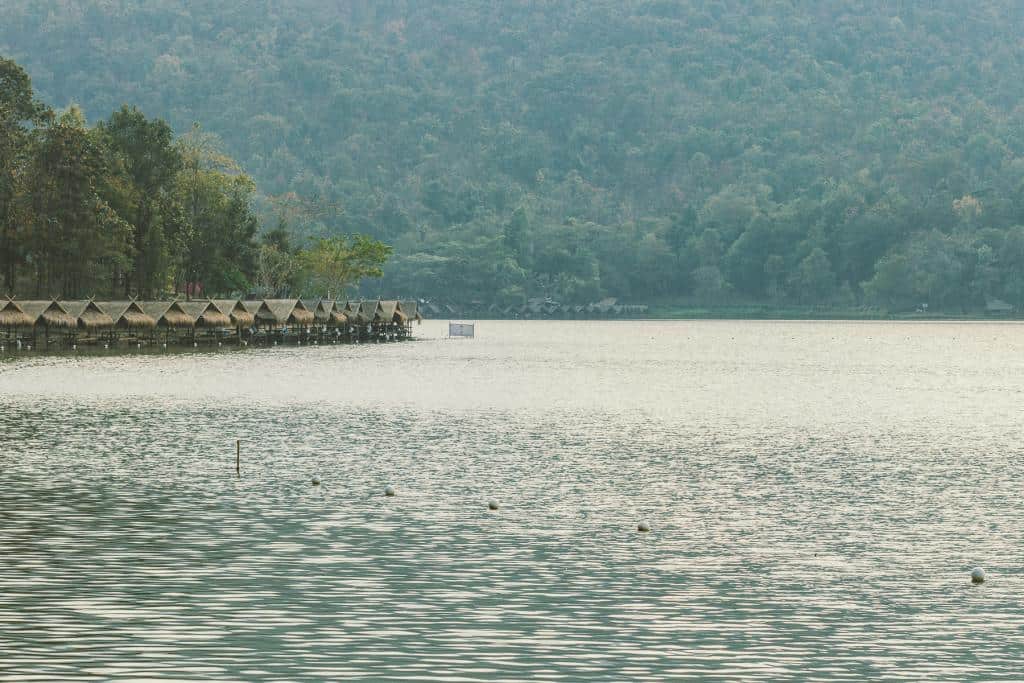
Located north of the city, the lake is surrounded by bamboo huts, restaurants, and mountain scenery. Visitors can order food, settle into a hut, walk around the lake, or simply spend an afternoon away from the traffic of central Chiang Mai.
Location: Don Kaeo, Mae Rim District, Chiang Mai 50180, Thailand – MAP
What to Do at Huay Tung Tao Lake
The lake is suited to a slower itinerary:
- Relax in a bamboo hut
- Eat traditional Thai dishes
- Walk or cycle around the lake
- Take photos of the surrounding mountains
- Spend a few hours outdoors
The area is popular with locals as well as visitors, which gives it a different atmosphere from Chiang Mai’s major sightseeing stops.
How to Get to Huay Tung Tao Lake
Huai Tueng Thao Lake is close enough to Chiang Mai for a quick half-day trip. You have several transport options:
- Grab or Bolt: The easier option for most travelers. Book a car directly through the Grab or Bolt app from Chiang Mai and check the fare before confirming. For the return journey, arrange a pickup in advance rather than relying on a driver to be waiting at the lake.
- Songthaew: Red songthaews are a traditional Chiang Mai transport option. You can usually find them around the Old City and major tourist areas, then negotiate a private fare directly with the driver. This can work well for groups or travelers who want the driver to wait while they visit the lake.
- Tuk-tuk: You can hire a tuk-tuk around the Old City or arrange one through your accommodation. Agree on the price and whether the driver will wait for you before setting off. This is generally better suited to a negotiated private trip than a metered ride.
- Private car and driver: Book through a local private-driver company or travel agency in Chiang Mai. This is a convenient option for families and groups who want to combine Huai Tueng Thao with nearby attractions and have the driver wait between stops.
- Rental scooter: Experienced riders can rent a scooter from shops around Chiang Mai or book one online for hotel delivery. Chiang Mai Scooter Rental, powered by Skoot, currently lists verified rental shops and online booking, with scooters starting from around ฿150 (about US$4.65) per day. Another local option, Get There Chiang Mai, lists scooters from ฿250 (about US$7.75) per day, depending on the model.
Important: If you rent a scooter, make sure you have the appropriate motorcycle licence and documents for riding legally in Thailand. A rental shop handing you the keys does not automatically mean you’re legally licensed or covered by insurance.
Huai Tueng Thao Lake charges ฿50 (about US$1.55) for foreign visitors and ฿20 (US$0.62) for Thai nationals. Bring cash for the entrance fee.
For current local announcements, access information, and government updates, check the Chiang Mai Province official website before you go. Fees, opening hours, and access conditions can change
3. Doi Suthep
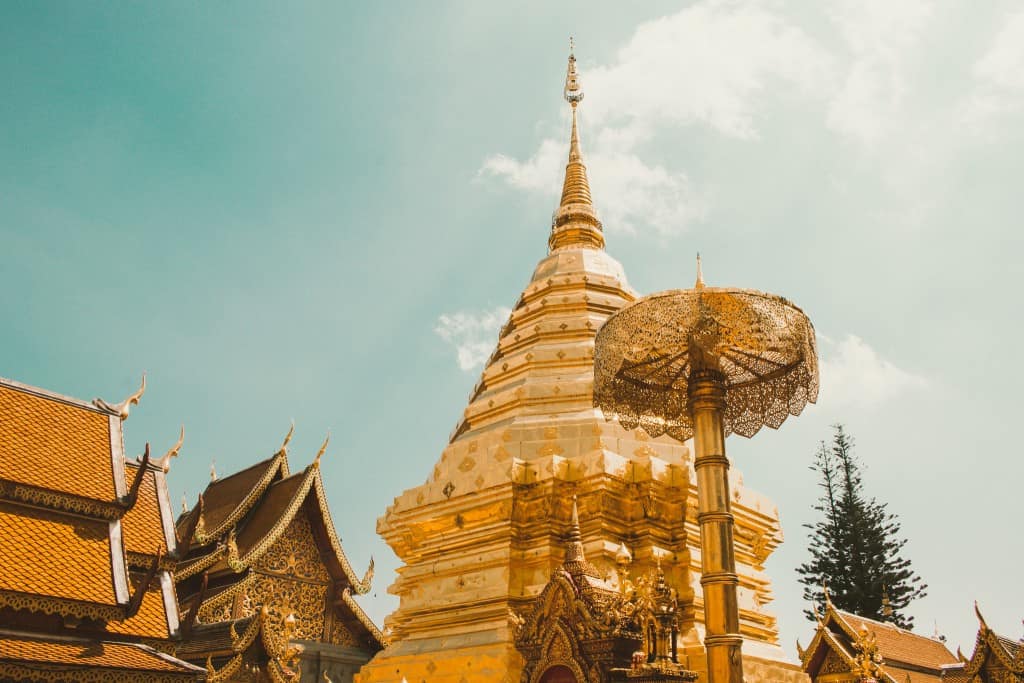
Doi Suthep is one of the most recognizable mountains around Chiang Mai, but the main reason travelers make the trip is Wat Phra That Doi Suthep, one of northern Thailand’s most important Buddhist temples.
The temple is known for its golden chedi, Lanna architecture, sacred relic, and views over Chiang Mai. The Tourism Authority of Thailand lists Phra That Doi Suthep and Doi Inthanon among Chiang Mai’s major attractions.
Location: Suthep, Mueang Chiang Mai District, Chiang Mai 50200, Thailand – MAP
How to Get to Wat Phra That Doi Suthep
Wat Phra That Doi Suthep is about 15 km from central Chiang Mai, with the drive up Doi Suthep taking roughly 30–40 minutes depending on traffic. You have several ways to get there:
- Red songthaew: Shared red songthaews commonly run toward Doi Suthep from areas such as Chang Phueak Gate and Chiang Mai University. Expect to pay around ฿40–฿60 (about US$1.25–$1.85) per person each way, depending on where you board and current fares. You can also negotiate a private charter if you’re traveling as a group.
- Tuk-tuk: Hire one around the Old City and agree on the fare and waiting time before leaving. This can work well if you want the driver to wait while you visit the temple.
- Private car and driver: Book through a local Chiang Mai tour operator, travel agency, or private-driver service. This is particularly convenient if you want to combine Doi Suthep with Wat Pha Lat, Bhubing Palace, or Doi Pui in the same trip.
- Rental scooter: Experienced riders can rent a scooter from Chiang Mai rental shops and ride up the mountain via the winding roads. Only choose this option if you’re comfortable riding on steep, curving roads and have the appropriate licence and documents.
Foreign visitors currently pay ฿30 (about US$0.95) to enter the temple. The optional cable car/funicular costs around ฿50 (about US$1.55) according to the Tourism Authority of Thailand’s current listing.
The temple’s famous Naga staircase has 306 steps, so you can walk up rather than take the cable car.
Current visitor information: The Tourism Authority of Thailand lists the temple at Doi Suthep, Mueang Chiang Mai, with a current phone number of 053-295-002. Check its official attraction listing before visiting for the latest access and operating information
What Else to See Around Doi Suthep
Doi Suthep is more than a single temple stop. Depending on your route and current access conditions, you can also explore places such as:
- Wat Pha Lat
- Bhubing Palace
- Forest viewpoints
- Waterfalls and smaller mountain stops
Dress respectfully when visiting Buddhist temples, covering your shoulders and knees and following local rules around photography and worship areas.
4. Bua Tong Waterfall
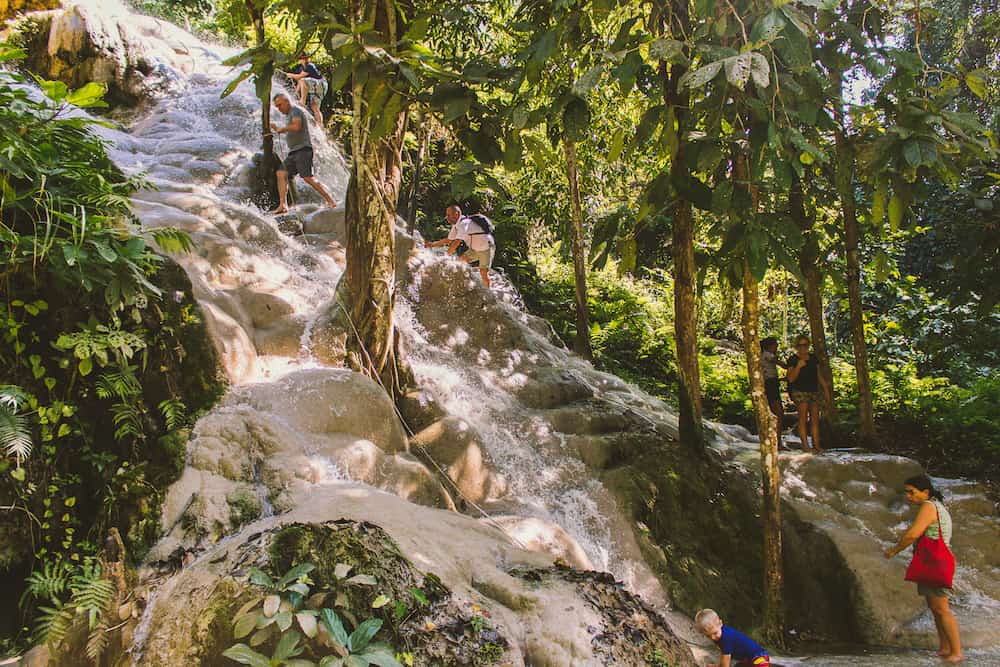
Bua Tong Waterfall, better known as the Sticky Waterfalls, is known for its pale limestone surfaces. Mineral deposits create unusual traction on the rock, allowing visitors to climb sections of the cascading water without immediately losing their footing. Tourism Thailand continues to highlight Bua Tong for this distinctive limestone surface.
The waterfall sits within a forested area north of Chiang Mai and works well as a half-day or combined day trip.
Location: Mae Ho Phra, Mae Taeng District, Chiang Mai 50150, Thailand – MAP
Climbing Bua Tong Sticky Waterfalls
Bua Tong’s mineral-coated limestone gives the waterfall its unusual grip, turning the cascades into a natural climbing route rather than a viewpoint-only stop. Ropes along the steeper sections help visitors move between the tiers, while the forest around the falls keeps the setting shaded and cool.
The climb still demands attention. Wet patches, uneven limestone, steep sections, and changing water flow can make parts of the route challenging. Wear shoes with good grip, use the installed ropes where available, and follow any park closures or safety instructions.
The waterfall is free to enter, so the main things to bring are water, appropriate footwear, and a change of clothes if you plan to get into the pools.
Local tip: Take your time on the climb. The lower sections are easier to navigate, while the steeper upper sections reward careful footing rather than speed.
What to Bring to Bua Tong
Keep your day-trip kit simple. Bring:
- Water: You’ll work up a sweat climbing the falls.
- Swimwear: Useful if you plan to cool off in the pools.
- Towel: For the inevitable splash.
- Shoes with good grip: Essential for wet limestone and uneven sections.
- Dry clothes: Handy after climbing through the cascades.
- Waterproof phone protection: Your phone is safer in a dry bag or waterproof case while you’re on the falls.
5. Chiang Dao Cave
About 70 kilometers north of Chiang Mai, Chiang Dao offers a different side of northern Thailand, with limestone mountains, forest, caves, and rural landscapes.
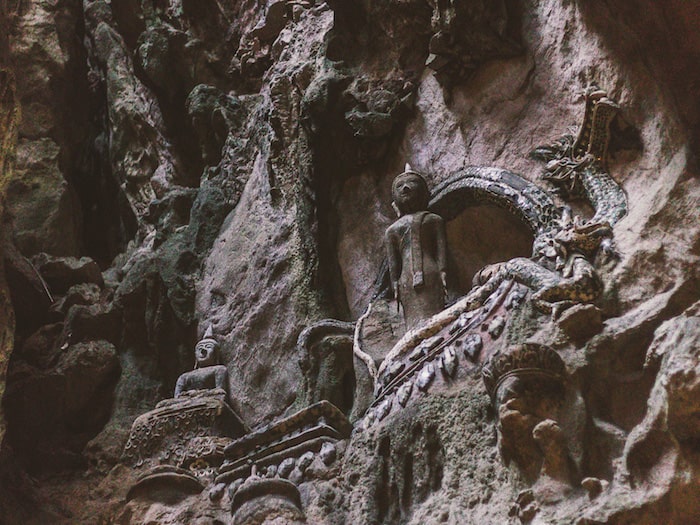
Chiang Dao Cave, or Tham Chiang Dao, is one of the area’s best-known attractions. The cave contains limestone formations, religious shrines, narrow passages, and bats.
The wider Chiang Dao area is also recognized for its ecological importance. In 2026, Tourism Thailand highlighted Doi Luang Chiang Dao as part of Thailand’s UNESCO World Biosphere Reserve network.
Location: 171 หมู่ 5 Chiang Dao, Chiang Dao District, Chiang Mai 50170, Thailand – MAP
Whether You Need a Guide for Chiang Dao Cave
The deeper sections of Chiang Dao Cave are best explored with a local cave guide, particularly if you’re unfamiliar with the passages. Guides help navigate the darker, uneven sections while adding context about the cave’s limestone formations, shrines, and religious significance.
You can arrange a local guide at the cave entrance, where guides are available for the guided cave routes. You generally don’t need to book a guide online in advance for a standard cave visit. If you’re traveling with a larger group or want a specific tour format, arranging transport or a guide through a Chiang Mai tour operator before leaving the city can be more convenient.
Wear shoes with good grip and clothing you don’t mind getting damp or dirty. Follow local instructions about which sections are open, and don’t venture beyond marked or guided areas.
Local tip: Bring a small flashlight or headlamp even if your guide provides lighting. The deeper sections can get very dark, and having your own light makes navigating uneven ground easier.
What Else to Do in Chiang Dao
Chiang Dao is worth treating as more than a quick cave stop. The drive from Chiang Mai takes you into a quieter stretch of northern Thailand, with limestone mountains, rural communities, temples, and small local businesses along the way.
Depending on your route and the season, you can combine Chiang Dao Cave with:
- Mountain viewpoints: Take in views of Doi Chiang Dao and the surrounding limestone landscape.
- Local temples: Stop at temples around the Chiang Dao area for a quieter cultural experience away from Chiang Mai’s busier sites.
- Rural villages: See a slower side of northern Thailand and local communities around the mountain.
- Cafés and restaurants: Break up the drive with coffee or a meal at one of the area’s independent cafés and local eateries.
- Nature trails: Add a short walk if conditions and access allow, particularly if you want more time outdoors.
Allow a full day for Chiang Dao from Chiang Mai. Leaving early gives you enough time for the cave, lunch, and a couple of stops without turning the day into a race between attractions.
6. Elephant Nature Park
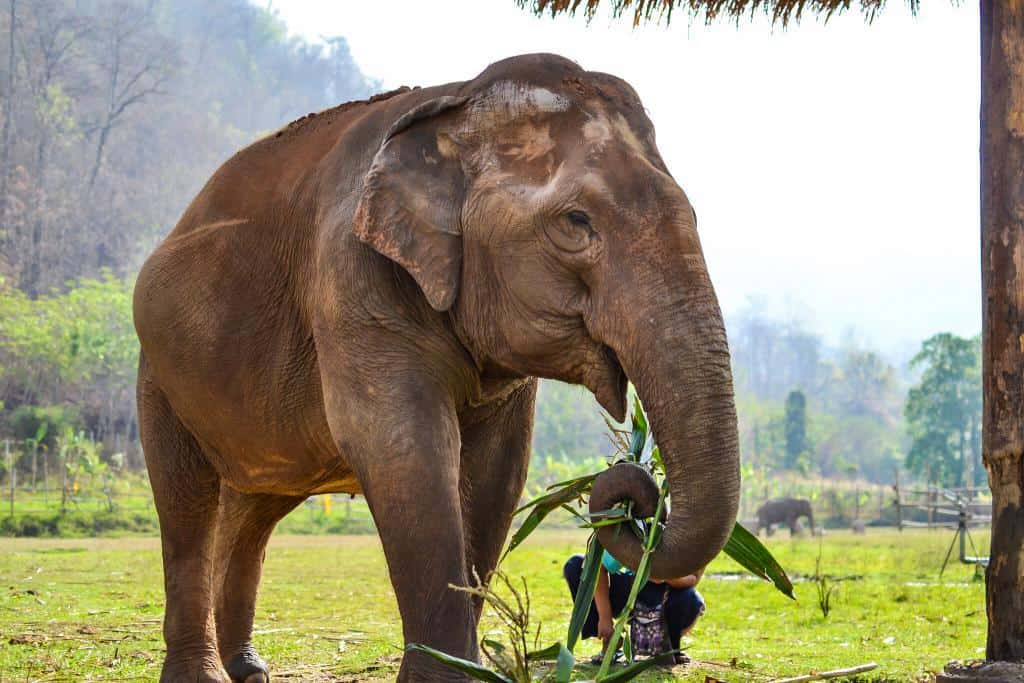
For travelers interested in wildlife and conservation, Elephant Nature Park is one of the better-known elephant rescue and rehabilitation centers in northern Thailand.
The park was founded by elephant advocate Saengduean “Lek” Chailert, who began rescuing injured and neglected elephants in the 1990s and established Elephant Nature Park as a permanent home for rescued elephants in 2003.
Today, the park provides care for elephants rescued from situations including riding, street begging, and circus shows. Its programs focus on observing and learning about elephants rather than riding them.
Location: ชม.3052 Kuet Chang, Mae Taeng District, Chang Wat Chiang Mai 50150, Thailand – MAP
What to Know Before Visiting Elephant Nature Park
When choosing an elephant experience, look for programs that place animal welfare at the center of the visit. Experiences should give elephants space to behave naturally while allowing visitors to learn about their care and rehabilitation.
Avoid experiences that offer elephant riding, forced performances, or interactions that put visitor access ahead of the animals’ needs.
Elephant Nature Park offers half-day and full-day visits, as well as longer stays, with programs focused on observing and caring for rescued elephants. Check the current programs and availability before booking.
7. Chiang Rai and the Golden Triangle
If you have a full day to spare, you can travel farther north to Chiang Rai and the Golden Triangle.
Chiang Rai was established by King Mangrai in the 13th century and has developed into one of northern Thailand’s major cultural destinations.
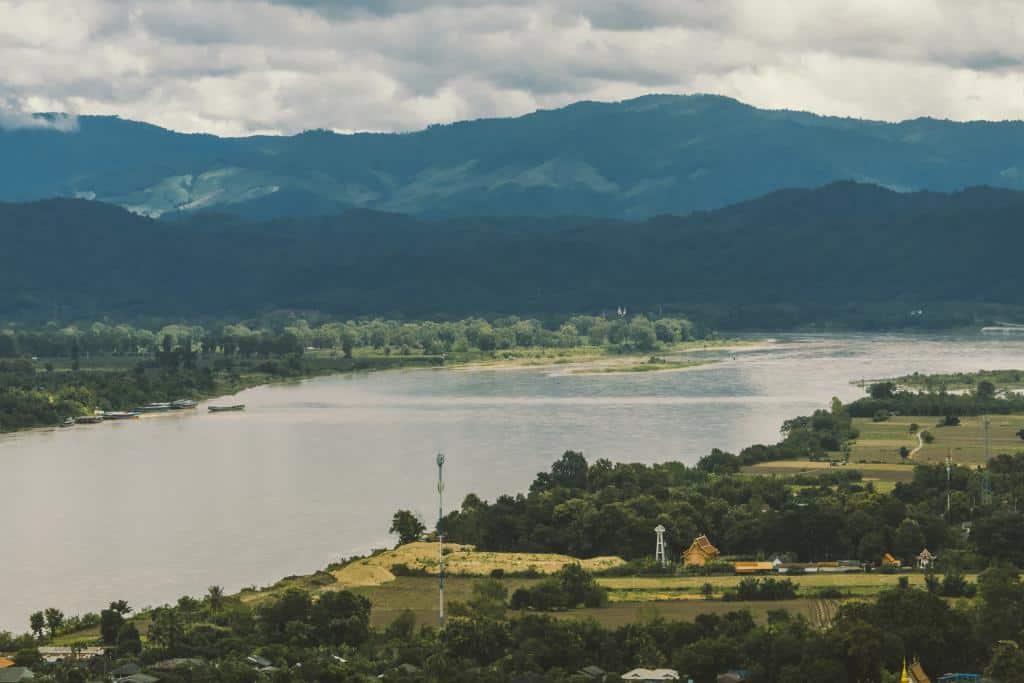
The Golden Triangle is located in Chiang Rai province around Sop Ruak, where Thailand meets Laos and Myanmar around the Mekong and Ruak rivers. The wider area has a complicated history connected to the opium trade and is now a major tourism region in northern Thailand.
Location: 932M+W6X, 370 ถนน ท่าแพ, Wiang, Chiang Saen District, Chiang Rai 57150, Thailand – MAP
What to See on a Chiang Rai Day Trip
A Chiang Rai day trip can cover a mix of temples, mountain landscapes, local markets, and the Mekong border region. Depending on the route you choose, you can include:
- Chiang Rai’s temples: Visit distinctive northern Thai temples such as Wat Rong Khun, Wat Rong Suea Ten, or Wat Phra Kaew.
- Golden Triangle viewpoint: Look across the Mekong and Ruak rivers toward the meeting point of Thailand, Laos, and Myanmar.
- Mekong River: Stop along the river for views of the surrounding border landscape and passing boats.
- Local markets: Browse northern Thai snacks, produce, handicrafts, and everyday goods.
- Border-area attractions: Explore the small towns and viewpoints around the Golden Triangle region.
- Doi Tung: Head into the mountains for cooler air, forest scenery, and attractions around Doi Tung, if your itinerary allows.
8. Mae Sa Valley
For a more relaxed countryside day, head north from Chiang Mai toward Mae Sa Valley.
The valley is home to several attractions, including the Queen Sirikit Botanic Garden and Mae Sa Waterfall, making it easy to build a flexible route with several stops.
Instead of following a rigid tour schedule, a private driver or your own transport gives you more flexibility to spend longer at the places you actually enjoy.
What Can You See at Queen Sirikit Botanic Garden
The Queen Sirikit Botanic Garden brings you into the greener side of Mae Sa Valley, with glasshouses, native plant collections, forest trails, and elevated walkways spread across the hillside. It feels less like a formal garden and more like a chance to wander through northern Thailand’s landscapes without committing to a serious hike.
Give yourself a couple of hours to explore rather than rushing through the main paths. The garden also makes an easy first stop before continuing along Mae Sa Valley to Mae Sa Waterfall, turning the two into a relaxed half-day or full-day outing.
Location: 100 หมู่ 9 Mae Raem, Mae Rim District, Chiang Mai 50180, Thailand – MAP
What Can You Do at Mae Sa Waterfall
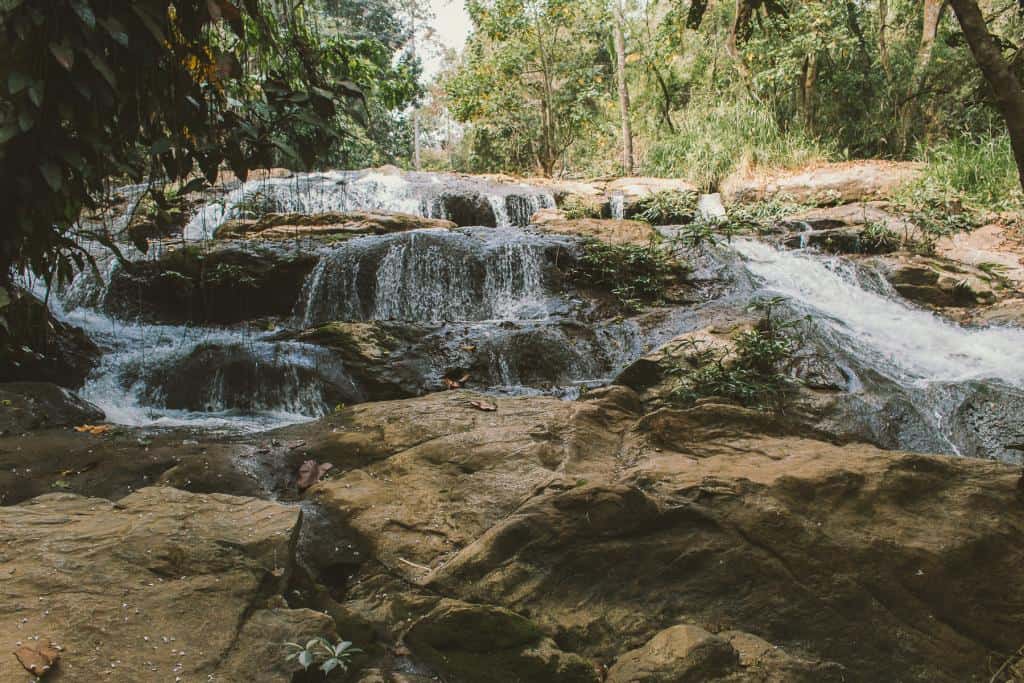
Mae Sa Waterfall winds through the forest of Mae Rim, with a series of cascading levels tucked into the hillside. It makes a natural second stop after the Queen Sirikit Botanic Garden, especially if you’d rather spend the afternoon outside than back in the car.
Bring time to walk between the levels and settle into the forest instead of treating the waterfall as a quick photo stop. Water flow changes throughout the year, and rocks can become slick after rain, so check local conditions before swimming and take care around the pools.
Location: Soi Namtok Mae Sa 4, Mae Raem, Mae Rim District, Chiang Mai 50180, Thailand – MAP
Local tip: Mae Sa Valley works better as a slow road trip than a checklist. Pick a couple of stops, have lunch locally, and leave room for the drive through the valley.
9. Visit the Grand Canyon
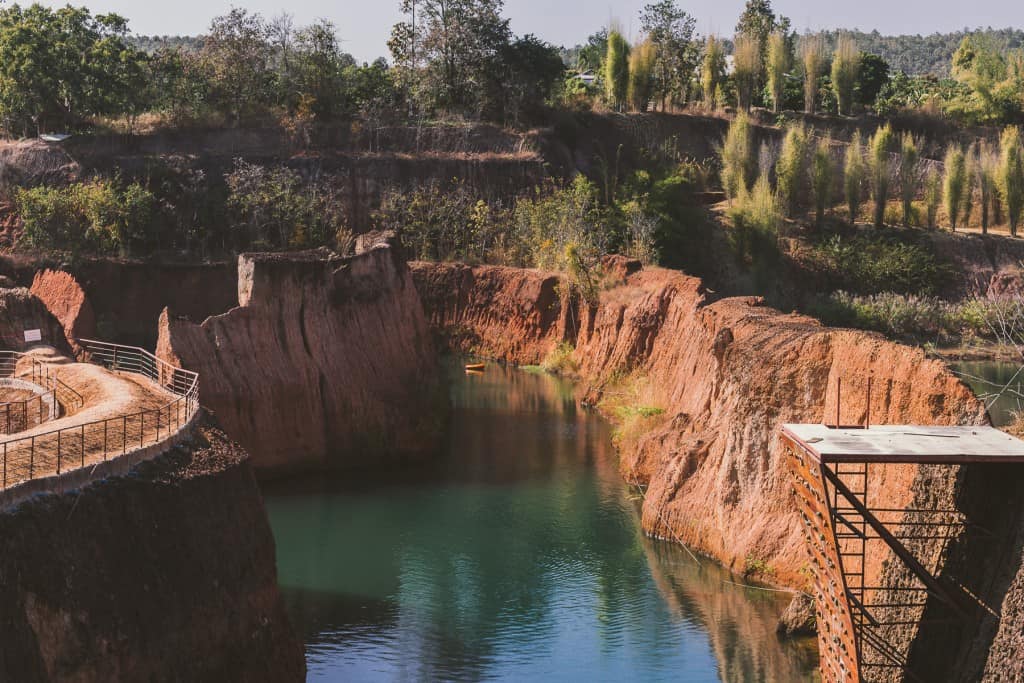
The Grand Canyon Chiang Mai in Hang Dong turns an old quarry into a sun-soaked escape south of the city. Its dramatic ochre cliffs drop into bright blue water, creating a setting that feels worlds away from Chiang Mai’s temples and mountain forests.
It’s built for a more active afternoon, with swimming and water-based activities alongside places to stretch out and take in the quarry views. If you’ve spent the morning sightseeing, this is the kind of stop where you can swap the itinerary for a few hours in the sun.
Is Grand Canyon Chiang Mai Worth Visiting
Grand Canyon Chiang Mai works well for a half-day escape when you want swimming, water activities, and a change of scenery without heading deep into the mountains. The former quarry has steep ochre-colored cliffs around the water, giving it a distinctly different feel from Chiang Mai’s forested waterfalls and mountain parks.
You can spend a few hours swimming, trying the available water activities, or simply relaxing around the quarry. It’s particularly easy to add to a day around Hang Dong, and the roughly 40-minute drive from central Chiang Mai makes it manageable without sacrificing an entire day.
If you’re after hiking, waterfalls, or cooler mountain scenery, Doi Inthanon or Mae Sa Valley will give you a more nature-focused day. Grand Canyon is better when you want something active, social, and close enough to the city for a shorter outing.
Traveler tip: Check the current entrance fee, opening hours, swimming rules, and available activities before heading to Grand Canyon Chiang Mai. Weather can also affect water conditions and activity access, so a quick check on the day can save you an unnecessary trip.
How to Plan Your Chiang Mai Day Trips
You don’t need to book a separate excursion for every day of your stay. Match each trip to the time and energy you have, and group stops that make sense along the same route.
- For a full mountain day: Choose Doi Inthanon for waterfalls, forest, and high-altitude scenery, or Chiang Dao for caves and limestone mountains.
- For a half-day adventure: Head to Bua Tong Sticky Waterfalls and spend a few hours climbing the mineral-coated cascades.
- For wildlife and conservation: Spend the day at Elephant Nature Park learning about rescued elephants and their care.
- For a slower afternoon: Escape to Huai Tueng Thao Lake for bamboo huts, local food, and mountain views.
- For gardens and waterfalls: Follow the Mae Sa Valley route and combine Queen Sirikit Botanic Garden with Mae Sa Waterfall.
- For a longer northern Thailand trip: Go to Chiang Rai and the Golden Triangle, but expect a long day on the road or consider staying overnight.
What Is the Best Time for Day Trips From Chiang Mai
The best time depends on where you’re going and what you plan to do. Mountain destinations can feel noticeably cooler than Chiang Mai, while waterfalls and forest trails change character with the seasons.
- Cooler months (November–February): Usually the most comfortable period for mountain drives, hiking, and outdoor sightseeing. Early mornings at higher elevations can feel surprisingly cold, so bring a light layer.
- Hot season (March–May): Start longer outdoor trips early and plan time in the shade or indoors during the hottest part of the day. Lower-elevation destinations can feel particularly warm by midday.
- Rainy season (June–October): Expect greener forests and fuller waterfalls, but allow extra travel time for wet roads and slippery trails. Heavy rain can also affect mountain routes and access to some attractions
Traveler tip: Check the weather for your actual destination before leaving, especially for Doi Inthanon, Chiang Dao, and other mountain areas where conditions can change quickly.
Make the Most of Your Chiang Mai Day Trips
Chiang Mai makes a convenient starting point for exploring northern Thailand beyond the city. From cool mountain forests and waterfalls to caves, rural roads, and the Mekong border region, each day trip offers a different side of the north.
Pick the route that matches your time, then leave a little room for the unexpected. A mountain road might lead you to a roadside coffee stop, a local lunch you didn’t plan for, or a viewpoint that makes you want to pull over. The big attractions are only part of the day. The fun starts when Chiang Mai fades into the rearview, and the road takes over.
FAQs: About Chiang Mai Day Trips
The best day trips from Chiang Mai include Doi Inthanon National Park, Bua Tong Sticky Waterfalls, Chiang Dao Cave, Elephant Nature Park, Mae Sa Valley, Huay Tung Tao Lake, and Chiang Rai.
Huay Tung Tao Lake is one of the easiest escapes because it is close to the city and does not require a full-day itinerary. Doi Suthep is another straightforward mountain excursion.
Yes. Doi Inthanon is worth the journey if you want mountains, waterfalls, high-altitude forest, and cooler temperatures. Plan a full day rather than trying to squeeze it into a few hours.
Yes, but it is a long day with several hours of travel each way. If you want to explore Chiang Rai beyond a few major sights, staying overnight is a better option.
Doi Inthanon is the strongest choice for a combination of mountains, waterfalls, forest, and high-altitude scenery. Chiang Dao and Mae Sa Valley are also good options for travelers who want to spend more time outdoors.
Pin Now. Read Later.