







Contents
TL;DR
- A social hostel differs from a standard budget stay by building shared spaces, structured events, and communal dining into the daily rhythm, and solo travelers should filter for room format, house rules, and location before booking.
- CODE in Edinburgh, YellowSquare in Rome, Generator in Paris and Barcelona, and Home Lisbon Hostel in Lisbon are highlighted throughout this guide as real-world examples of how the social hostel format plays out differently city to city, alongside other well-regarded options in each city, not as a ranked list of Europe’s best hostels.
- The same evaluation criteria that apply in Europe carry over to social hostel circuits in other regions, including Southeast Asia’s backpacker hostel scene.
What Makes a Hostel Social for Solo Travelers
Picture a solo traveler arriving after dark, backpack still on, standing in an unfamiliar lobby with no plan for dinner. In a standard budget stay, that’s where the night ends: a bunk, a locker, maybe a nod from a roommate. In a social hostel, it’s where the night starts. A social hostel is built around structure, not luck. Communal kitchens, scheduled dinners, coworking corners, and an in-house bar give guests repeated, low-pressure chances to talk to strangers over the course of a stay, rather than leaving that entirely to chance in a shared dorm. For a solo traveler, this design choice does more for the trip than any single amenity: it turns a night alone in a new city into an evening with company, without requiring anyone to make the first move in a crowded bar across town.

What Solo Travelers Should Look for in a Social Hostel
“Social” can mean anything from a lively common room to three people silently scrolling on a sofa. The hostels that get it right make meeting people feel natural, not scheduled or forced. Four things usually make the difference:
- Room format: Pod-style and capsule dorms trade some communal chatter for sleep privacy. Open dorms built around a connected bar favor spontaneous conversation over quiet.
- Structured programming: Look for a published schedule of communal dinners, walking tours, or bar nights rather than relying on whoever happens to be in the dorm that night.
- House rules and age range: Some properties set an age floor or ceiling for dorm bookings, which shapes who else is likely to be staying there. Always check this before booking if it affects your fit.
- Location relative to the transit hub versus the historic core: A property near a main station simplifies arrival and onward travel. A property inside the old town or city centre puts nightlife and sightseeing within walking distance, often at the cost of a longer trip from the train.
Where to Find a Pod-Style Social Hostel in Edinburgh
Pod-style social hostels in Edinburgh offer a useful middle ground for solo travellers: privacy when it’s time to sleep and communal spaces when you want company. In the Old Town, you can find this setup close to the Royal Mile, putting historic Edinburgh, cafés, pubs, and major sights within walking distance while still having a social base to return to.
CODE The Court
Set in Edinburgh’s former jail and courthouse on Parliament Square – just off the Royal Mile and a ten-minute walk from Waverley Station – CODE The Court offers solo travelers private pod-style beds within shared dorms. Guests can join free daily events like Old Town walking tours, local beer samplings, and Scottish Ceilidh introductions, or unwind in the new communal space featuring a co-working area, cinema room, kitchen, and quiet library. Simply retreat to your pod when you’re done socialising, then step right back into the Old Town the next morning.
Location: 1A Parliament Sqr, Edinburgh EH1 1RF, United Kingdom – MAP
Contact: +44 131 297 6170 | Website
CODE The Loft
CODE The Loft leans into a more laid-back social setup, with a communal kitchen and lounge where guests can cook, hang out, and meet people at their own pace. It works particularly well for solo travelers who prefer conversations to happen naturally rather than having every evening built around organized events.
Location: 50 Rose St N Ln, Edinburgh EH2 2NP, United Kingdom – MAP
Contact: +44 131 287 5878 | Website
Booking tip: Book direct with either property and use code MADMONKEY4CODE at checkout to get 10% off your stay — plus a £1 waffle.
Local Tip: Staying around Edinburgh’s Old Town means you can walk back from pubs, live music spots, and late-night stops around the Royal Mile and Grassmarket instead of planning transport across the city. A pod-style bed is especially useful here: close the curtain when you’re done socialising, then step straight back into the Old Town the next morning.
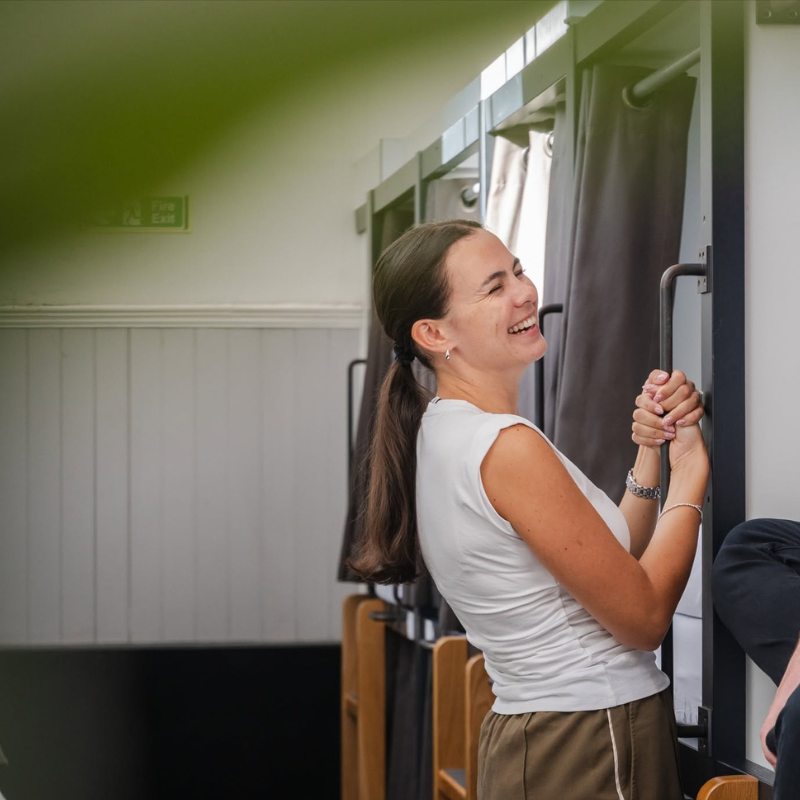
What a Social Hostel Near Rome’s Termini Station Looks Like
Social hostels around Roma Termini combine the convenience of Rome’s main transport hub with spaces designed to make meeting other travellers easier. Expect communal areas, bars, organised events, and easy connections to the historic centre, making the area a practical base for solo travellers who want both access and a built-in social scene.
YellowSquare
YellowSquare shows what a social hostel near Roma Termini can look like when the experience extends beyond the dorm. Set on Via Palestro, it builds much of its social pulse around Yellow Bar across the street, where live music and regular events give solo travellers a natural place to meet. Coworking spaces add another layer for longer stays, while dorm bookings are limited to guests aged 18 to 45.
Heading to Athens? You can get the exact same vibrant, social vibe at YellowSquare Athens—complete with its own rooftop bar overlooking the Acropolis.
Location: Via Palestro, 51, 00185 Roma RM, Italy – MAP
Contact: +39 06 446 3554 | Website
Book smart: Book direct and use code MADMONKEY4YELLOW at checkout to get 10% off your stay — plus a £1 waffle.
Ostello Bello Roma Colosseo
Ostello Bello Roma Colosseo sits in Monti, within walking distance of the Colosseum, with social spaces built naturally into the stay. A rooftop terrace, garden, and communal kitchen give solo travellers easy places to cross paths, share a meal, or make plans for exploring Rome together.
Location: Via Angelo Poliziano, 75, 00184 Roma RM, Italy – MAP
Contact: +39 327 191 6363 | Website
Backpacker Tip: Rome gets more interesting once the dinner rush starts. If you meet people at the hostel, head out for aperitivo before dinner rather than waiting for a late night out. It’s an easy way to turn a hostel introduction into an evening exploring the city together.
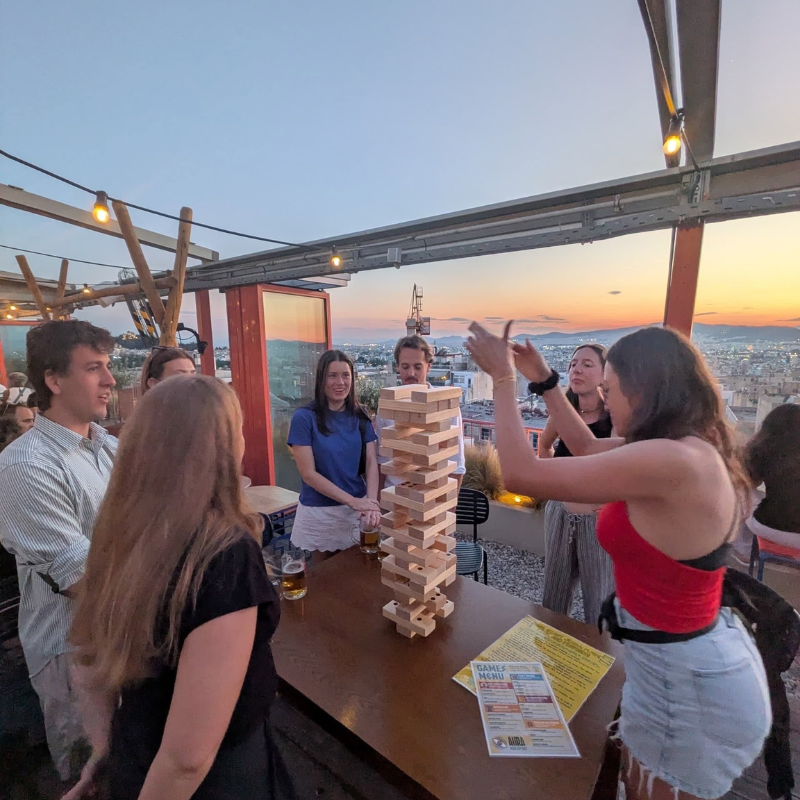
How Paris Built Its Social Hostel Scene
Paris built its social hostel scene by creating places that work as more than a base for sightseeing. Across neighbourhoods from Canal Saint-Martin to northeast Paris, hostels have added bars, rooftops, cafés, events, and communal spaces that bring travellers together throughout the day. For solo travellers, that means the social experience often starts at the hostel rather than waiting until they head out into the city.
Generator Paris
Generator Paris captures the shift that shaped the city’s modern social hostel scene. In the 10th arrondissement, near Canal Saint-Martin, the experience extends well beyond the dorms: Café Fabien sets the daytime rhythm, the basement club picks it up after dark, and the rooftop terrace opens onto views of Montmartre and Sacré-Cœur. It’s a format that makes socialising part of the stay, with different spaces giving travelers a reason to cross paths throughout the day.
Location: 9-11 Pl. du Colonel Fabien, 75010 Paris, France – MAP
Contact: +33 170 98 8400 | Website
St. Christopher’s Inn Paris
St Christopher’s Inn Paris takes Paris’s hostel scene beyond the city centre and onto the banks of Canal de l’Ourcq. The waterfront gives the stay a more local rhythm, with guests stepping out into a stretch of northeast Paris known for waterside walks, terraces, and summer evenings by the canal. Back at the hostel, Belushi’s bar adds a ready-made meeting point for food, drinks, and events, making the property as much about its neighbourhood as what happens inside.
Location: 5 Rue de Dunkerque, 75010 Paris, France – MAP
Contact: +33 170 08 52 22 | Website
Paris Social Tip: Don’t let the hostel become your whole social scene. If you meet people over breakfast or drinks, take the group to Canal Saint-Martin or Canal de l’Ourcq, where waterside walks, cafés, and evening hangouts offer a more local way to experience Paris together.
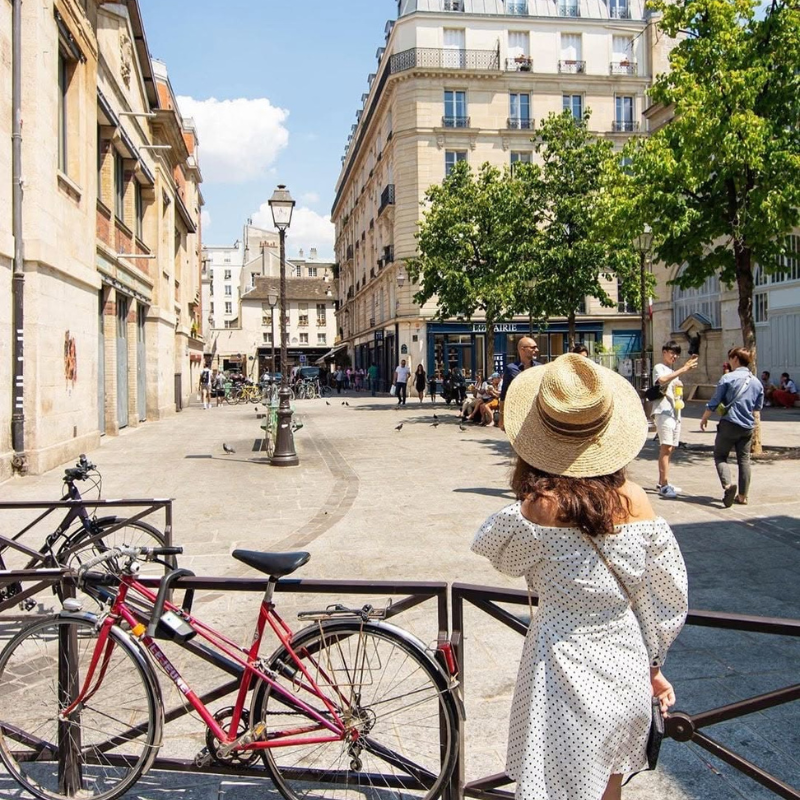
Where to Find Social Hostels in Barcelona
Barcelona’s social hostel scene spreads across several neighbourhoods, from the narrow streets around the Gothic Quarter to the residential blocks surrounding Sagrada Família. Where you stay can shape how you experience the city as much as the hostel itself.
Kabul Party Hostel
Kabul Party Hostel puts solo travellers directly on Plaça Reial, just off La Rambla in the Gothic Quarter. Its central location works well for solo travellers who want Barcelona’s bars, late-night spots, historic streets, and major sights within walking distance. At the same time, communal areas and organised activities make meeting other guests part of the stay.
Location: Pl. Reial, 17, Ciutat Vella, 08002 Barcelona, Spain – MAP
Contact: +34 933 18 51 90 | Website
Sant Jordi Hostels Sagrada Familia
Sant Jordi Hostels Sagrada Familia offers a social base away from the busiest streets of the Gothic Quarter. Close to the Sagrada Família and connected to the rest of Barcelona by metro, its skate-inspired interiors, shared spaces, and organised activities give solo travellers an easy starting point for meeting people before heading into the city.
Location: Carrer del Freser, 5, Sant Martí, 08026 Barcelona, Spain – MAP
Contact: +34 934 46 05 17 | Website
Barcelona Neighbourhood Tip: Choose your hostel area based on how you want to experience the city. The Gothic Quarter puts historic streets and late-night spots close to your door, while areas around Sagrada Família offer a more residential base with metro connections when you want to head into the centre.
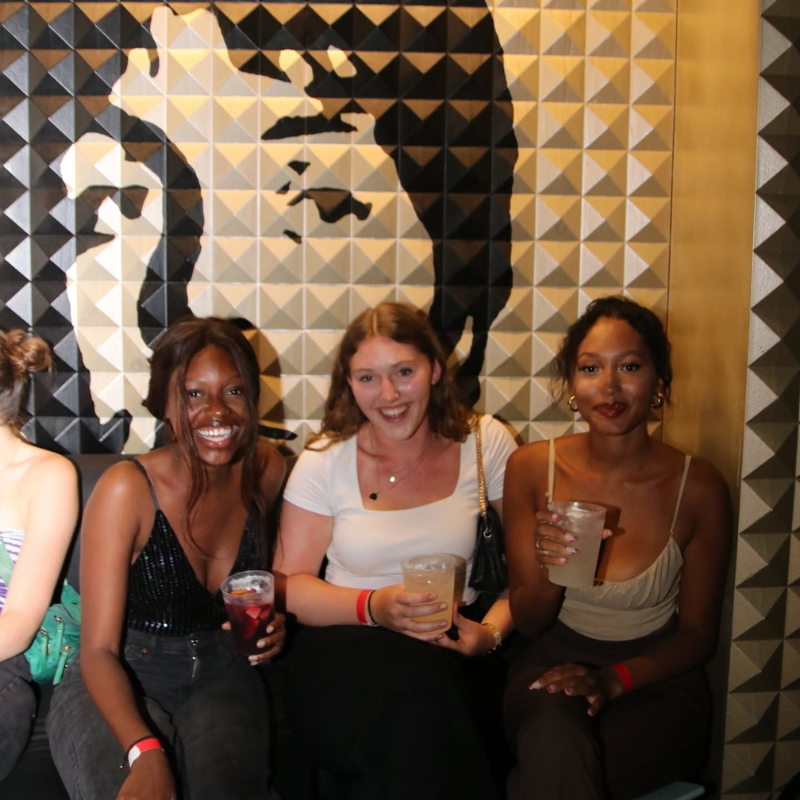
How Lisbon’s Social Hostels Bring Solo Travelers Together
Lisbon’s social hostels make meeting people part of the daily rhythm. Shared dinners, communal spaces, and organised activities give solo travelers natural reasons to cross paths, particularly around Baixa and the historic centre, where hostel life sits within walking distance of the city’s cafés, bars, viewpoints, and riverfront.
Home Lisbon Hostel
Home Lisbon Hostel has built much of its social identity around communal dinners. Guests gather over Portuguese home-style food at shared tables, creating an easy introduction for solo travelers who might otherwise be figuring out where to eat alone. From its Baixa location, Praça do Comércio, Chiado, and the Tagus riverfront are also close enough to explore on foot.
Location: R. de São Nicolau 13 2E, 1100-415 Lisboa, Portugal – MAP
Contact: +351 21 888 5312 | Website
Yes! Lisbon Hostel
Yes! Lisbon Hostel pairs a central Baixa location with communal spaces and organised activities that help solo travelers connect early in their stay. With Praça do Comércio and the Tagus riverfront nearby, meeting someone at the hostel can easily turn into a day exploring Lisbon or plans for the evening.
Location: R. de São Julião 148, 1100-527 Lisboa, Portugal – MAP
Contact: +351 21 342 7171 | Website
On-the-Ground Tip: Lisbon’s hills can make short distances on a map surprisingly steep. Between cobbled streets, stairways, and uphill routes through the historic centre, comfortable walking shoes are worth prioritising when exploring beyond the hostel.

How to Choose a Social Hostel as a Solo Traveler in Europe
Edinburgh, Rome, Paris, Barcelona, and Lisbon each approach the social hostel experience differently. Edinburgh balances pod-style privacy with shared spaces, Rome pairs central locations with built-in social hubs, and Paris spreads the experience across bars, rooftops, cafés, and communal areas. Barcelona’s social hostels tap into the character of different neighbourhoods, while Lisbon often brings solo travellers together through shared meals and group experiences. The best fit comes down to how you prefer to meet people, explore the city, and recharge between plans.
The hostels above may take different approaches, but the same signals can help you spot a genuinely social stay anywhere:
- Choose a room that matches your social battery. Pod-style beds give you somewhere to retreat when you need downtime, while open dorms put you closer to the everyday rhythm of hostel life.
- See where the social scene actually happens. A bar, café, rooftop, communal kitchen, or shared dinner can all bring people together, but check whether that space is inside the hostel, next door, or at a sister property.
- Read the house rules before booking. Age restrictions, quiet hours, curfews, and group policies can shape the crowd and atmosphere just as much as reviews.
- Think beyond the hostel address. Staying near a major station makes arrivals and day trips easier, while a base in a walkable neighbourhood can put cafés, nightlife, landmarks, and late-night food closer to your door.
- Look for reasons to actually meet people. A packed common room doesn’t automatically make a hostel social. Walking tours, communal dinners, games, group outings, and regular events give solo travelers an easier way into the conversation.
How Safe Are Social Hostels in Europe for Solo Travelers
Social hostels are designed to make meeting people easy, but shared spaces come with a few things worth keeping in mind. From the moment you check in, these simple habits can help you stay comfortable, keep your belongings secure, and enjoy the social side of hostel life with more confidence.
Lock Up Your Valuables
Use the hostel’s lockers or in-room safes for passports, cards, cash, and electronics, even if you’re only heading to the kitchen or another shared space. Bring your own padlock if the hostel does not provide one.
Book a Female-Only Dorm If You Prefer One
Many social hostels offer female-only dorms for travelers who feel more comfortable in that setup. Book one in advance rather than waiting until check-in, particularly during peak travel periods when these rooms can fill quickly.
Keep Backup Copies of Important Documents
Save digital copies of your passport or ID, travel insurance, and important booking details somewhere you can access without your wallet. Keeping a separate physical copy can also be useful if your phone or belongings go missing.

Start With Hostel-Organized Social Events
Walking tours, group dinners, pub crawls, and other hostel-organized activities can be an easier introduction to a new city when traveling alone. You’ll already have a meeting point and a group to head out with rather than navigating an unfamiliar area solo on your first night.
Check Recent Reviews for Staff Responsiveness
Look beyond ratings for cleanliness and atmosphere. Recent reviews mentioning helpful reception staff, secure access, and how problems were handled can tell you more about how the hostel operates when something actually goes wrong.
Arrival Tip: In Edinburgh and Rome, save your hostel’s full address and location offline before heading out. Having a screenshot or offline map means you can still find your way back if your connection drops or your phone struggles for signal around busy stations or older buildings.
How Much Social Hostels in Europe Cost
In 2026, hostel costs across the cities in this guide vary considerably by season, room type, and booking date. A dorm bed can generally fall between €25–€70+ (about $30–$82+ USD) per night, while private rooms can reach €80–€200+ (about $94–$235+ USD), particularly in higher-cost destinations.
| City | Typical Dorm Bed | Typical Private Room | General Price Level |
|---|---|---|---|
| Edinburgh | £25–£55+ ($34–$75+ USD) | £80–£180+ ($109–$245+ USD) | Mid to high |
| Rome | €30–€60+ ($35–$71+ USD) | €90–€180+ ($106–$212+ USD) | Mid to high |
| Paris | €35–€70+ ($41–$82+ USD) | €100–€200+ ($118–$235+ USD) | High |
| Barcelona | €30–€60+ ($35–$71+ USD) | €90–€180+ ($106–$212+ USD) | Mid to high |
| Lisbon | €25–€50+ ($30–$59+ USD) | €70–€150+ ($82–$177+ USD) | Mid |
These are planning ranges rather than fixed nightly rates. Prices can climb during summer, weekends, festivals, and major events, while larger dorms and off-peak dates are usually more affordable. Pod-style or smaller dorms may also carry a premium over a standard bunk.
For solo travelers, a dorm will almost always be the cheaper option. If two people are traveling together, compare the combined price of two dorm beds with a private hostel room and nearby budget hotels. The difference can sometimes be smaller than expected.
Always check the hostel’s direct booking site or a major booking platform for your exact travel dates before setting your final accommodation budget.
When Is the Best Time to Stay in a Social Hostel in Europe
The best time depends on what you want from the trip. Summer brings bigger crowds, longer days, and busier hostel calendars, but usually at higher prices. Spring and early fall often offer a better balance of social energy, comfortable weather, and availability.
Edinburgh: May to June or September
Edinburgh reaches its busiest point in August during the Edinburgh Festival Fringe, when the Royal Mile fills with performers and accommodation demand surges. Stay in May, June, or September for milder weather and a lively city without the intensity of festival season. If the Fringe is the reason you’re going, book your hostel well ahead.
Rome: April to June or September to October
April to June and September to October give Rome a more comfortable rhythm, especially when your days involve hours of walking between neighbourhoods and historic sites. By July and August, temperatures regularly push past 30°C and the busiest attractions draw heavier crowds, making early mornings and slower afternoons almost essential.

Paris: April to June or September to October
Paris feels more open in late spring and early autumn, when days are still long enough to explore and evenings naturally spill onto terraces and canal banks. For solo travellers, that means more of the city’s social life happens outdoors, from Canal Saint-Martin to the neighbourhood cafés surrounding the hostel.
Barcelona: May to June or September
Late spring and September balance beach weather with slightly fewer visitors than July and August. Hostel social calendars remain active, and evenings are warm enough for plazas, terraces, and exploring different neighbourhoods after dark.
Lisbon: April to June or September to October
April to June and September to October bring Lisbon into its best outdoor rhythm, with warm days for exploring and evenings that stretch across terraces, miradouros, and the riverfront. July and August turn up both the heat and visitor numbers, making the city’s steep streets noticeably harder work during the middle of the day.
Finding the Right Social Hostel for Your Europe Trip
Europe’s social hostels come in different forms, from pod-style stays at CODE in Edinburgh and lively nights around YellowSquare’s social spaces in Rome. For solo travelers, the best fit is one that makes meeting people easy while still giving you space to explore and recharge.
It’s an approach shared across the wider backpacking circuit, including Mad Monkey in Southeast Asia: create the setting for people to connect, then let the experience unfold naturally.
FAQs Social Hostels in Europe
Reputable social hostels generally offer female-only dorms, secure lockers, and staffed reception. CODE The Court in Edinburgh and YellowSquare in Rome are two options for solo female travelers looking for a social stay with the choice of female-only accommodation. Wherever you book, check recent reviews for cleanliness, security, and staff responsiveness before confirming your stay.
Some do. YellowSquare in Rome restricts dormitory bookings to guests aged 18 to 45. CODE in Edinburgh requires guests to be 18 or older but does not publish an upper age limit. Always check a property’s house rules page before booking if age range affects your decision.
A party hostel is built primarily around nightlife, drink specials, and late-night dance floors. A social hostel is built around structured connections throughout the day, communal kitchens, coworking space, group meals, and daytime activities alongside an evening scene. The two overlap but are not the same product.
Yes. Solo travelers make up a significant share of hostel guests in most major European cities, and social hostels in particular are designed around that reality, with communal spaces and scheduled events built to help a guest arriving alone meet people within the first evening.
Communal dinners, hostel-run pub crawls or walking tours, and shared kitchen or lounge spaces are the most reliable starting points. Arriving in time for a scheduled event, rather than a quiet late check-in, gives a solo traveler the best chance to meet other guests on the first night.
A padlock for lockers, a portable charger, flip-flops for shared showers, and a lightweight daypack for day trips cover most of what a standard hostel dorm doesn’t provide. Earplugs and an eye mask are worth packing for any shared room, social or otherwise.
Pin Now. Read Later.


