

Travel tips for while you’re backpacking Southeast Asia and Australia, or some travel inspiration if you’re sat at a desk wishing you were here. Written by backpackers living or traveling around this side of the world. We’ve got travel advice for Australia, Cambodia, Indonesia, Laos, Philippines, Thailand, and Vietnam.

TL;DR The Pai Canyon scooter loop is best treated as a relaxed afternoon ride rather than a race between attractions. Start in Pai and head south toward the WWII Memorial Bridge, Pai Land Split, Pam Bok Waterfall, and Boon Ko Ku So Bamboo Bridge before finishing at Pai Canyon for sunset. Allow around four to five hours with stops, bring roughly ฿300–500 ($9–15 USD) per person for a scooter, fuel, and basic attraction fees, and use a 125cc automatic if you’re comfortable riding. The main road is paved, but the smaller roads around Pam Bok can be rougher, while Pai Canyon’s exposed sandstone ridges need extra care. How Long Does the Pai Canyon Scooter Loop Take? Plan for four to five hours with stops. The riding itself does not take long, but this route works best when you leave room for the Land Split, waterfall, bamboo bridge, and a proper walk around Pai Canyon. Pai Canyon is about 8 km (5 miles) south of Pai town on Route 1095. The exact total distance for the loop depends on where you start and how much time you spend exploring the smaller roads around the attractions. Tip: If you only have one afternoon, give yourself the most time at Boon Ko Ku So Bamboo Bridge and Pai Canyon. The WWII Memorial Bridge works as a quick stop, while the Land Split is easy to shorten if you’re running behind. What Stops Are on the Pai Canyon Scooter Loop? If you’re leaving Pai in the afternoon, this is a good order to follow: Pai → WWII Memorial Bridge → Pam Bok Waterfall → Boon Ko Ku So Bamboo Bridge → Pai Canyon → Pai The first few stops are easy to fit in along the way, while Pai Canyon is the main event at the end of the ride. Aim to get there before sunset so you have time to walk the trails and find a good viewpoint. WWII Memorial Bridge The WWII Memorial Bridge crosses the Pai River south of town. The original bridge was built during World War II, while the steel structure standing here today dates from 1976. It is a quick historical stop rather than somewhere you need to spend an hour. Pull over, take a quick look at the bridge and Pai River, then continue south on Route 1095. Mad Monkey Pai Tip: This is a quick stop, so five to ten minutes is enough for most riders. Take longer if you want to learn more about the bridge’s history, then continue south. Pam Bok Waterfall Pam Bok Waterfall sits inside a narrow rocky gorge, with a short walk from the parking area to the falls. The surrounding cliffs provide some shade, which makes it a useful break during a hot afternoon. Water levels depend on the season, so the waterfall can look quite different throughout the year. The rocks around the water can also be slippery, especially after rain. The entrance fee is around ฿200 ($6 USD) per person based on current 2026 reports. Fees have changed over time, so bring some extra cash and check the current rate locally when you arrive Mad Monkey Tip: If there’s plenty of water, take some time to cool off here. If the falls are running low, have a quick look and keep moving toward Boon Ko Ku So Bamboo Bridge so you have more time for the later stops. Boon Ko Ku So Bamboo Bridge From Pam Bok, get back on the scooter and continue toward Boon Ko Ku So Bamboo Bridge. It’s one of the bigger stops on…

TL;DR A social hostel differs from a standard budget stay by building shared spaces, structured events, and communal dining into the daily rhythm, and solo travelers should filter for room format, house rules, and location before booking. CODE in Edinburgh, YellowSquare in Rome, Generator in Paris and Barcelona, and Home Lisbon Hostel in Lisbon are highlighted throughout this guide as real-world examples of how the social hostel format plays out differently city to city, alongside other well-regarded options in each city, not as a ranked list of Europe’s best hostels. The same evaluation criteria that apply in Europe carry over to social hostel circuits in other regions, including Southeast Asia’s backpacker hostel scene. What Makes a Hostel Social for Solo Travelers Picture a solo traveler arriving after dark, backpack still on, standing in an unfamiliar lobby with no plan for dinner. In a standard budget stay, that’s where the night ends: a bunk, a locker, maybe a nod from a roommate. In a social hostel, it’s where the night starts. A social hostel is built around structure, not luck. Communal kitchens, scheduled dinners, coworking corners, and an in-house bar give guests repeated, low-pressure chances to talk to strangers over the course of a stay, rather than leaving that entirely to chance in a shared dorm. For a solo traveler, this design choice does more for the trip than any single amenity: it turns a night alone in a new city into an evening with company, without requiring anyone to make the first move in a crowded bar across town. What Solo Travelers Should Look for in a Social Hostel “Social” can mean anything from a lively common room to three people silently scrolling on a sofa. The hostels that get it right make meeting people feel natural, not scheduled or forced. Four things usually make the difference: Where to Find a Pod-Style Social Hostel in Edinburgh Pod-style social hostels in Edinburgh offer a useful middle ground for solo travellers: privacy when it’s time to sleep and communal spaces when you want company. In the Old Town, you can find this setup close to the Royal Mile, putting historic Edinburgh, cafés, pubs, and major sights within walking distance while still having a social base to return to. CODE The Court Close the curtain on a pod at CODE The Court at midnight, and the sound drifting up from outside isn’t a stranger’s snoring; it’s the low hum of Edinburgh’s Old Town settling in for the night. Set on Parliament Square, just off the Royal Mile and around a ten-minute walk from Edinburgh Waverley Station, CODE The Court uses a pod-bed format that gives solo travelers a curtained, private sleeping space within a shared dorm. Location: 1A Parliament Sqr, Edinburgh EH1 1RF, United Kingdom – MAPContact: +44 131 297 6170 | Website CODE The Loft CODE The Loft leans into a more laid-back social setup, with a communal kitchen and lounge where guests can cook, hang out, and meet people at their own pace. It works particularly well for solo travelers who prefer conversations to happen naturally rather than having every evening built around organized events. Location: 50 Rose St N Ln, Edinburgh EH2 2NP, United Kingdom – MAPContact: +44 131 287 5878 | Website Local Tip: Staying around Edinburgh’s Old Town means you can walk back from pubs, live music spots, and late-night stops around the Royal Mile and Grassmarket instead of planning transport across the city. A pod-style bed is especially useful here: close the curtain when you’re done socialising, then step straight back into the Old Town the next…



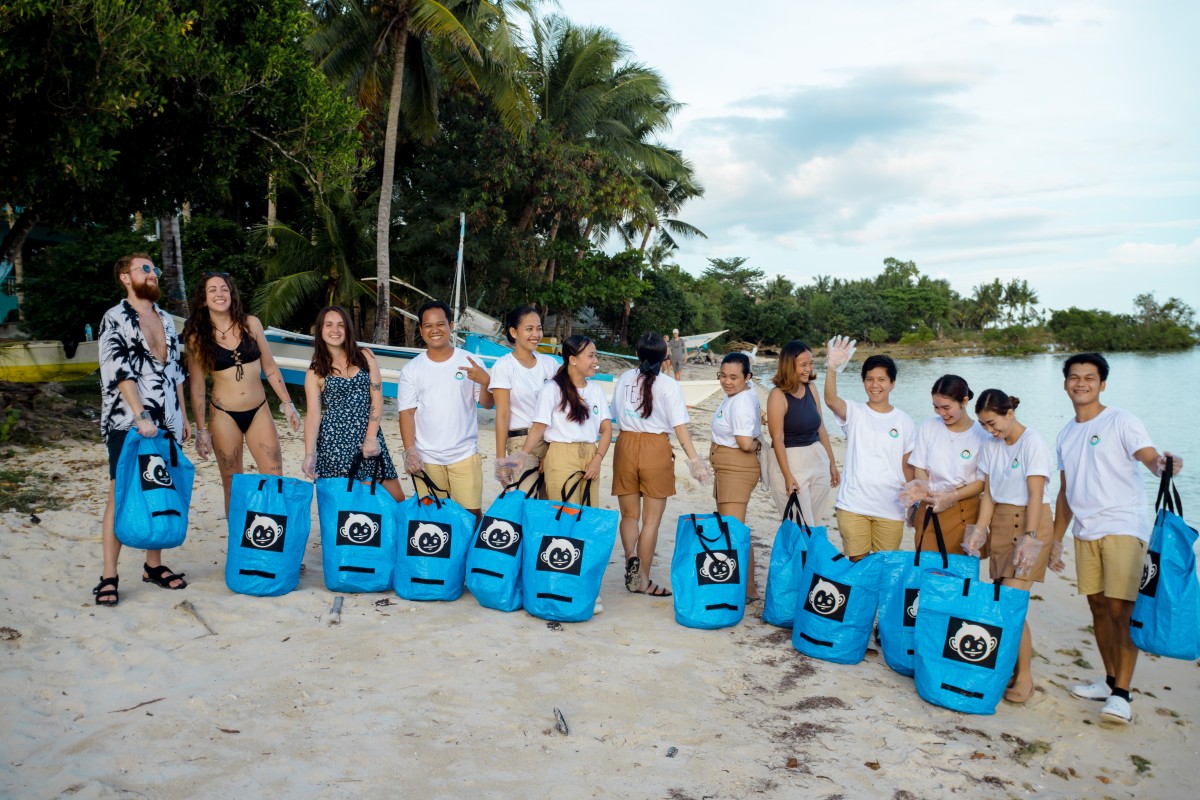
FOR IMMEDIATE RELEASE Mad Monkey Hostels, a leader in social and sustainable youth accommodation across Southeast Asia and Australia, has partnered with KrapMaps. KrapMaps is an innovative crowdsourced platform for waste management. This collaboration begins with pilot programs in two key destinations: Uluwatu, Indonesia, and Chiang Mai, Thailand. This initiative tackles a critical issue: waste management in popular tourist areas. It empowers travelers with a practical, community-driven solution. The KrapMaps app helps users find and map public waste disposal points, including recycling facilities. This promotes responsible waste practices and helps create cleaner local environments. “At Mad Monkey, our commitment goes beyond great social experiences. We also foster positive community and environmental impact,” stated Lexie Hadley, Head of Marketing at Mad Monkey. “Our partnership with KrapMaps aligns perfectly with our values. It turns environmental responsibility from a passive idea into an active, engaging experience for our guests. This directly helps preserve the vibrant places where we operate. Ultimately, our community becomes part of the solution, ensuring these cherished locations remain sustainable long-term.” Strategic Imperative: Empowering Responsible Travel Tourism brings economic benefits, but it often creates significant waste challenges. KrapMaps offers a scalable, tech-driven solution. It uses collective action. By gamifying the process of finding waste disposal locations, the platform encourages active participation from backpackers. This turns a common frustration into a constructive contribution. Pilot Program: Uluwatu, Indonesia and Chiang Mai, Thailand The pilot programs are currently operational at Mad Monkey Uluwatu and Mad Monkey Chiang Mai. Guests are actively encouraged to download the KrapMaps application and contribute to the mapping efforts within their local surroundings. This engagement is incentivized through a gamified system where top contributors at Mad Monkey properties can earn exclusive rewards, including complimentary stays and recognition on the global KrapMaps leaderboard. “We are immensely pleased to collaborate with Mad Monkey, a brand that deeply understands and champions community engagement,” commented Harley Treagust, Founder & CEO at KrapMaps. “Our shared vision is to cultivate a global network of environmentally conscious travelers who are proactive in preserving the beauty of their visited destinations. Launching this initiative in Uluwatu and Chiang Mai with Mad Monkey provides an ideal foundation for broader adoption and impact.” About Mad Monkey Hostels Mad Monkey is a leading hostel operator in Southeast Asia, known for experience-driven stays that blend affordable accommodation with community, adventure, and unforgettable social energy. With locations across Cambodia, Vietnam, the Philippines, Thailand, Indonesia, Laos, and Australia, Mad Monkey is more than a place to stay – it’s a place to belong. About KrapMaps KrapMaps is a pioneering sustainable travel application developed by and for backpackers. As the world’s first crowdsourced platform for locating waste disposal points, KrapMaps leverages gamification and community participation to empower travelers in reducing their environmental footprint and promoting cleaner travel habits.
TL;DR: Book your first few nights, choose three or four things you genuinely do not want to miss, and leave the rest flexible. Stay somewhere social, download the transport apps used locally, protect your sleep and budget, and never let hostel FOMO make decisions about scooters or safety. What Are the Most Common Solo Travel Mistakes in Southeast Asia? The biggest solo travel mistakes are overplanning, choosing the wrong hostel, arriving without local transport apps, saying yes to every plan, chasing the lowest possible budget, riding scooters without proper cover, staying inside the backpacker bubble, and trusting every dorm-room opinion as fact. You do not need a flawless trip. You need enough structure to stay safe and enough space for the good stuff to find you. 1. Are You Planning Too Much Before Your Solo Trip? The most common mistake Arno sees is travellers locking in every destination before they know what they actually enjoy. “Arrive with a direction, not a schedule.” — Arno, WorldlyRoaming Plan the bones of the trip: Book more around major festivals, public holidays, limited permits, or flights you cannot miss. Leave ordinary stops flexible when availability allows. “If you love somewhere, stay longer. Move on when your curiosity about the next place becomes stronger than your desire to stay where you are.” — Arno, WorldlyRoaming Vietnam shows why this works. You might sketch a route from Hanoi to Ninh Binh, Hoi An, or Da Nang, then Ho Chi Minh City. You might also reach Hanoi, meet three people heading to Ha Giang, and change the plan over breakfast. WorldlyRoaming’s guide to the best things to do in Vietnam helps you compare the options without turning the country into a checklist. Local insight: A short line on the map can still mean a mountain road, a ferry, a border queue, or an overnight bus that drops you somewhere dark before the coffee shops open. 2. Are You Booking the Cheapest Hostel Instead of the Right One? The cheapest bed is not always the best deal. If your hostel is far from everything, you may spend the difference on rides—and spend three nights scrolling from your bunk because the common room feels like an airport gate. For a first solo stop, look for: Where Should Solo Travellers Stay in Hanoi? Hanoi’s Old Quarter works well for first-time visitors because Hoan Kiem Lake, street food, cafés, markets, and nightlife sit within a compact area. The trade-off is noise, scooters, and pavements that often double as kitchens and parking bays. WorldlyRoaming’s updated guide to things to do in Hanoi names Mad Monkey Hanoi as its favourite budget stay in the city, especially for solo travellers and backpackers. Located at 9–11 P. Mã Mây in the Old Quarter, the hostel has shared dorms, a restaurant, a sports bar, nightly social events, and quiet hours from midnight to 7 AM You can follow the smell of grilled pork into a side street, get caught in the flow around Hoan Kiem Lake, then return to a communal base where people are already comparing tomorrow’s plans. 3. Which Transport Apps Should You Download Before Arriving? Sort out the ride-hailing app used at your destination before you land. Airports, stations, and bus terminals are where tired new arrivals are easiest to overcharge or misdirect. Arno uses Grab or Bolt in Thailand, PassApp in Cambodia, Gojek in Indonesia, and Grab in Vietnam. Coverage changes by city, so check before relying on one app. Grab lists service currently across eight Southeast Asian countries, while Bolt confirms rides in Bangkok, PassApp covers major Cambodian cities, and Gojek…