






Contents
TL;DR
- Mad Monkey operates properties across Thailand, Laos, Vietnam, Cambodia, the Philippines, and Indonesia, which means a single backpacking itinerary can move between hostels within a familiar network instead of researching a new place to stay at every stop.
- A popular route starts in Bangkok, continues through Vang Vieng and Luang Prabang, then heads to Hanoi and Hoi An, Phnom Penh, Siem Reap, Koh Rong or Koh Sdach, Manila, Dumaguete, and finishes in Gili Trawangan, Kuta Lombok, and Uluwatu.
- Most journeys are connected by overnight buses, ferries, or short regional flights, and Mad Monkey front desk teams can often help arrange transport to your next destination.

How the Mad Monkey Network Connects Across Six Countries
Mad Monkey operates 21 hostels across Thailand, Laos, Vietnam, Cambodia, the Philippines, and Indonesia. Because the properties cluster along the same overland corridors and island-hopping routes that budget travelers already use, a guest can plan a multi-country trip using Mad Monkey as the fixed point in each city rather than researching a new hostel at every stop.
Local Insight: Mad Monkey front desk teams often recommend booking your next bus or ferry as soon as you arrive during peak travel months, especially for island routes where daily departures are limited.
What the Complete Mad Monkey Route Looks Like
| Country | Mad Monkey Destinations | Typical Transport |
|---|---|---|
| Thailand | Bangkok, Chiang Mai, Pai, Phuket | Flight, Bus, Train |
| Laos | Vang Vieng, Luang Prabang | Flight, Bus, Train |
| Vietnam | Hanoi, Hoi An | Flight, Train, Bus |
| Cambodia | Phnom Penh, Siem Reap, Koh Rong | Flight, Bus, Ferry |
| Philippines | Manila, Dumaguete, Siquijor, Siargao, Panglao, Nacpan Beach | Flight, Ferry, Bus |
| Indonesia | Gili Trawangan, Kuta Lombok, Uluwatu, Nusa Lembongan | Flight, Ferry, Shuttle |
Start Your Backpacking in Thailand
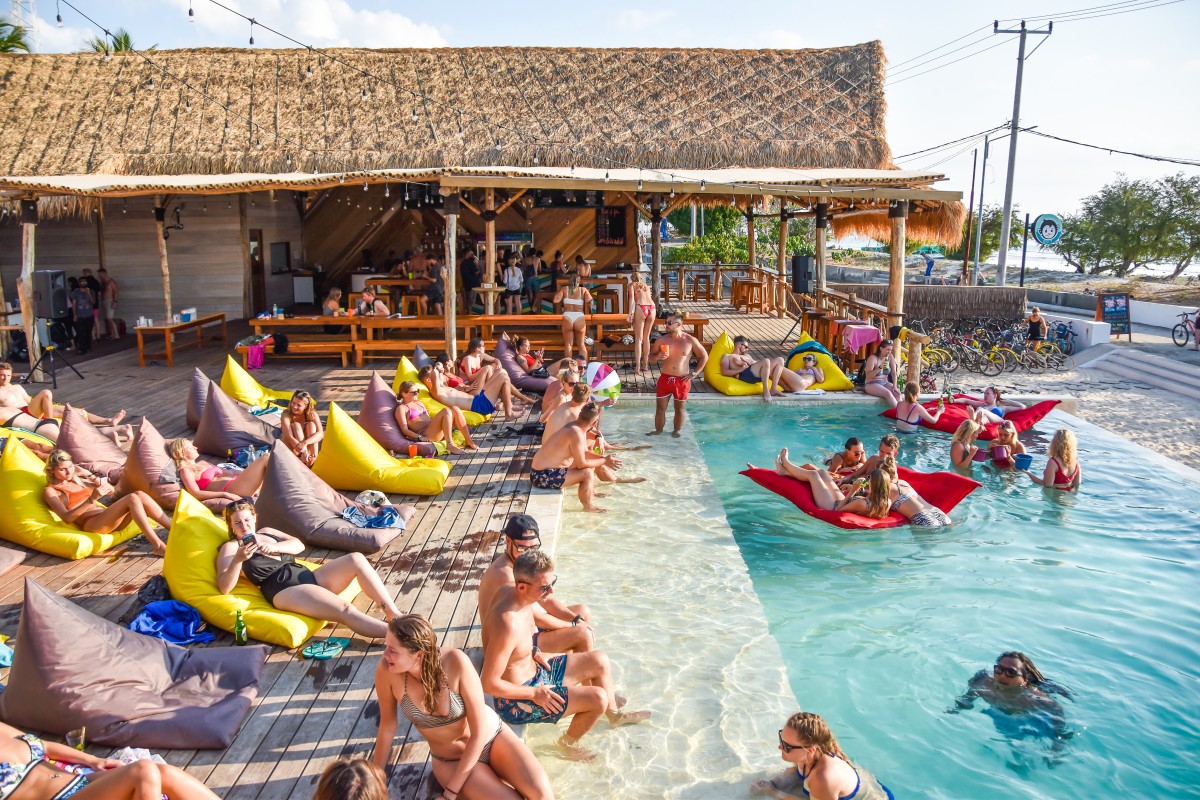
Thailand is where most backpackers begin the Mad Monkey Trail. With hostels in Bangkok, Chiang Mai, Pai, and Phuket, it’s easy to experience the country’s cities, mountains, and islands before continuing into Laos.
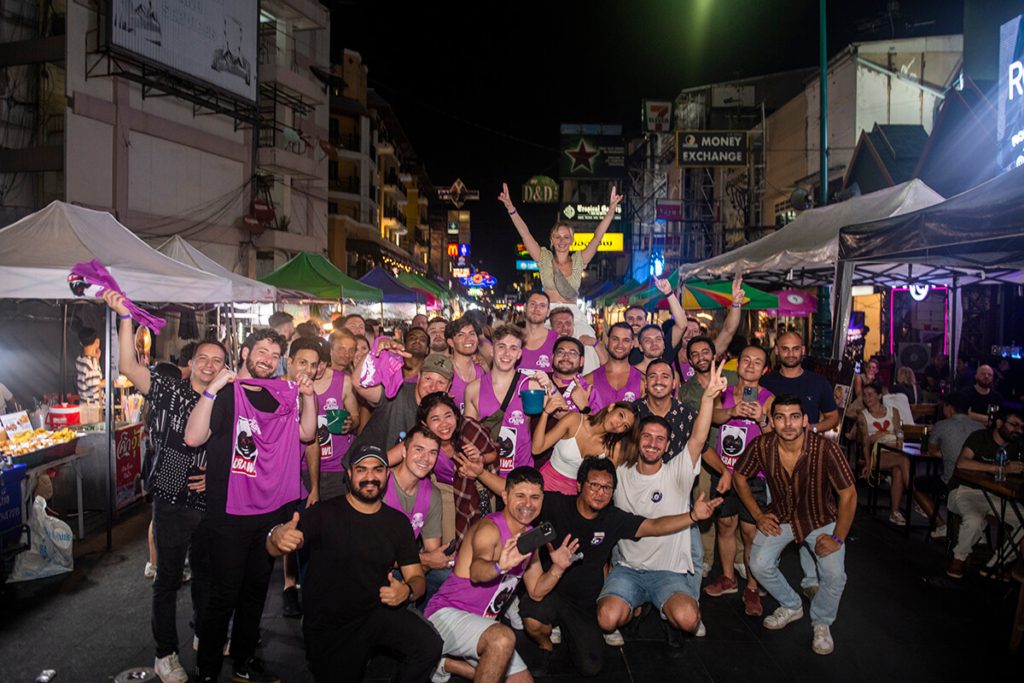
Mad Monkey Bangkok, just a short walk from Khao San Road in the historic Banglamphu district, is the perfect introduction to Thailand. Spend a few days exploring Bangkok’s temples, street food, markets, and nightlife before making your way north to Mad Monkey Chiang Mai. From Bangkok, the quickest way to reach Mad Monkey Chiang Mai is by a 1-hour 15-minute flight, with fares typically ranging from ฿900 to ฿2,500 ($25-70 USD). If you’d rather travel overland, overnight sleeper trains take 10 to 13 hours and cost around ฿800 to ฿1,600 ($22-45 USD), while long-distance buses offer another budget-friendly alternative.
From Mad Monkey Chiang Mai, shared minivans make the 3- to 4-hour journey to Mad Monkey Pai, with tickets typically costing ฿150 to ฿250 ($4-7 USD). Travelers confident on two wheels often rent a scooter or motorbike instead, turning the winding Route 1095 into one of northern Thailand’s most memorable road trips. Once in Pai, the pace slows dramatically, with hot springs, waterfalls, Pai Canyon, and mountain viewpoints replacing the bustle of the city.
For a completely different side of Thailand, head south to Mad Monkey Phuket. The quickest route from northern Thailand is to return to Chiang Mai and catch a 2-hour flight to Phuket, with fares typically ranging from ฿1,500 to ฿3,500 ($42-98 USD). Once there, you’ll have easy access to island-hopping tours around Phi Phi Islands and Phang Nga Bay, nearby beaches, and the colorful streets of Old Phuket Town before continuing the Mad Monkey Trail into Laos.
Local Insight: Many backpackers spend two to three weeks exploring Thailand before crossing into Laos, making this one of the most popular opening legs for a longer Southeast Asia itinerary.
How to Travel from Thailand to Laos
Crossing into Laos feels like a reset. After Thailand’s busy cities and island-hopping, the pace slows, the roads get quieter, and the landscapes become the highlight of the journey.
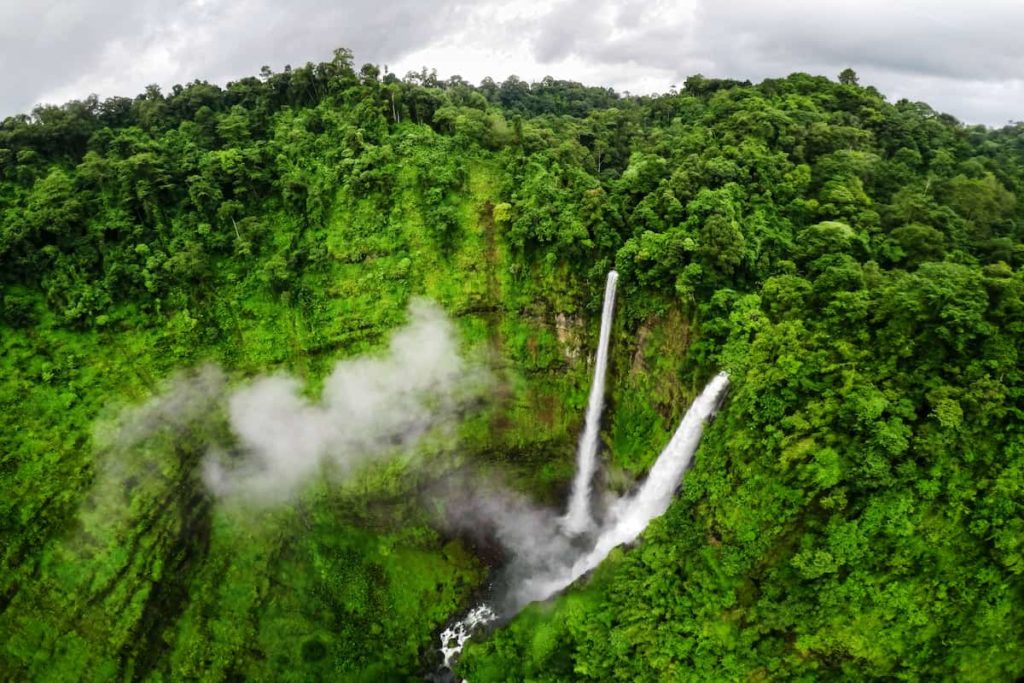
Backpackers enter Laos through Huay Xai before making their way to Luang Prabang or Vang Vieng. If you have time, the two-day Mekong slow boat from Huay Xai to Luang Prabang is one of Southeast Asia’s classic backpacking experiences, drifting past remote villages and jungle-covered hills. Travelers looking for a faster option can fly directly from Bangkok to Luang Prabang or take the Lao-China Railway between the country’s major destinations.
Mad Monkey Luang Prabang introduces a slower side of the Mad Monkey Trail. Set within a UNESCO World Heritage city, it’s the perfect base for experiencing centuries-old temples, French colonial architecture, riverside cafés, the traditional morning alms ceremony, and the turquoise pools of Kuang Si Falls just outside the city.
From Mad Monkey Luang Prabang, the Lao-China Railway makes reaching Mad Monkey Vang Vieng quick and easy, where limestone cliffs rise above the Nam Song River. High-speed trains complete the journey in around 1 hour, with tickets typically costing 120,000 to 250,000 LAK ($6-13 USD). Once you arrive, towering limestone cliffs rise above the Nam Song River, creating the backdrop for kayaking, tubing, exploring the Blue Lagoons, hiking to panoramic viewpoints, or simply watching the sunset over the mountains with other travelers.
The new Lao-China Railway makes getting between the two hostels surprisingly easy. Trains take around one hour, with tickets typically costing 120,000 to 250,000 LAK (about $6-13 USD), making Laos one of the easiest countries to explore on the Mad Monkey Trail.
Continue the Mad Monkey Trail in Vietnam
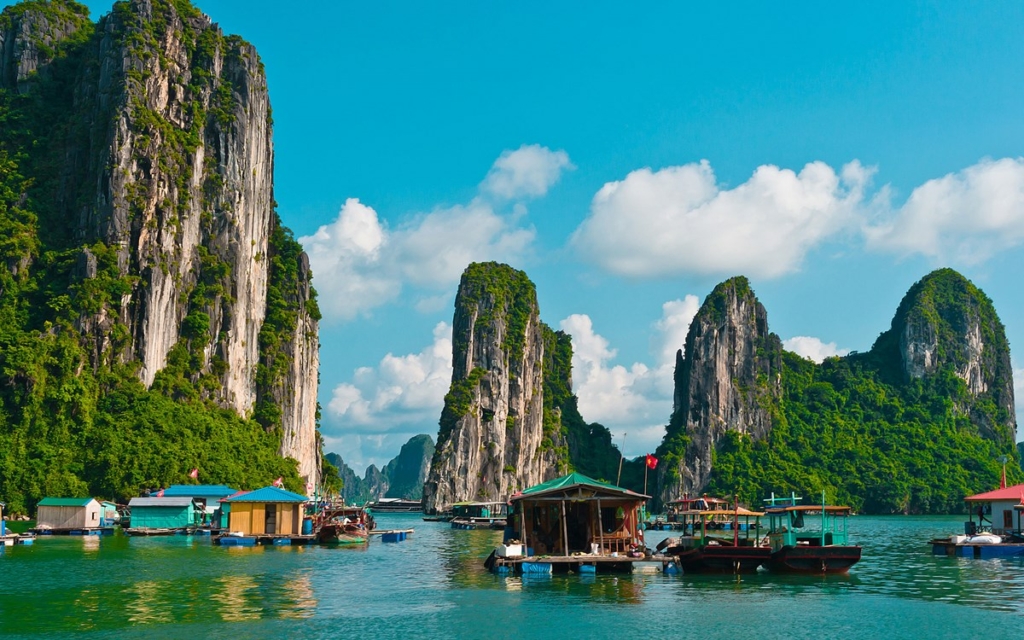
Leaving the laid-back pace of Laos behind, the Mad Monkey Trail continues into Vietnam, where bustling cities, world-famous street food, and centuries of history create a completely different travel experience.
Experience Hanoi’s Old Quarter
Hanoi sets the tone for Vietnam. The city’s nonstop energy, incredible food scene, and layers of history make it an unforgettable stop on the Mad Monkey Trail. Mad Monkey Hanoi, located in the Old Quarter, puts the capital’s best street food, cultural landmarks, and nightlife within easy reach.
Explore Hoi An’s Ancient Town
Several hundred kilometers south, Mad Monkey Hoi An offers a completely different experience. The fastest way to get there is by taking a 1 hour 20 minute flight from Hanoi to Da Nang, with fares typically ranging from ₫900,000 to ₫2,200,000 ($35-85 USD), followed by a 45-minute shuttle or taxi ride to Hoi An. If you have more time, the overnight train to Da Nang is a classic backpacking journey, taking 15 to 17 hours and costing around ₫700,000 to ₫1,300,000 ($27-50 USD). Once you arrive, days are spent cycling through rice paddies, browsing family-run tailor shops, relaxing at An Bang Beach, and watching colorful lanterns illuminate the UNESCO-listed Ancient Town after dark.
How to Backpack Cambodia with the Mad Monkey Trail
Cambodia offers more than one way to experience the Mad Monkey Trail. Historic cities, ancient temples, and tropical islands all sit within easy reach, making it one of the most varied chapters of the journey.
Explore Phnom Penh
Mad Monkey Phnom Penh puts you in the capital’s BKK1 district, close to the Royal Palace, the Independence Monument, and the Riverside. It’s also where the Mad Monkey story began in 2011, making it a fitting place to experience Cambodia’s energetic café culture, nightlife, and complex history.
Visit Angkor Wat from Siem Reap
North of the capital, Mad Monkey Siem Reap serves as the gateway to Angkor Wat, where sunrise over the temple complex remains one of Southeast Asia’s defining travel experiences. Beyond the temples, Siem Reap’s markets, restaurants, and creative scene easily fill a few more days.
Escape to Cambodia’s Islands
Cambodia’s southern coastline reveals a completely different side of the country. Mad Monkey Koh Rong is all about beach days, boat trips, and clear turquoise water, while Mad Monkey Koh Sdach feels far more remote. Life moves at the rhythm of a small fishing community, with quiet beaches, coral reefs, and some of Cambodia’s best diving just offshore.
Buses connect Phnom Penh and Siem Reap in 5 to 6 hours, with fares typically costing $8 to $15 USD. The journey to Koh Rong combines a 2½ to 3-hour bus to Sihanoukville with a 45-minute ferry, while Koh Sdach is reached via Koh Kong Province before a local boat transfer.
Local Insight: Mad Monkey front desk teams often recommend booking your next bus or ferry as soon as you arrive during peak travel months, especially for the Koh Sdach route, where boats run on a lighter timetable than the Koh Rong crossing.
How to Backpack the Philippines and Indonesia with Mad Monkey
The Philippines offers one of the most varied stretches of the Mad Monkey Trail, moving between a nightlife-driven capital, a string of low-key islands, and some of the region’s most active dive and surf spots within a matter of days.
How to Start the Philippines Route in Manila
Most backpackers begin their Philippines route at Mad Monkey Manila in Poblacion. The neighborhood is known for its independent cafés, live music venues, creative restaurants, and vibrant nightlife. It’s a fitting introduction before trading the city skyline for the country’s island landscapes.
How to Island-Hop the Philippines
From Manila, the trail heads north to Mad Monkey Nacpan Beach in El Nido, where direct flights take around 1 hour 30 minutes and cost around ₱3,500 to ₱8,000 ($60-140 USD). Set along one of Palawan’s longest beaches, it’s the perfect base for exploring hidden lagoons, limestone cliffs, and nearby island-hopping tours.
The journey continues to Mad Monkey Panglao in Bohol. The quickest route is a connecting flight via Manila or Cebu. The journey usually takes 4 to 6 hours and costs around ₱3,500 to ₱7,000 ($60-120 USD). Once in Panglao, you can explore the Chocolate Hills, cruise the Loboc River, spot Philippine tarsiers, or dive around Balicasag Island.
A 45- to 60-minute ferry connects Siquijor with Mad Monkey Dumaguete, with fares starting from around ₱200 to ₱350 ($3-6 USD). Dumaguete is the gateway to Apo Island, where snorkeling and diving alongside green sea turtles is one of the Philippines’ standout marine experiences.
From Panglao, ferries to Siquijor take around 2 hours, with tickets generally costing ₱800 to ₱1,200 ($14-21 USD). Mad Monkey Siquijor sits close to waterfalls, cliff-jumping spots, beach bars, and the island’s laid-back coastal villages, making it one of the most relaxed stops on the trail.
Nearby, a 45 to 60-minute ferry connects Siquijor with Mad Monkey Dumaguete, with fares starting from ₱200 to ₱350 ($3-6 USD). Dumaguete is the gateway to Apo Island, one of the Philippines’ top snorkeling and diving destinations. Green sea turtles are commonly spotted along its protected coral reefs
The Philippine leg finishes at Mad Monkey Siargao. Flights from Dumaguete to Siargao usually connect through Cebu and take 3 to 5 hours, depending on the layover. Fares typically range from ₱2,500 to ₱6,000 ($45-105 USD). Cloud 9, island lagoons, surf breaks, and a thriving café scene make Siargao a fitting finale before crossing into Indonesia.
How to Explore Bali and Nusa Lembongan with Mad Monkey
Mad Monkey Uluwatu is the first stop in Indonesia. From Ngurah Rai International Airport, it’s a 45- to 60-minute drive to Mad Monkey Uluwatu. Taxis and ride-hailing services typically cost IDR 250,000 to 400,000 ($15-25 USD). Perched above Bali’s dramatic limestone cliffs, the hostel is close to Uluwatu Temple, Padang Padang Beach, Suluban Beach, and several of the island’s best-known surf breaks.
The pace slows just offshore on Mad Monkey Nusa Lembongan. Fast ferries from Sanur Harbour reach Nusa Lembongan in 30 to 45 minutes, with tickets typically costing IDR 250,000 to 500,000 ($15-30 USD). Mangrove forests, clear-water coves, and colorful coral reefs give the island a slower pace than Bali, yet it’s still close enough for an easy day of travel.
How to Finish the Route in the Gili Islands and Lombok
The final stretch of the Mad Monkey Trail heads east to Mad Monkey Gili Trawangan. From Nusa Lembongan, fast ferries typically take around 3 hours, with tickets usually costing IDR 450,000 to 700,000 ($28-43 USD). Mad Monkey Gili Trawangan sits directly on the beach, with sunset views towards Mount Agung. The island’s car-free streets, vibrant nightlife, and world-class snorkeling have made it one of Indonesia’s most iconic backpacker destinations.
Travel from Gili Trawangan to Bangsal Harbour by public boat in 15 to 20 minutes. The journey continues with a 1 to 2-hour drive to Mad Monkey Kuta Lombok. Combined transport typically costs IDR 175,000 to 390,000 ($11-24 USD). Mad Monkey Kuta Lombok is surrounded by beginner-friendly surf beaches, rugged headlands, and quieter stretches of coastline, making it a fitting place to slow down before the Mad Monkey Trail comes to an end. Travelers wanting to improve their surfing can also join Mad Monkey’s Kuta Surf Camp, which combines accommodation with guided surf sessions.
Local Insight: Domestic flights make it easy to connect between the Philippines’ major islands, while Bali, Nusa Lembongan, the Gili Islands, and Lombok are linked by frequent fast ferries, allowing backpackers to combine multiple destinations into one island-hopping adventure.

How Long It Takes to Complete the Mad Monkey Route
| Trip Length | Recommended Countries |
|---|---|
| 2 weeks | Thailand + Laos |
| 1 month | Thailand + Laos + Vietnam |
| 6 weeks | Add Cambodia |
| 8 to 10 weeks | Complete Mad Monkey route across all six countries |
How to Travel Responsibly Across Southeast Asia
Backpacking across Southeast Asia means experiencing local communities, cultures, and ecosystems firsthand. Even simple choices can help preserve the places you visit while supporting the people who call them home. If you’re looking for practical ways to reduce your environmental impact, apps like Krapmap can help you find refill stations, eco-conscious businesses, and sustainable travel tips along your route.
Wherever your route takes you, consider these habits:
- Refill a reusable water bottle at hostel refill stations where available instead of buying single-use plastic bottles.
- Choose family-run restaurants, cafés, and market stalls to support local businesses.
- Use reef-safe sunscreen before snorkeling or diving around Koh Rong, Koh Sdach, the Gili Islands, or other marine parks.
- Stay on marked trails when exploring natural areas such as the limestone landscapes around Vang Vieng.
- Avoid wildlife experiences that allow touching, feeding, or posing with wild animals, and choose ethical sanctuaries and conservation-focused tours instead.
Local Insight: Responsible travel doesn’t require a complete change in how you explore. Small, consistent choices throughout your trip can have a meaningful impact on the destinations and communities that make Southeast Asia such a rewarding place to backpack.
Your Southeast Asia Backpacking Route Starts Here
Backpacking Southeast Asia isn’t about ticking off every destination. It’s about finding a route that matches your interests, budget, and pace. From mountain towns in northern Thailand to UNESCO-listed cities in Laos, Cambodia’s islands, the Philippines’ beaches, and Indonesia’s surf coast, the Mad Monkey Trail connects some of Southeast Asia’s most iconic backpacker destinations into one unforgettable journey.
Wherever you begin, each destination offers a different perspective on Southeast Asia’s landscapes, cultures, and communities. Explore at your own pace, leave room for spontaneous detours, and don’t be afraid to stay longer in the places that surprise you most. Along the way, you’ll discover that the best backpacking stories often come from the places you never planned to visit.
Frequently Asked Questions
A focused trip through Thailand and Laos can work in two weeks. For most of the route, buses, trains, and ferries are all you need. However, flights are usually the most practical option when traveling from mainland Southeast Asia to the Philippines or Indonesia. They’re also the quickest way to travel between many of the larger islands.
Across mainland Southeast Asia, buses, trains, and ferries connect most destinations. Meanwhile, flights are the quickest way to reach the Philippines, Indonesia, and many of the larger islands.
Bangkok is the most common starting point for backpackers exploring Southeast Asia. From Thailand, you can continue overland into Laos by bus or train. Alternatively, short regional flights connect to Cambodia, Vietnam, the Philippines, and Indonesia, making Thailand an ideal gateway for a multi-country backpacking trip.
Mainland routes through Thailand, Laos, Vietnam, and Cambodia are generally the most budget-friendly. Once you reach the Philippines and Indonesia, flights and ferries become part of the journey, so travel costs tend to increase.
The Kuta Lombok Surf Camp is open to all skill levels, from first-time surfers to experienced riders.
Throughout the Mad Monkey Trail, front desk teams can usually help arrange buses, trains, ferries, and flights for your next destination. This makes it easier to continue your journey without booking every connection in advance.
Pin Now. Read Later.


