






Contents
TL;DR
Yes, the Ha Giang Loop can be safe, but it demands more attention than a typical Vietnam scooter ride. The biggest risks come from speed, poor visibility, wet or loose roads, fatigue, and riding beyond your experience level.
- Experienced, properly licensed riders can self-ride when conditions are suitable.
- Complete beginners are better off avoiding self-riding on the Loop.
- Weather matters: fog, rain, and changing road conditions can make even familiar sections more challenging.
- Your licence matters: you need the correct motorcycle licence and recognized IDP to self-ride legally..
- The safest approach is to ride to the conditions, not to a group, schedule, or viewpoint.
What Makes the Ha Giang Loop Different
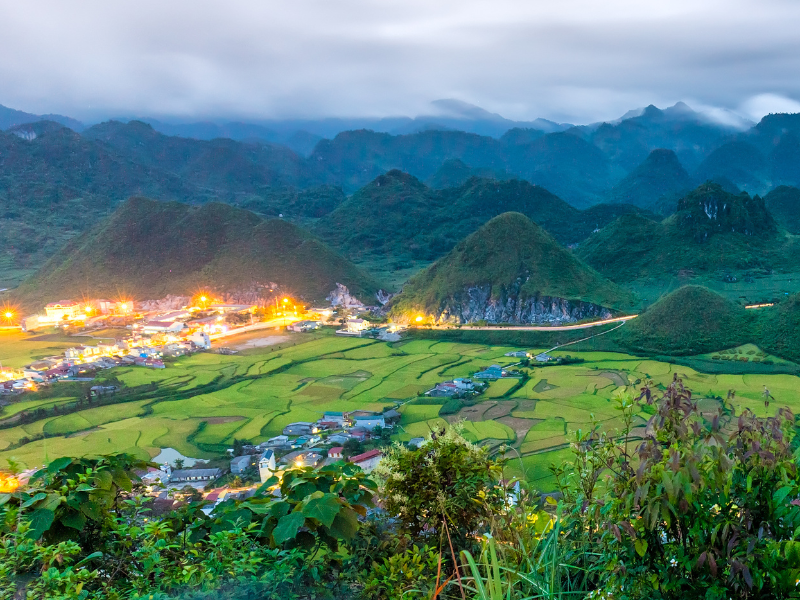
The Ha Giang Loop is roughly 300–350 kilometers in northern Vietnam, depending on the route and stops. The road threads through Quản Bạ, Yên Minh, Đồng Văn, and Mèo Vạc, moving between karst peaks, small mountain communities, and valleys that feel far removed from the pace of Hanoi.
This is not a smooth highway run from one destination to the next. The route rises and drops constantly, with tight bends, steep passes, changing weather, and stretches of exposed road where the landscape falls away beside you.
Then there is Mã Pí Lèng Pass, one of the Loop’s defining sections. The road cuts across the mountainside above the Nho Quế River, with limestone cliffs rising around you and the valley opening far below. It is the kind of landscape that makes you want to stop every few minutes, which is exactly why you need to know when to keep your eyes on the road.
The Ha Giang Loop is not about riding fast to tick off another destination. Its character comes from the road itself: the mountain villages, the changing light, the bends that reveal another valley, and the need to slow down enough to actually notice where you are.
Ride it with patience, and the road becomes part of the experience rather than something you simply have to get through.
Local insight: If you are not confident handling steep bends, descents, and changing mountain conditions, an Easy Rider takes the pressure of driving off you while still giving you the full Ha Giang Loop experience.

What Should You Know Before Riding the Ha Giang Loop
The Ha Giang Loop is an adventure that rewards a little preparation. The roads are more demanding than a typical city scooter ride, with mountain climbs, hairpin bends, steep descents, changing weather, and stretches of exposed road.
That is part of what makes the Loop so compelling. Every turn brings a different view, from limestone peaks and quiet villages to valleys stretching beneath the road. You just need to give the terrain the attention it deserves.
If you are comfortable on a motorcycle, ride at your own pace and stay alert to changing conditions; the Loop is a rewarding route to explore. If mountain riding is new to you, an Easy Rider lets you settle in, take in the landscape, and leave the road to an experienced local driver.
Safety warning: Do not let a group set your pace. If another rider is faster, let them go. Arriving at the next viewpoint a few minutes later is better than taking a corner faster than your ability allows.
How Can You Ride the Ha Giang Loop Safely
The Ha Giang Loop changes throughout the day. Weather, traffic, road surfaces, and your own riding experience can all affect how a section feels, so the best approach is to stay flexible and ride according to the conditions in front of you.
Keep Your Speed Comfortable
Mountain roads leave less room for correcting a mistake, so slow down before bends rather than braking heavily once you are already in the corner.
If you are riding in a group, resist the temptation to keep up with someone more experienced. Your pace should be based on your own ability, not theirs. The Loop is better enjoyed when you have time to look around and take in the landscape.
Give Yourself Clear Visibility
Fog can appear in the higher sections and quickly reduce visibility. When you cannot see far enough ahead to react comfortably, ease off the throttle and give yourself more space.
The mountain scenery is a major reason people come to Ha Giang, but save the sightseeing for the viewpoints. On the road, keep your eyes where they matter.
Adjust for Rain
Rain can change the feel of the road quickly. Wet surfaces reduce traction, while loose gravel and mud can make corners more demanding.
If the weather turns, slow your pace and give yourself more time between stops. There is no prize for reaching the next viewpoint first.
Watch the Road Surface
Gravel, stones, and other debris can appear around bends or after rain. Keep your speed manageable and leave enough space to react to vehicles and changing surfaces.
The road can change between two stops, so stay curious about what is ahead rather than assuming the next section will feel like the last.
Safety Tip: Ride at a pace that gives you time to react. Fog, wet roads, livestock, loose gravel, and oncoming traffic can appear quickly around mountain bends.
Do You Need a License to Ride the Ha Giang Loop
If you plan to self-ride, you need a motorcycle licence that is valid for the motorcycle you are riding, together with the appropriate International Driving Permit recognized in Vietnam.
Vietnam’s current road-traffic law recognizes driving licences issued by countries that are party to the 1968 Vienna Convention, as well as the corresponding International Driving Permit and national driving licence when the requirements are met. Foreign drivers using an IDP must carry the IDP and their national licence, and the licence must correspond to the vehicle category being driven.
Before riding the Ha Giang Loop, check that your national licence allows you to ride a motorcycle, your motorcycle licence category matches the bike you will operate, and your IDP is recognized under the 1968 Vienna Convention.
Carry the physical documents rather than relying only on photographs stored on your phone.
Vietnam’s rules on international driving permits and driving licences have also been updated, so travelers should verify the current requirements before self-riding.
No licence or recognized IDP? Don’t take the handlebars. Renting a bike doesn’t make self-riding legal. An Easy Rider puts an experienced local driver in control while you take in the mountains without the pressure of navigating the road yourself.
Local Tip: Carry your physical national motorcycle licence and recognized IDP together. Keep digital copies separately as a backup, but don’t rely on your phone as your only proof.
Easy Rider vs Self-Riding: Which Is Safer
| Easy Rider | Self-Riding | |
|---|---|---|
| Best for | Beginners and less-confident riders | Experienced motorcycle riders |
| Who drives? | Local driver | You |
| Mountain experience | Not required from the passenger | Strongly recommended |
| Licence & IDP | Driver handles the motorcycle | Required for you to drive legally |
| Main benefit | Less responsibility on the road | More independence |
| Navigation | Local driver | You manage the route |
| Safety advantage | Experienced local driver | You control your own pace |
For first-time riders, Easy Rider is generally the safer choice. Experienced riders who meet Vietnam’s licensing requirements may prefer self-riding for the added independence.
How to Prepare for a Safer Ha Giang Loop Trip
The Ha Giang Loop is at its best when you have enough time to take it in. Before setting off, get the practical stuff right, then let the road set the pace.
Check Your Motorcycle
If you’re self-riding, check the bike before you leave. Test the brakes, inspect the tires, and make sure the lights, indicators, horn, mirrors, throttle, and controls are working properly.
Anything feel off? Sort it out before heading into the mountains. A small issue is easy to fix in town and a lot less convenient once you’re several bends into the Loop.
Pack for Changing Weather
The temperature can shift as you climb, and mountain weather does not always follow the forecast in town. A lightweight rain jacket, warm layer, sun protection, closed shoes, and water are worth having within reach.
Keep your luggage light. You’ll be moving between viewpoints, villages, mountain roads, and homestays, so pack for the ride rather than the entire trip.
Ride at Your Own Pace
The Loop is not about keeping up with whoever happens to be fastest that day.
Ride at a pace that feels controlled and gives you time to read the road. If the group stretches out, let it. The next stop will still be there.
Read the Road Ahead
Blind corners deserve your full attention. Slow down before entering them and leave yourself enough room to react to whatever is ahead, from local traffic and livestock to gravel, fallen rocks, or a wet patch of road.
You cannot see what is around the bend, so give yourself time to find out.
Know When to Stop
Mountain riding demands concentration, particularly when the road keeps twisting and climbing. If you’re tired, take a break before fatigue starts affecting how you ride.
Stop for water, take in the view, and reset. On the Ha Giang Loop, there is no reason to rush past the places you came all this way to see.
What Should You Do If You Have an Accident on the Ha Giang Loop
If an accident happens, do not immediately try to continue riding.
- Move yourself and others away from immediate traffic if it is safe to do so.
- Check for serious injuries.
- Avoid moving an injured person unnecessarily if you suspect a serious injury.
- Contact your guide or tour operator.
- Contact emergency services when necessary.
- Do not continue riding if you are seriously injured or the motorcycle is unsafe.
- Contact your travel insurance provider as soon as practical.
Remote sections of the Loop have fewer medical resources than major Vietnamese cities, so having your tour operator’s contact information and insurance details available offline is useful.
If you are traveling with a guided group, tell your guide immediately rather than trying to handle a serious incident alone.
Ready for the Ha Giang Loop
Now you know what the road asks of you. Take the handlebars if you’re confident on mountain roads, or let an Easy Rider handle the bends while you take in the views.
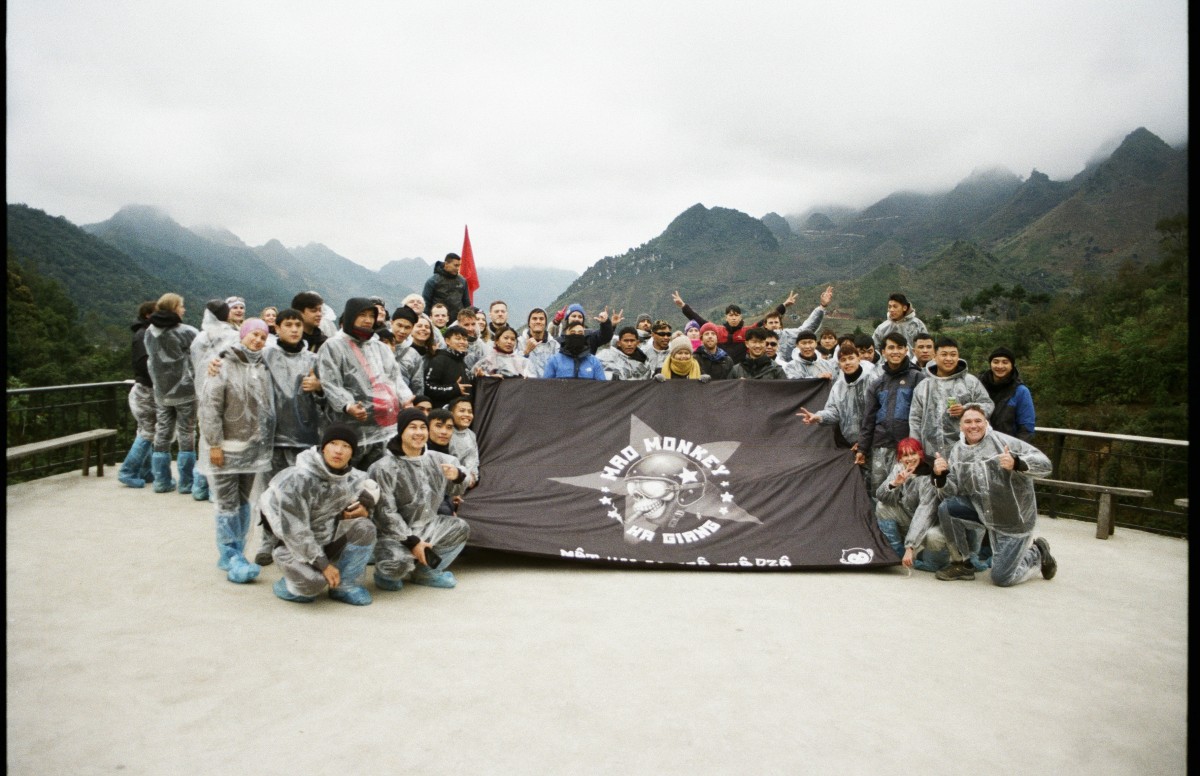
If you’re planning the Loop with Mad Monkey, you can choose between self-riding and Easy Rider, with routes taking in places like Đồng Văn, Du Già, Mèo Vạc, and Mã Pí Lèng Pass.
Either way, get your documents sorted, pack for changing weather, and give yourself enough time to enjoy the road. The mountains aren’t going anywhere.
FAQs: Ha Giang Loop Safety
Yes, but solo travelers should be especially cautious when riding alone. Mountain roads, changing weather, limited connectivity, and unfamiliar terrain make a guided group or Easy Rider a practical option for travelers without extensive mountain-riding experience.
Rain makes the Loop more challenging because wet surfaces can reduce traction and visibility. If conditions become poor, slow down, take a break, or follow your guide’s advice rather than trying to maintain your original schedule.
Self-riding is not recommended for complete beginners. An Easy Rider is a better option because you can experience the Loop without having to learn mountain riding while navigating unfamiliar roads.
Mã Pí Lèng Pass is one of the Loop’s most exposed sections, but conditions matter more than any single stretch of road. Rain, fog, loose surfaces, traffic, fatigue, and speed can all change how challenging a section feels. Treat the entire Loop with the same level of attention.
Yes. An Easy Rider lets you experience the Ha Giang Loop as a passenger while a local driver handles the motorcycle. It’s a good option if you lack the right licence or IDP, have limited mountain-riding experience, or simply want to focus on the scenery.
You should have travel insurance that explicitly covers the motorcycle riding and activities included in your trip. Check the policy’s licensing, motorcycle, medical, and evacuation conditions before departure.
If you plan to self-ride, you need to meet Vietnam’s legal requirements for operating the motorcycle. Current Vietnamese rules recognize qualifying 1968 Vienna Convention International Driving Permits (IDPs) together with the corresponding national driving licence.
If you do not have the appropriate documents, choose an Easy Rider instead of self-riding without the required licence.
Pin Now. Read Later.


