






Contents
TL;DR:
- For the classic Angkor Wat photograph: Arrive early at the main reflecting pools, or consider a different viewing position if the main lawn is already crowded.
- For a different sunrise landscape: Srah Srang offers open water and a historic sandstone landing.
- For brick temples and elevated views: Consider Pre Rup, subject to confirmed opening hours.
- For a guided experience: Mad Monkey Siem Reap’s Sunrise Angkor Wat Temple Tour combines the sunrise visit with Bayon and Ta Prohm.
- Before you go: Check temple access, sunrise times, and Angkor Pass requirements, and arrange transport or your tour ahead of time.
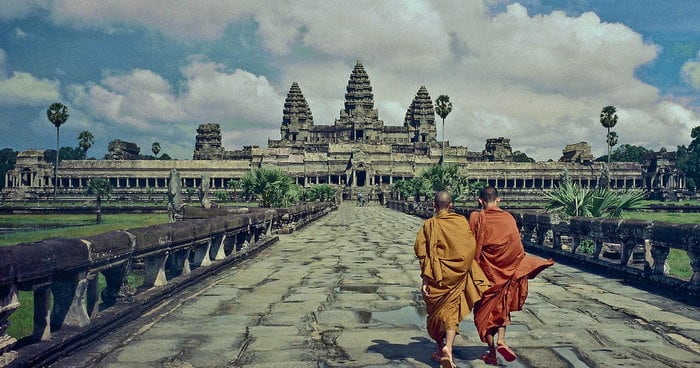
Why Is Angkor Wat Sunrise So Crowded?
Angkor Wat is famous for its five towers reflected in the water in front of the western entrance. That distinctive composition appears in countless travel photographs, making the reflecting pool a natural first stop for visitors to Siem Reap.
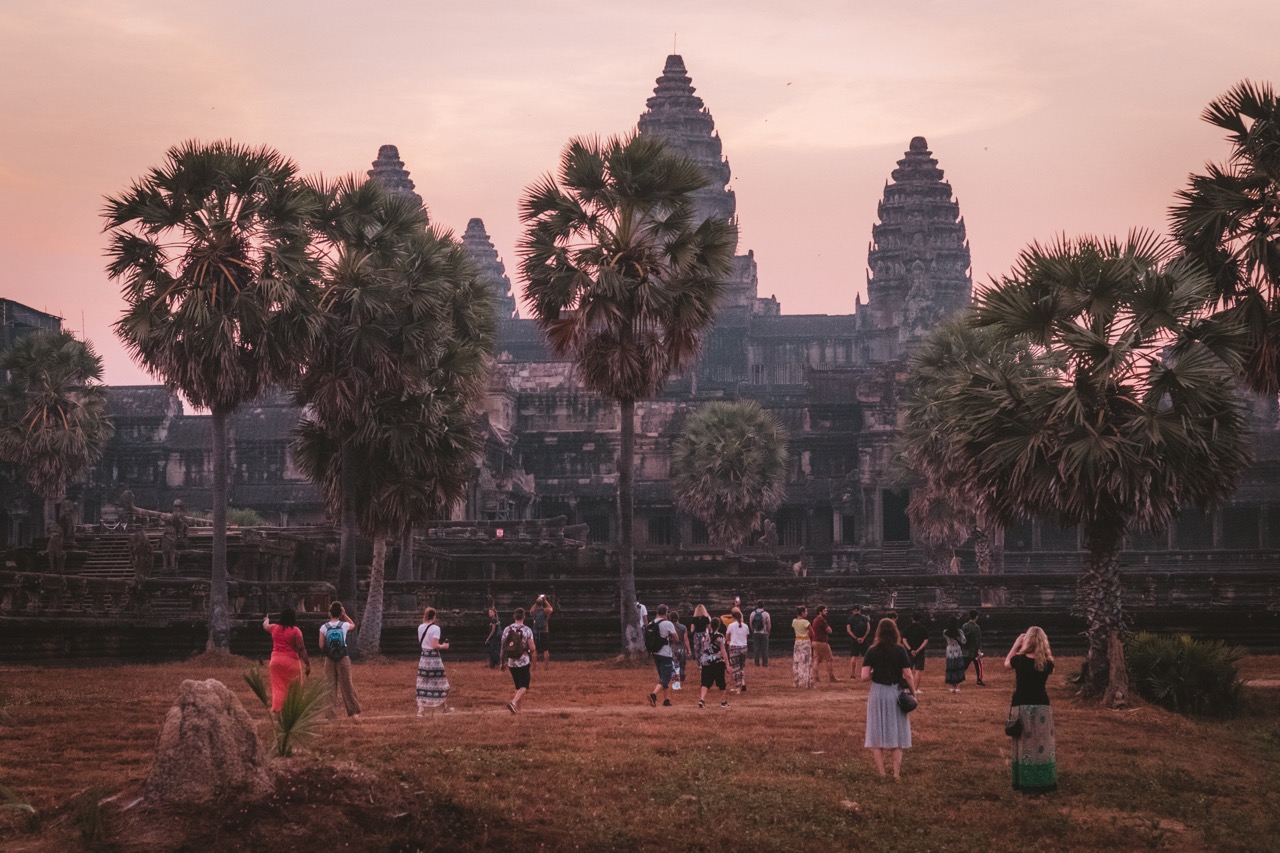
The result is a predictable morning routine. Travellers leave town before dawn, arrive at the same entrance and gather around the same stretch of water to wait for the light.
The busiest viewing areas can fill before sunrise, particularly during the drier months. Weather also plays a part: a clear sky may produce the colours visitors hope for, while clouds can change the entire scene.
That doesn’t mean you should skip Angkor Wat at sunrise. The experience is worth considering, especially on a first visit. The trick is deciding whether you want the classic photograph, a quieter landscape, or a morning spent exploring several temples.
Where Are the Best Places to Watch Sunrise at Angkor?
Angkor Wat is the most recognized spot for sunrise in Siem Reap, but there are other places across the Angkor Archaeological Park to watch the morning light. From alternative viewpoints around the main temple to the open waters of Srah Srang, each location offers a different way to experience sunrise while potentially avoiding the busiest viewing areas.
Is the South Reflecting Pool at Angkor Wat Less Crowded?
If the reflection of Angkor Wat’s towers is the main reason you’re getting up before dawn, you don’t necessarily need to abandon the temple for another location.
The main reflecting pools sit along the western approach. The northern and southern viewing areas offer slightly different compositions, and the smaller northern pool is worth considering if the central viewing area is already crowded.
Arrive with enough time to find a position before the sky brightens. Keep your expectations realistic, though: an alternative angle may have fewer people, but neither pool guarantees a crowd-free sunrise.
Once the light improves, continue into the temple to explore its galleries, columns, and bas-reliefs. There is considerably more to Angkor Wat than the photograph taken from outside.
Is Srah Srang a Good Place to Watch Sunrise?
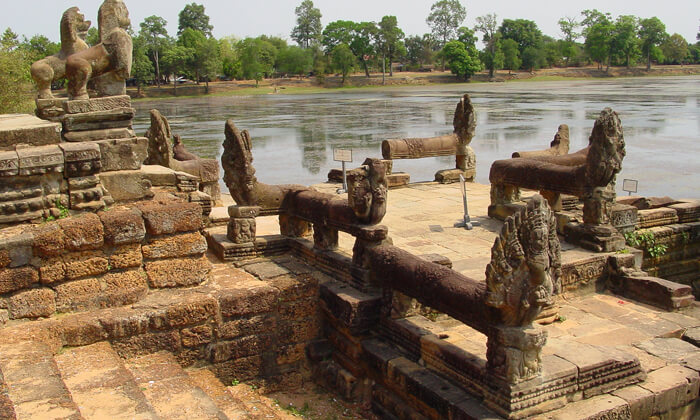
Srah Srang is a historic reservoir near Banteay Kdei on the Small Circuit. Instead of temple towers reflected in a pool, the view centres on open water, a sandstone landing terrace and the tree-lined horizon.
The reservoir dates to the 10th century and was later remodelled during the reign of Jayavarman VII. Its broad water surface gives the morning a different atmosphere from the main Angkor Wat viewing area.
Srah Srang is particularly appealing if you’ve already photographed Angkor Wat or want a sunrise focused on the surrounding landscape rather than a famous architectural composition.
Srah Srang is also a good option if you prefer an open-water view over Angkor Wat’s crowded reflecting pools. Arrive before sunrise to watch the light spread across the reservoir, then consider visiting nearby Banteay Kdei once the temple opens. Both stops are close together, making them a great combination for a morning exploring Angkor’s Small Circuit.
Traveler Tip: If you’re planning to photograph Srah Srang, bring a torch for the walk before daylight and check your route with your driver the evening before. Keep refreshments and rubbish under control around the reservoir, which remains part of a historic cultural landscape.
Can You Watch Sunrise at Pre Rup?
Pre Rup is a 10th-century temple-mountain built during the reign of King Rajendravarman II. Its brick and laterite architecture rises above the surrounding countryside, offering a different perspective from Angkor Wat’s long causeway and reflecting pools.
The upper terraces provide views across the landscape, while the warm brickwork becomes more pronounced as daylight reaches the structure.
Safety Tip: Pre Rup’s steep stone staircases can be slippery and uneven. Wear shoes with good grip, use the handrails where available, and watch your footing when climbing or descending.
How to Join an Angkor Wat Sunrise Tour from Siem Reap?
A 4 AM start hits differently when you’re not doing it alone. Meet fellow travellers in the lobby, head out before dawn, and watch the first light reach Angkor Wat together. Then keep the morning going with visits to Bayon and Ta Prohm, where a guide brings the temples’ history to life beyond the usual photo stops.
The Mad Monkey Siem Reap Sunrise Angkor Wat Temple Tour combines the famous sunrise view with a morning exploring three of Angkor’s best-known temples. Along the way, there’s time to take in Bayon’s carved faces, Ta Prohm’s tree-covered ruins, and the details that make each site distinct. It’s a chance to experience Cambodia’s history while sharing the early start and discoveries with other travellers.
The tour costs $15 USD per person, or $18 USD with lunch and a drink when you return to the hostel. You can also add a breakfast box for $6 USD, so you’re fuelled for the early start. The Angkor Archaeological Park pass is separate and costs $37 USD for one day.
Ready to catch the first light over Angkor Wat? Join the Mad Monkey Sunrise Angkor Wat Temple Tour and explore Angkor Wat, Bayon, and Ta Prohm with a guide and fellow travellers. Check the tour details and book your sunrise adventure.
Which Angkor Sunrise Experience Is Right for You?
The best choice depends on what you want from the morning.
| Your priority | Option to consider | Why |
|---|---|---|
| The iconic tower reflection | Angkor Wat’s reflecting pools | The classic view of the five towers in the water |
| A different landscape | Srah Srang | Open water and a historic stone terrace |
| Brick architecture and elevated views | Pre Rup | A temple-mountain with views across the countryside |
| Architecture after sunrise | Angkor Wat’s galleries | Bas-reliefs, columns and historic details |
| Exploring several major temples with a group | Mad Monkey’s sunrise tour | A planned visit to Angkor Wat, Bayon and Ta Prohm |
Crowd levels at Angkor vary by season and time of day. For a quieter experience, arrive early, explore beyond the main reflecting pools, or visit Srah Srang for a different view of the morning light. If you’re staying in Siem Reap for several days, consider spreading your temple visits across different mornings instead of trying to see everything at once.
How to Plan Your Angkor Sunrise Visit
Angkor sunrise means an early start, so a little planning goes a long way.
- Check the sunrise time. Look up the local sunrise time for your travel date and arrive at your chosen viewing area before the sky brightens.
- Arrange transport in advance. Confirm your destination, pickup time, and return arrangements with your driver. If you’re joining a guided tour, check the meetup point and itinerary.
- Buy the correct Angkor Pass. Published prices are $37 USD for one day, $62 USD for three days, and $72 USD for seven days. Approximate equivalents are ៛150,000 KHR, ៛251,000 KHR, and ៛292,000 KHR, respectively. Check current prices and conditions through Angkor Enterprise, the official ticketing platform.
- Dress respectfully. Angkor is an active religious and cultural site. Cover your shoulders, follow clothing requirements, and respect restrictions around sacred areas.
- Bring the essentials. Pack comfortable walking shoes, a torch, drinking water, sun protection, and a light layer for the early-morning journey. Keep your phone or camera charged, too.
- Plan your temple route. Choose a few sites rather than rushing through every major temple. Allow time to appreciate the architecture, carvings, and surrounding landscape.
Is Angkor Wat Sunrise Worth Waking Up Early For?
Absolutely! Watching the first light creep across Angkor Wat is one of those travel moments that makes a 4 AM alarm feel worthwhile. The sky shifts from deep blue to gold, the temple towers emerge from the morning haze, and the reflecting pools catch the changing colours of the day.
But the experience doesn’t have to end when the sun comes up. Wander through ancient galleries, admire the carved faces of Bayon, or explore the tree-covered ruins of Ta Prohm as the morning unfolds. With a little planning, you can experience Angkor beyond the famous sunrise photo.
Whether you find a quieter spot or join fellow travellers on the Mad Monkey Sunrise Angkor Wat Temple Tour, give yourself time to take it all in. The best part isn’t just watching the sun rise. It’s seeing Angkor wake up around you.
FAQs: About Angkor Sunrise
The main reflecting pools in front of Angkor Wat provide the classic view of the five towers reflected in the water. If the area is crowded, consider a different viewing position or visit Srah Srang for a different landscape. The best choice depends on whether you prefer the iconic photograph or a quieter-feeling setting.
Arrive early, consider an alternative viewing position, and avoid assuming that everyone will have the same experience on every date. If you have several mornings in Siem Reap, you can also visit another sunrise location instead of relying on Angkor Wat’s main reflecting pool every day.
Srah Srang is worth considering if you prefer open water and a historic stone terrace to the classic Angkor Wat tower reflection. It is near Banteay Kdei, making it a practical location to combine with other stops on the Small Circuit when they are open.
Yes. You’ll get to see Angkor Wat, Bayon, and Ta Prohm with a guide and transport sorted. Just remember, your Angkor Archaeological Park pass is separate, so check the tour page for the prices and inclusions before booking.
Planning your own Angkor sunrise? Budget $37 USD for a one-day Angkor Pass, plus transport and personal expenses. If you’d rather join the Mad Monkey Sunrise Angkor Wat Temple Tour, options are $15 USD for the tour only or $18 USD with lunch and a drink. Your Angkor Pass is paid separately, so factor that into your budget before you set off.
Wear respectful clothing that covers your shoulders and meets posted temple requirements. Comfortable shoes are useful for walking on uneven paths and stone surfaces. Bring a torch for the early start and sun protection for later in the morning.
Pin Now. Read Later.


