





Contents
FOR IMMEDIATE RELEASE
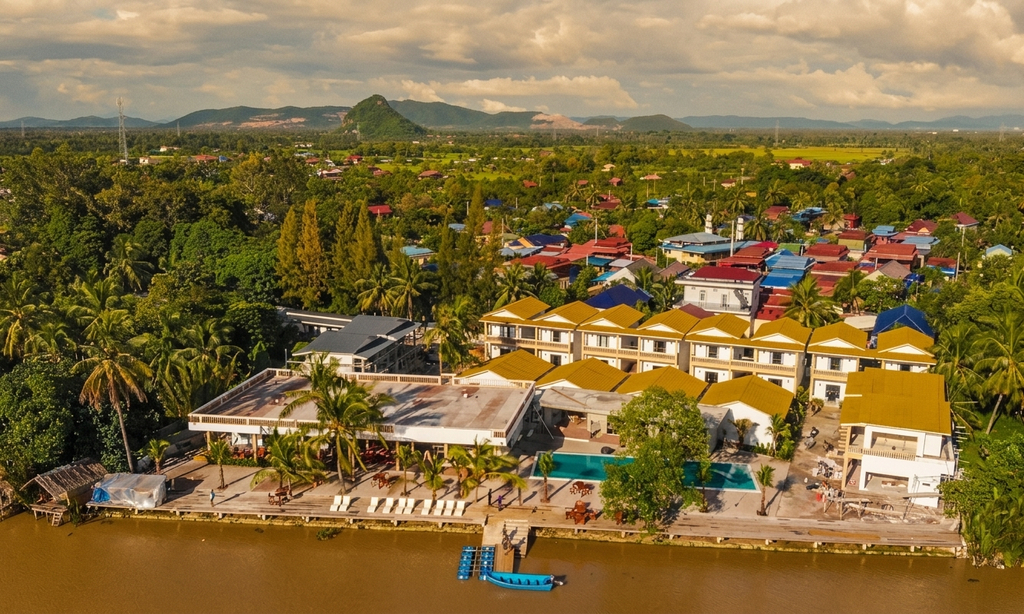
KAMPOT, Cambodia, November 2026 — Mad Monkey, the social hostel brand with more than 24 locations across Southeast Asia and Australia, opened Mad Monkey Kampot on 1 November. The new riverside property sits on River Road, on the banks of the Kampot River, with 128 dorm beds, 24 private rooms, a pool, bar and restaurant, gym, jacuzzi, steam, sauna and ice bath.
Kampot is the gateway to Bokor Mountain, Popokvil Waterfalls and the region’s pepper farms and salt fields, and it draws two crowds: backpackers moving along the Southeast Asia route, and domestic weekenders from Phnom Penh and other Cambodian cities. Mad Monkey Kampot was designed for both. Every planning decision had to pass two tests: does it help guests meet each other, and does it make the site simpler to staff?
7 Social Hospitality Design Principles at Mad Monkey Kampot
1. One way in
Why: Shared first moments give strangers something in common before they have spoken. Multiple entrances split people up from minute one, and each one needs staffing.
How: Every guest arrives through a single tunnel that opens into the heart of the property, like walking through a festival gate. One security post runs it, and the same post handles non-guest entry, so F&B and Day Pass revenue started on day one.
2. One social hub
Why: Spread the facilities out and guests scatter into small, quiet pockets. Each pocket then needs its own bar team, kitchen and cleaner.
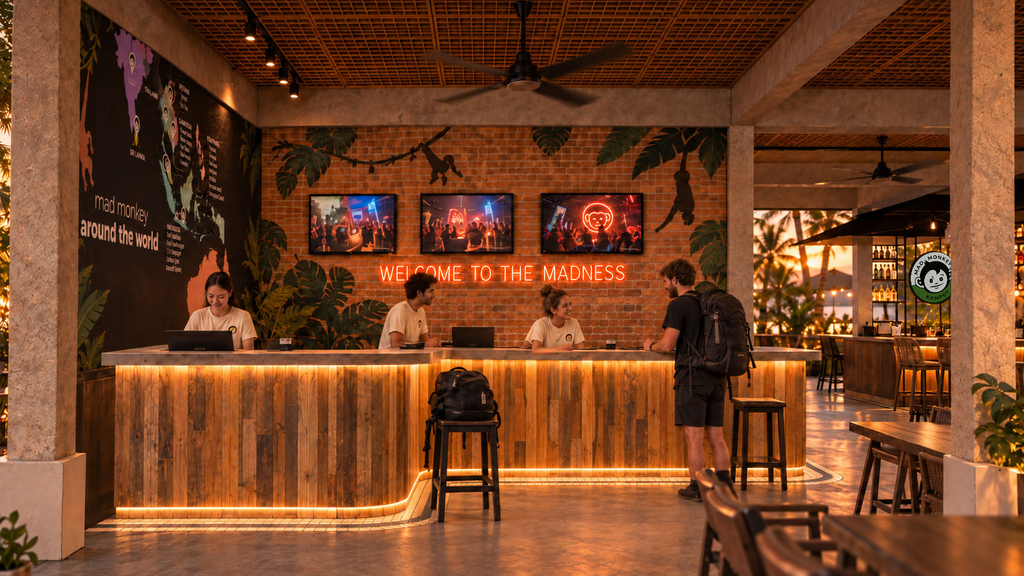
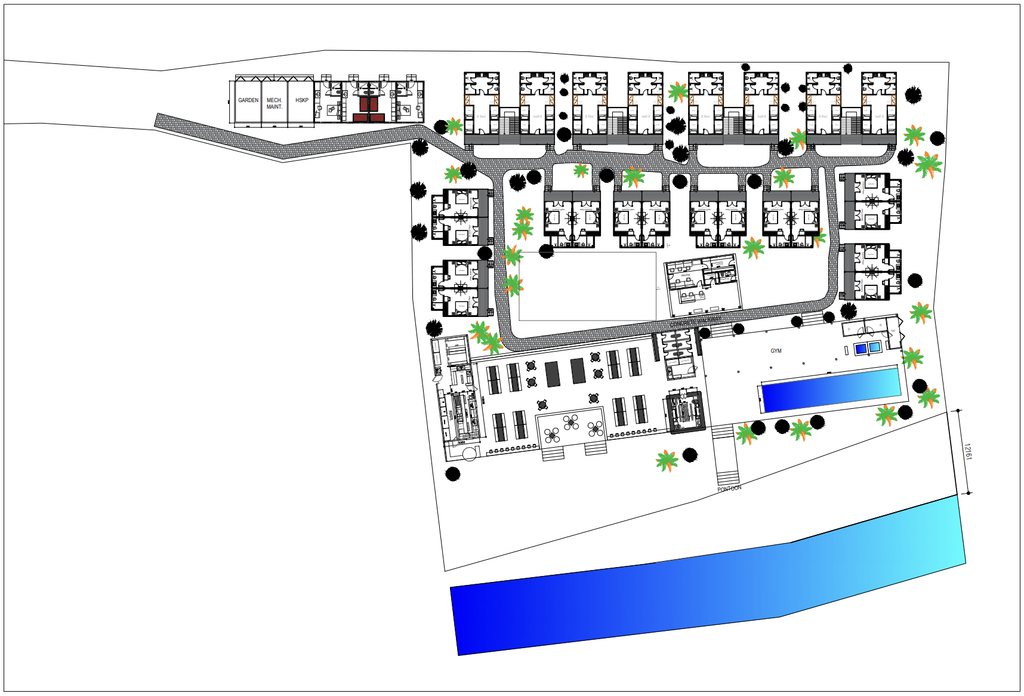
How: Check-in, bar, restaurant, coffee shop, pool, gym and recovery sit in one cluster, and the path from every room runs through it. Guests meet while doing things they would do anyway: checking in, ordering a coffee, eating dinner. No organised event required. One professionally planned kitchen and one bar serve the whole site, so one team can see, and be seen by, almost every guest.
3. Give people something to point at
Why: Most people want the conversation and lack an excuse to start it. A shared curiosity is the excuse.
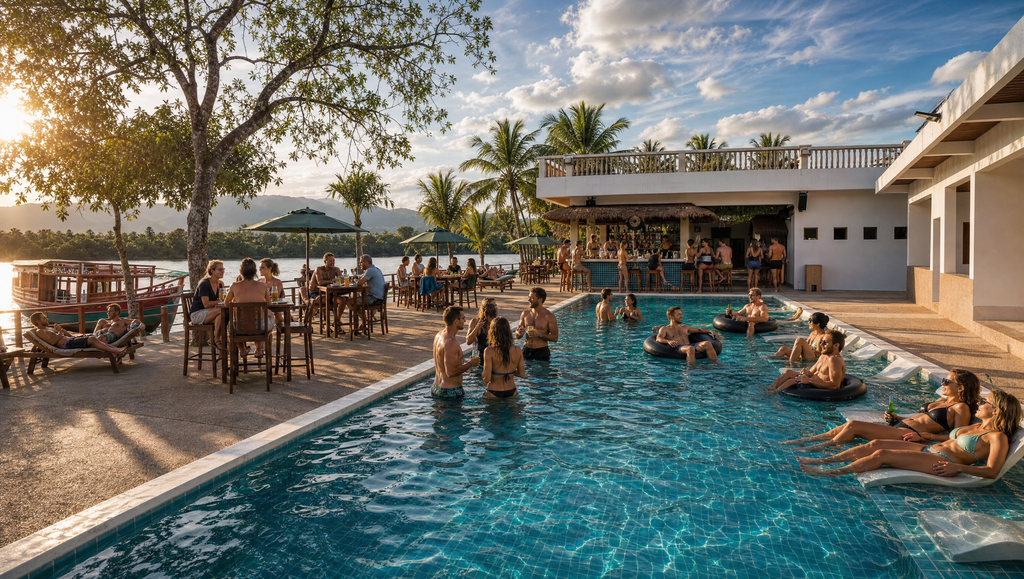
How: Seating faces the river. Murals tell one continuous jungle story from wall to wall. Pepper and herbs grow on spare land and end up on your plate. Each is a talking point, and each says this is the place to eat, drink and experience Kampot from morning to night.
4. Watch first, join at your own pace
Why: People settle at the edge of a space before they step into the middle. Remove the edges and shy guests go back to their bunk.
How: The hub is ringed with steps, ledges and perches that look onto the action. Long shared tables sit alongside smaller tables placed close enough to catch the atmosphere and a passing conversation. The distance between tables was planned as carefully as their size. Built-in seating is also cheaper to maintain than loose furniture, and long tables turn faster with fewer staff.
5. Shared effort bonds faster than small talk
Why: Doing something slightly hard together, then laughing about it, builds trust in minutes.
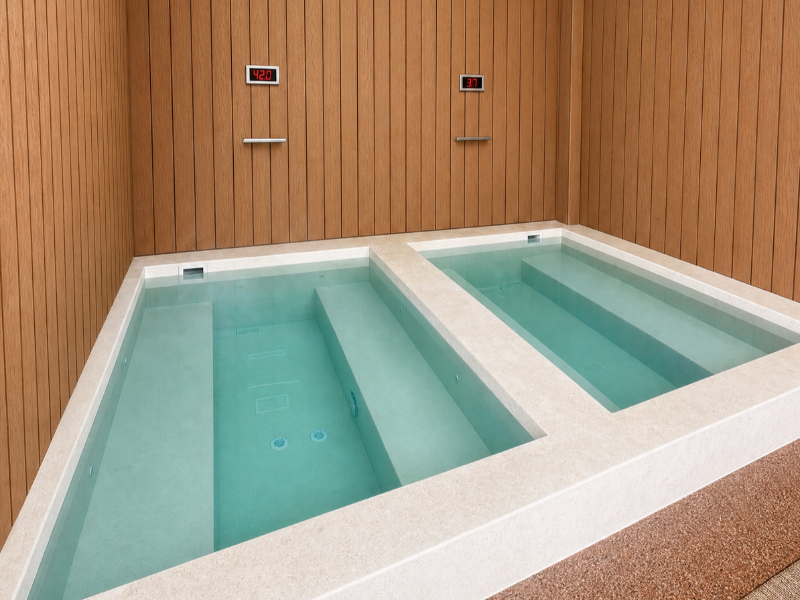
How: The gym, sauna and ice baths sit inside the social zone, not in a hidden spa wing. Three minutes in cold water next to a stranger makes a shared breakfast and a night out the easy next step. Put recovery out of sight and guests walk back to their beds instead of past the coffee bar.
6. Small rooms, one repeatable module
Why: In a room of eight you learn every name. In a room of twenty you learn none.
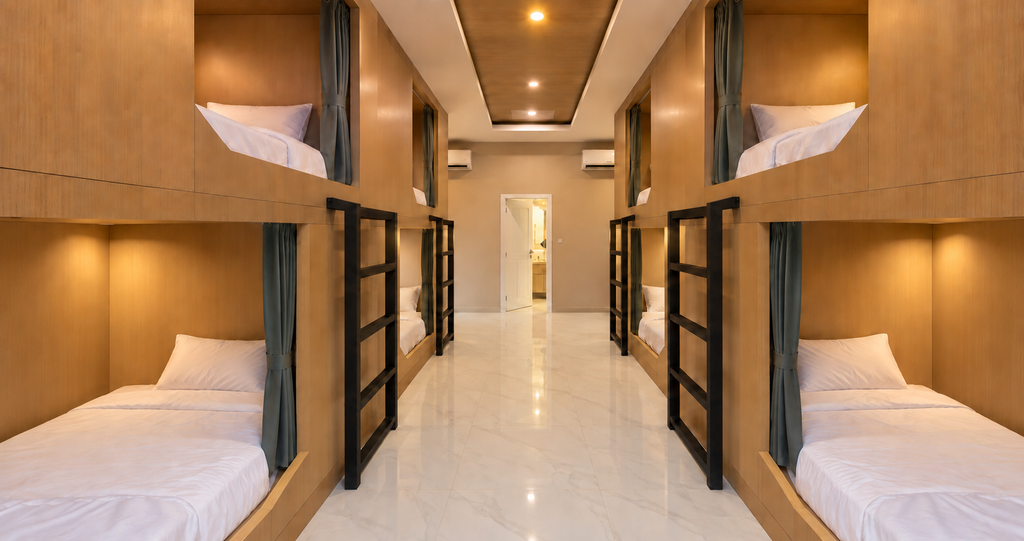
How: Every dorm is a standard 8-bed module: a steel frame clad in wood and bamboo, giving a premium finish on sturdy infrastructure.
7. Run the day like a trip
Why: Group tours work because everyone follows the same rhythm with the same faces. By day two, familiar strangers are a group.
How: The riverfront hub is an all-day space, laid out in the order of the day: river in the morning, gym and recovery in the afternoon, sunset at the water, dinner, then the bar. In quiet hours guests lounge and read. When they want to move, they book a waterfall loop or Bokor Mountain with the team. In the evening they settle in for drinks and dinner. Each guest picks their own level of energy without leaving the same social setting. Staffing follows the same curve, so the team moves with the crowd instead of covering empty zones.
How We Built a Riverfront Hostel in Kampot: 4 Design & Engineering Challenges
The riverbank moved
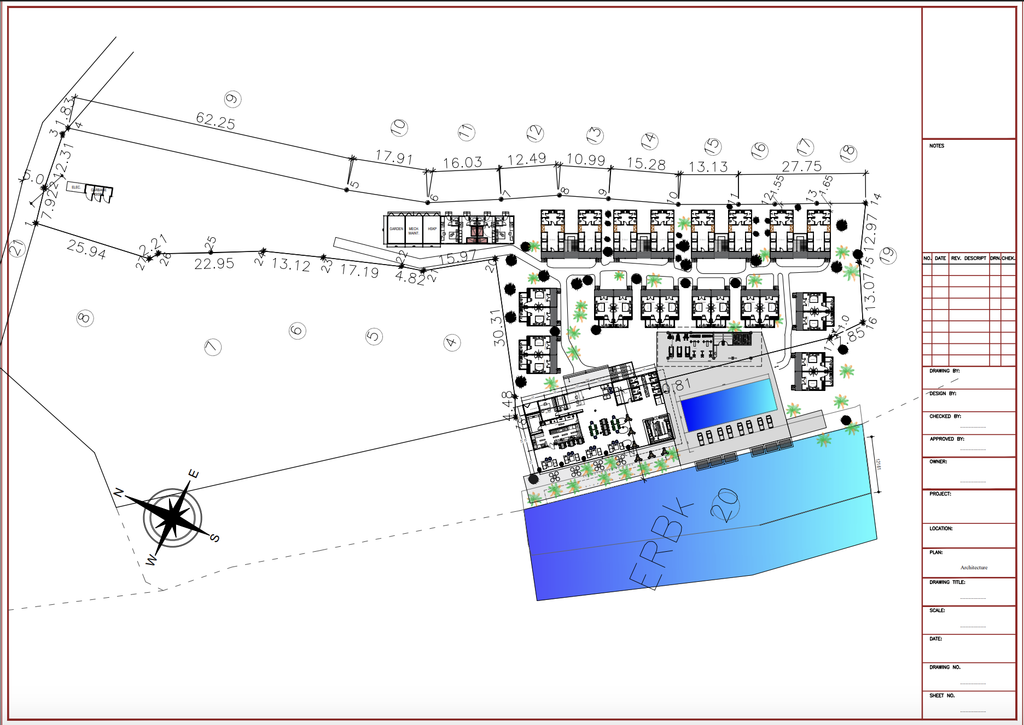
Soil movement along the riverbank forced a full redesign of the F&B and social space after the accommodation was already under construction. The planned social capacity had to fit on a smaller plot, with the guest experience and the service areas both squeezed into less space. Holding to one hub made that possible: one kitchen, one bar and one gathering space take up far less ground than three.
The long walk
The best part of the plot sits far from the access road, past deliveries and service yards. The tunnel fixed both problems at once. Guests arrive through a tunnel that opens onto the river and back-of-house gets a hidden service route that keeps deliveries off guest paths.
Two audiences, one property
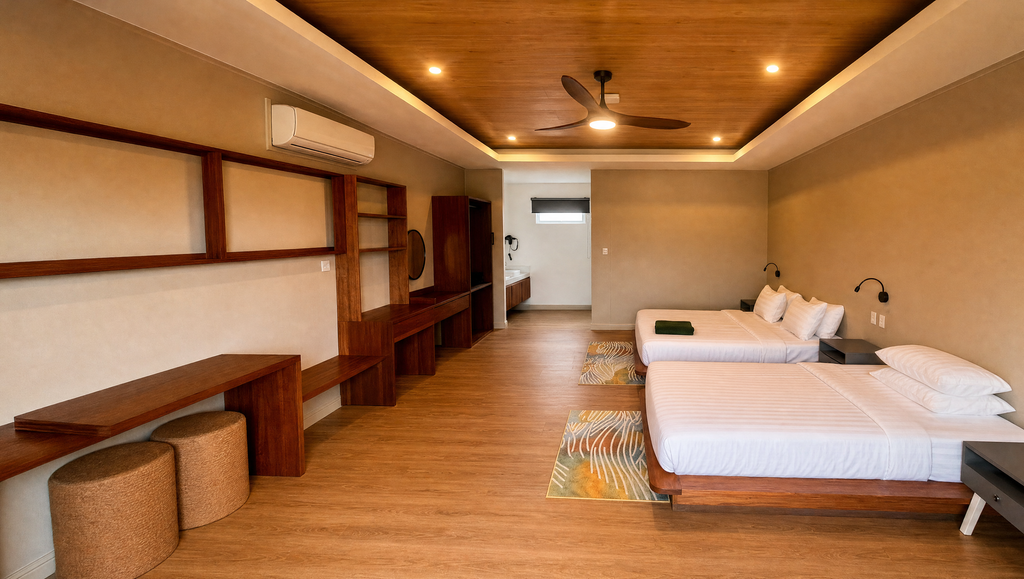
We expect a 50/50 split of backpackers and domestic weekenders from the cities. Private rooms can drain a social space and tempt you into building a second, quieter bar. We held the line at one heart. Private rooms look onto the same river as the hub, and weekend stays are sold with experiences attached, so private room guests end up on the same waterfall trip as dorm guests.
Connection without pressure
Nothing at Kampot is compulsory and everything is visible. The default path passes the action, the quiet seat overlooks it, and joining in is always one step away.
Built for strangers to meet
Every choice at Mad Monkey Kampot came back to the same two questions: does it help guests meet, and does it make the site easier to run? The result is one riverside hub where a solo traveller can arrive alone at check-in and be on a boat to Bokor with five new friends by morning. Come alone, leave together.
About Mad Monkey
Mad Monkey is a social hostel and experiences brand with 24+ locations across Southeast Asia and Australia, welcoming 150,000+ guests a year aged 18 to 30. Founded more than 15 years ago by British backpackers, it has hosted 750,000 guests to date and has 85,000+ loyalty members.
