






Contents
TL;DR
- Start with everyday expressions like sà-wàt-dee (hello), khòp khun (thank you), and mâi khâo jai (I don’t understand).
- End your sentence with kráp (for men) or kâ (for women) to sound more polite; most locals appreciate the effort even if your pronunciation isn’t perfect.
- A handful of taxi, market, and food phrases cover most day-to-day situations in Bangkok, Chiang Mai, Phuket, and Koh Samui.
What Thai Phrases Every Tourist Should Know
You don’t need to speak fluent Thai to enjoy your trip, but knowing a few common phrases can make everyday interactions much easier. While English is widely understood in tourist hubs like Bangkok, Chiang Mai, Phuket, and Koh Samui, speaking a little Thai is a simple way to show respect and connect with local people.
Thai is a tonal language, meaning the tone used can change the meaning of a word entirely. Context usually helps bridge the gap, and most locals appreciate the effort regardless of accent. These Thai phrases for tourists are the ones you’ll use most while exploring Thailand, whether you’re greeting locals, asking for directions, or ordering at a street food stall.
English Thai Pronunciation When You’ll Use It Hello สวัสดี Sà-wàt-dee (sa-wat-dee) Greeting people at your hostel, café, or local shop. Thank you ขอบคุณ Khòp khun (khop khoon) Thanking restaurant staff, drivers, or locals who help you. Yes ใช่ Châi (chai) Confirming a question or agreeing with someone. No ไม่ Mâi (mai) Politely declining or saying no. Excuse me / Sorry ขอโทษ Khǎw thôot (khao thot) Getting someone’s attention or apologizing. My name is… ผม/ฉันชื่อ… Phǒm/Chán chʉ̂ʉ… Introducing yourself. Men say phǒm; women say chán. How are you? สบายดีไหม Sà-baai dee mái? Starting a friendly conversation. I’m fine สบายดี Sà-baai dee Replying when someone asks how you’re doing. I don’t understand ไม่เข้าใจ Mâi khâo jai When there’s a language barrier. Do you speak English? พูดภาษาอังกฤษได้ไหม Phûut phaa-sǎa ang-grìt dâai mái? Before asking for directions or assistance. Where is…? …อยู่ที่ไหน …yùu thîi nǎi? Finding a bathroom, ATM, station, or attraction. Bathroom ห้องน้ำ Hông náam One of the most useful travel words to know. Goodbye ลาก่อน Laa gòn Saying farewell, although many Thais also casually say “bye-bye.” Local Insight: Finish a sentence with kráp if you’re a man or kâ if you’re a woman. These polite endings are used every day in Thailand and instantly make Thai sound more natural and respectful, whether ordering food, asking directions, or saying thanks.
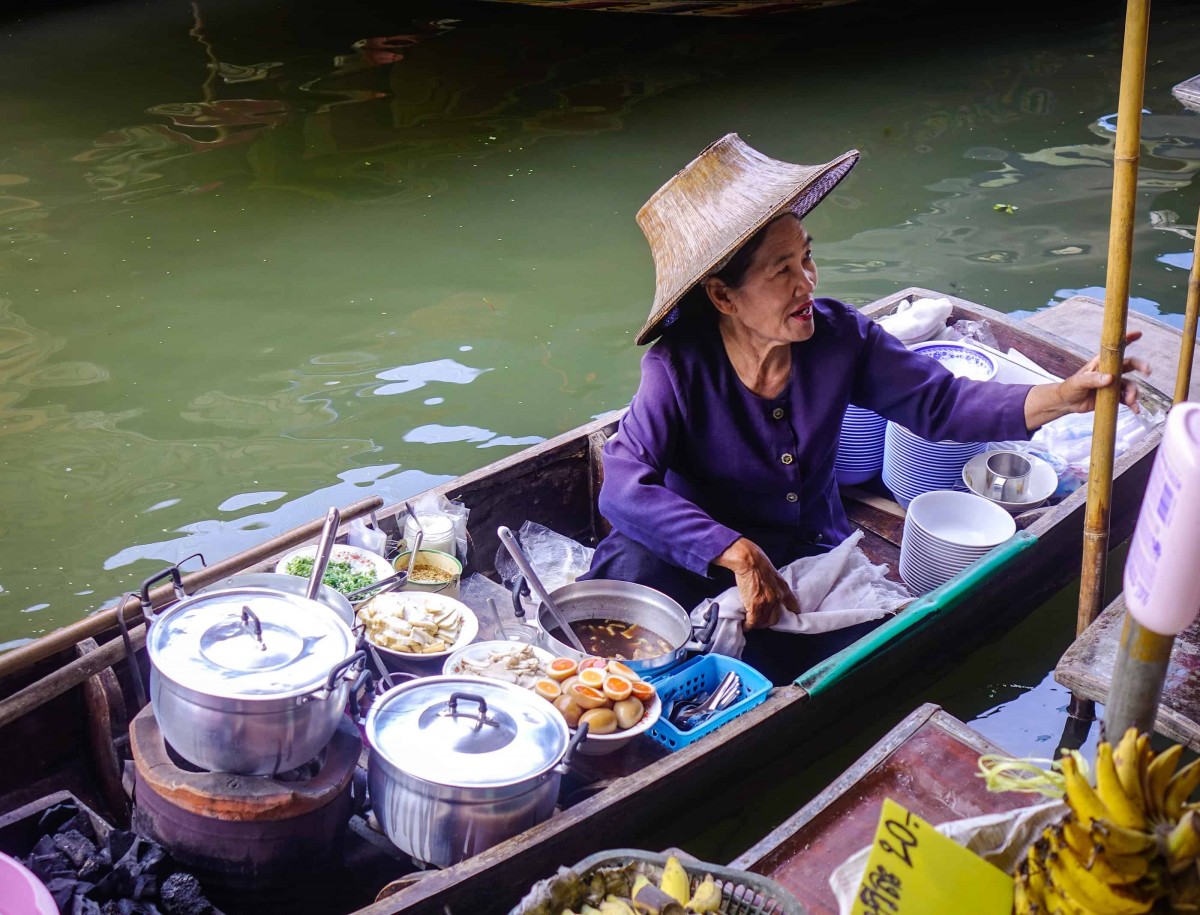
Experience local flavors at Taling Chan Floating Market, photo courtesy of Mad Monkey. What Thai Phrases to Use for Taxis and Getting Around
Getting around Thailand is easy thanks to taxis, tuk-tuks, songthaews, and ride-hailing apps like Grab. These phrases are useful for giving directions, confirming fares, or making sure a ride is heading to the right destination.
Do you use the meter?
Thai: ใช้มิเตอร์ไหม, pronounced Chái mee-dtêr mái?
Ask this before getting into a taxi in Bangkok. Licensed taxis are required to use the meter, but some drivers may offer a fixed price instead.Go straight.
Thai: ตรงไป, pronounced Dtrong bpai
A handy phrase when guiding a taxi or tuk-tuk driver to a destination.Turn left / Turn right
Thai: เลี้ยวซ้าย / เลี้ยวขวา, pronounced Líao sáai / Líao kwǎa
Useful when following Google Maps and giving directions along the way.Stop here, please.
Thai: หยุดที่นี่, pronounced Yùt thîi nîi
Say this on arrival or to have the driver pull over safely.U-turn, please.
Thai: กลับรถ, pronounced Glàp rót
Helpful if a driver has passed the destination.Please slow down.
Thai: ขับช้าๆ หน่อย, pronounced Khàp cháa cháa nòi
A polite way to ask a driver to reduce speed.Traveler Tip: In Bangkok, if a taxi driver refuses to use the meter, politely thank them and find another taxi or book a Grab instead. It saves money and avoids unnecessary fare negotiations.
What Thai Phrases to Use When Ordering Food and Drinks
Food is one of the best places to start using Thai phrases for tourists, especially at local markets and family-run restaurants, and fluency isn’t required to enjoy them. These are the phrases most useful for ordering meals, explaining dietary preferences, and asking for drinks.
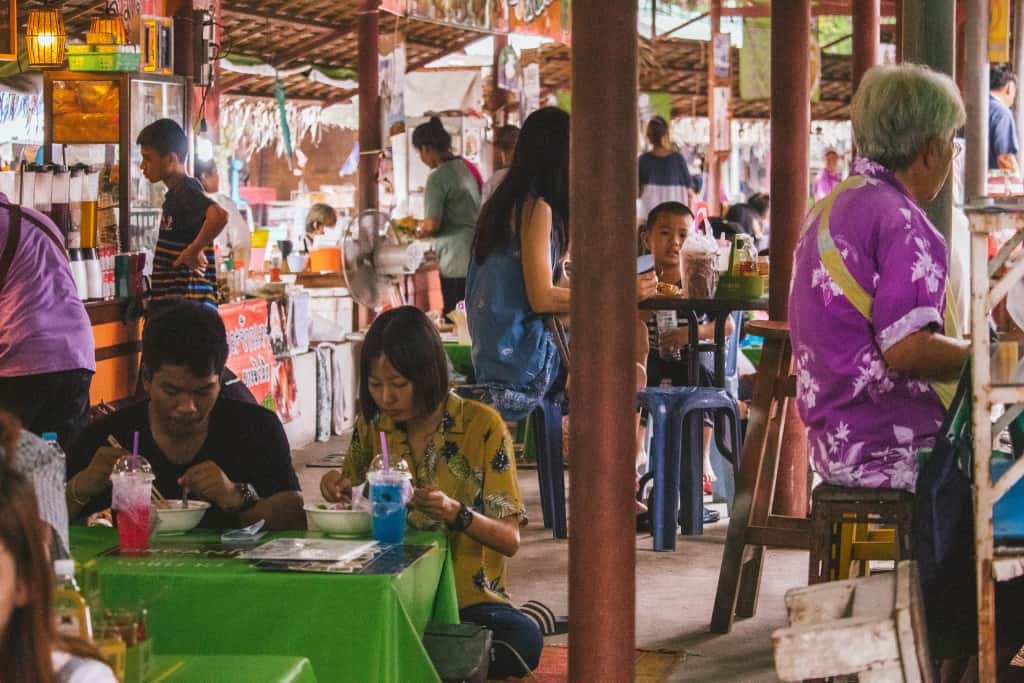
English Thai Pronunciation When You’ll Use It Have you eaten yet? กินข้าวแล้วหรือยัง Gin kâao lɛ́ɛo rʉ́-yang? A common greeting heard from locals. Restaurant ร้านอาหาร Ráan ahǎan (raan a-haan) Asking for a recommendation or searching for one. Café ร้านกาแฟ Ráan gaa-fɛɛ (raan ga-fae) Looking for a coffee shop or café. I’m hungry. หิว Hǐu (hiu) Letting friends know it’s time to eat. I’m vegetarian. กินเจ Gin jay Ordering meat-free meals. I’m vegan. มังสวิรัติ Mang-sa-wí-rát Explaining dietary preference. I can’t eat spicy food. กินเผ็ดไม่ได้ Gin pèt mâi dâai Asking for a mild version of a dish. Don’t add sugar. ไม่ใส่น้ำตาล Mâi sài nám dtaan Ordering coffee, tea, or fresh juice without sugar. Can I have some water, please? ขอน้ำหน่อย Khǎw náam nòi Asking for drinking water at a restaurant. It’s very delicious! อร่อยมาก À-ròi mâak! Complimenting a chef or street food vendor. Local Insight: Say “Gin pèt mâi dâai” before a meal is prepared when spice tolerance is low. Asking for “a little spicy” can still mean much hotter than most visitors expect at local restaurants.
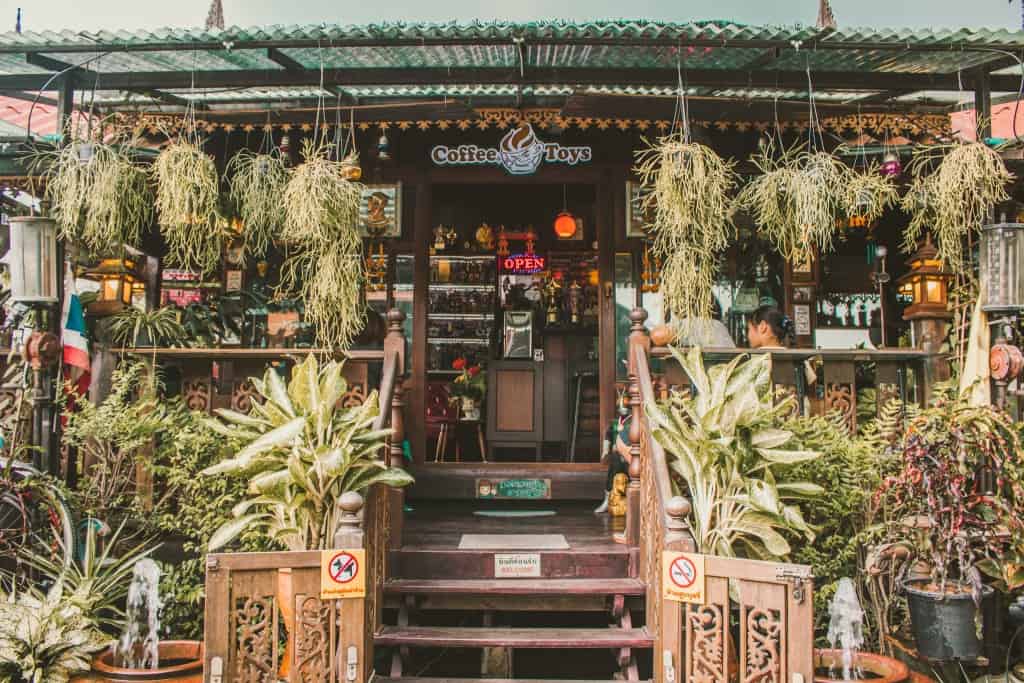
Escape the buzz at a local Bangkok coffee shop, photo courtesy of Mad Monkey. What Thai Phrases to Use When Shopping at Markets
From Bangkok’s night markets to Chiang Mai’s weekend bazaars, shopping is part of the Thailand experience. Bargaining is common at local markets, though prices in malls and convenience stores are usually fixed. Three phrases cover most situations.
How much is this?
Thai: อันนี้เท่าไหร่, pronounced An nee tâo rài?
The phrase used most when browsing clothing, souvenirs, or handmade goods.That’s expensive.
Thai: แพงมาก, pronounced Paeng mâak!
A friendly way to react if the first price is higher than expected. Bargaining in Thailand is usually good-natured, so a light tone and a smile go further than a hard lineCan I get a discount?
Thai: ลดได้ไหม, pronounced Lót dâai mái?
Acceptable to ask politely when buying multiple items or shopping at a market.Local Insight: Bargaining is common at street markets and independent stalls, but generally not expected in malls, supermarkets, or convenience stores. A friendly attitude tends to work better than aggressive negotiating.

Pick affordable fashion at Neon Market, photo courtesy of Mad Monkey. How to Be Polite When Speaking Thai
Learning a few Thai phrases is only part of the experience. Basic etiquette makes conversations feel warmer and shows respect for local culture.
End sentences politely
Adding a polite ending is one of the easiest ways to sound natural: kráp (ครับ) is generally used by men, kâ (ค่ะ) by women. For example, khòp khun kráp (thank you, spoken by a man) or khòp khun kâ (thank you, spoken by a woman).
Stay calm and unhurried
Thai culture places a strong emphasis on friendliness and respect. A calm voice and a patient pace tend to land better than volume when there’s a language barrier.
Let go of perfect pronunciation
Thai is tonal, and mastering it takes time. Most locals recognize a visitor making an effort and meet it accordingly, even when a tone lands off.
Local Insight: A genuine smile paired with a polite “khòp khun kráp/kâ” tends to leave a better impression than technically perfect Thai delivered without warmth.
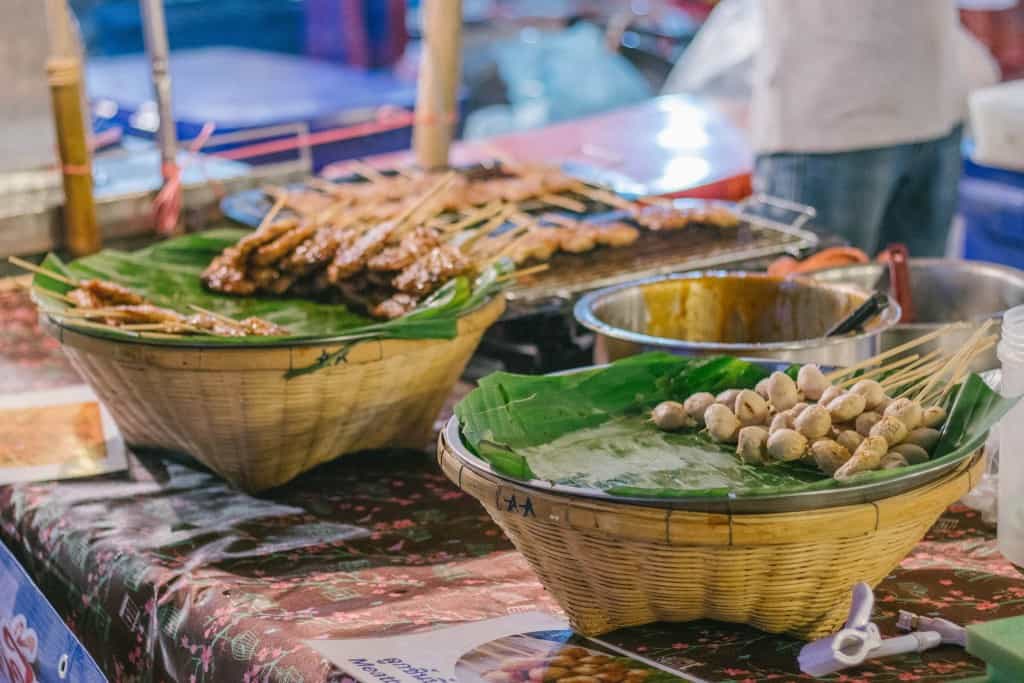
Grab a bite from Bangkok’s bustling street food scene, photo courtesy of Mad Monkey. How to Use Thai With Grab Drivers and Taxi Drivers
Getting around Thailand is easier than ever with Grab, taxis, and tuk-tuks, but a few Thai phrases help communication go smoothly, especially with drivers who speak limited English.
Grab’s app automatically translates destinations and messages into Thai, making it one of the most reliable ways to get around cities like Bangkok, Chiang Mai, Phuket, and Pattaya.
For a regular taxi, these habits help:
- Show the destination on Google Maps rather than relying solely on pronunciation.
- Ask “Chái mee-dtêr mái?” (Do you use the meter?) before starting a trip in Bangkok.
- Use nearby landmarks such as shopping malls, BTS stations, or well-known hotels if an address is hard to locate.
- Keep the hotel address saved in Thai on a phone in case a driver needs to read it directly.
- For directions mid-trip, “Dtrong bpai” (go straight), “Líao sáai” (turn left), “Líao kwǎa” (turn right), and “Yùt thîi nîi” (stop here) cover most situations.
Traveler Tip: Drivers often recognize landmarks faster than street addresses. Showing a destination in Thai on Google Maps or the Grab app is usually the quickest way to avoid confusion.

Browse colorful lanterns at a Thai Night Market, photo courtesy of Mad Monkey. Start Speaking Thai with Confidence
Fluency isn’t the goal. A handful of everyday phrases, used consistently, can make your trip feel more connected. Whether you’re staying at Mad Monkey Thailand or exploring independently, these phrases are useful everywhere—from night markets and cafés to temples, taxis, and local neighborhoods.
Save this guide before your trip so the most useful phrases are always within easy reach. Paired with a smile and a polite kráp or kâ, a few simple expressions can help you navigate Thailand with more confidence and create more meaningful interactions with the people you meet.
FAQs: Thai phrases for tourists
Do I need to speak Thai to travel around Thailand?
No. English is widely spoken in popular tourist destinations like Bangkok, Chiang Mai, Phuket, Krabi, and Koh Samui. However, learning a few basic Thai phrases can make everyday interactions smoother and is often appreciated by locals.What is the most useful Thai phrase for tourists?
Sà-wàt-dee (hello) and khòp khun (thank you) are the two phrases you’ll use most often. Pair them with kráp (for men) or kâ (for women) to sound more polite.Is Thai difficult to learn?
Thai is a tonal language, so pronunciation can take practice. The good news is that you only need a handful of common phrases to travel confidently, and most locals appreciate the effort even if your pronunciation isn’t perfect.How do I ask for less spicy food in Thailand?
Say “Gin pèt mâi dâai” if you can’t eat spicy food, or “Mai pèt” if you simply want your meal prepared without much chili. Using these phrases before your food is cooked can help avoid an unexpectedly spicy meal.What’s the difference between kráp and kâ?
Both are polite sentence endings. Kráp (ครับ) is generally used by men, while kâ (ค่ะ) is generally used by women. Adding them to greetings, requests, and expressions of thanks is an easy way to sound more respectful.Can I use Google Translate in Thailand?
Yes. Google Translate works well for basic conversations, and downloading the Thai language offline before your trip is helpful if you lose internet access. Apps like Grab also translate destinations and messages automatically, making it even easier to get around.Pin Now. Read Later.


About the Author
