






Contents
TL;DR
- Angkor Pass: 1-day ៛151,700 ($37 USD), 3-day ៛254,200 ($62 USD), or 7-day ៛295,200 ($72 USD). Get your ticket through Angkor Enterprise.
- When to go: November to February has cooler, drier weather. Angkor Wat opens at 5:00 AM, so leave Siem Reap around 4:15 to 4:30 AM if you’re going for sunrise.
- How long: One day works for Angkor Wat, Angkor Thom, Bayon and Ta Prohm. Give yourself two to three days if you want to add more temples without packing your day too tightly.
- Getting around: Tuk-tuk is the go-to for most backpackers, while scooters and bicycles give you more freedom if you’re comfortable riding.
- What to bring: Water, sunscreen, a hat, comfortable shoes, and clothes that cover your shoulders and knees.
- Where to stay: Base yourself in central Siem Reap, so you’re not crossing town before a sunrise start. Mad Monkey Siem Reap is on Rose Apple Road and also runs a sunrise Angkor Wat tour.
Mad Monkey team tip: Don’t try to cram every temple into one day. Start early, see the major sites before the heat builds, take a proper break, then decide whether you still have the energy for another temple.
When Is the Best Time to Visit Angkor Wat?
November to February is the most comfortable period for walking around Angkor Wat and the surrounding temples. March to May brings much hotter afternoons, while May to October brings regular rain and greener surroundings.
That matters because an Angkor visit means a lot of walking. Go early, take a break around midday when the heat peaks, and keep your afternoon plans flexible during the wet season.
| Season | What it’s like | Best approach |
|---|---|---|
| November–February | Cooler mornings and mostly dry weather | Go early and make the most of the full day |
| March–May | Hot, humid, and tiring during the afternoon | Prioritize sunrise and morning temples, then take a midday break |
| May–October | Rain showers, greener scenery, and humid days | Keep your route flexible and carry a light rain layer |
If you’re visiting during the hotter months, do the temples early, disappear for lunch and a shower, then decide if you want another round later.
The Angkor Archaeological Park opens from 5:00 AM to 6:30 PM, although individual temples have their own opening and closing times.
Mad Monkey team tip: If you’re planning an Angkor sunrise, sort out your transport the night before. You can arrange a tuk-tuk yourself, or, if you’d rather skip the 4 AM logistics, check out the Mad Monkey Siem Reap Sunrise Angkor Wat Temple Tour.
How Much Does an Angkor Pass Cost in 2026?
The official Angkor Pass prices are:
| Pass | Price | Validity | Best for |
|---|---|---|---|
| 1-day | ៛151,700 ($37 USD) | 1 day | The main highlights |
| 3-day | ៛254,200 ($62 USD) | 7 days | A more relaxed first visit |
| 7-day | ៛295,200 ($72 USD) | 30 days | Slow travel or repeat visits |
The Angkor Pass is priced in US dollars, with the current rates at $37 USD for 1 day, $62 USD for 3 days, and $72 USD for 7 days. The Cambodian riel amounts in the table are approximate conversions.
Where to buy your Angkor Pass: Book through the official Angkor Enterprise ticket portal before your visit. You can choose your pass, select your visit date, enter your nationality, and pay by card or KHQR. Your e-ticket is sent to your email and can be shown on your phone at the entrance.
You can also buy your pass at the Angkor Enterprise Ticket Office on Road 60, about 4 km from central Siem Reap, or use an official self-service kiosk. Angkor Enterprise states that tickets purchased elsewhere are not valid.
One thing to watch: Don’t rely on random ticket websites that appear in search results. Angkor Enterprise issued a 2026 warning about fraudulent sites selling fake tickets and specifically advises travelers to use its official portal.
How Many Days Do You Need at Angkor & Which Temples Should You Prioritize?
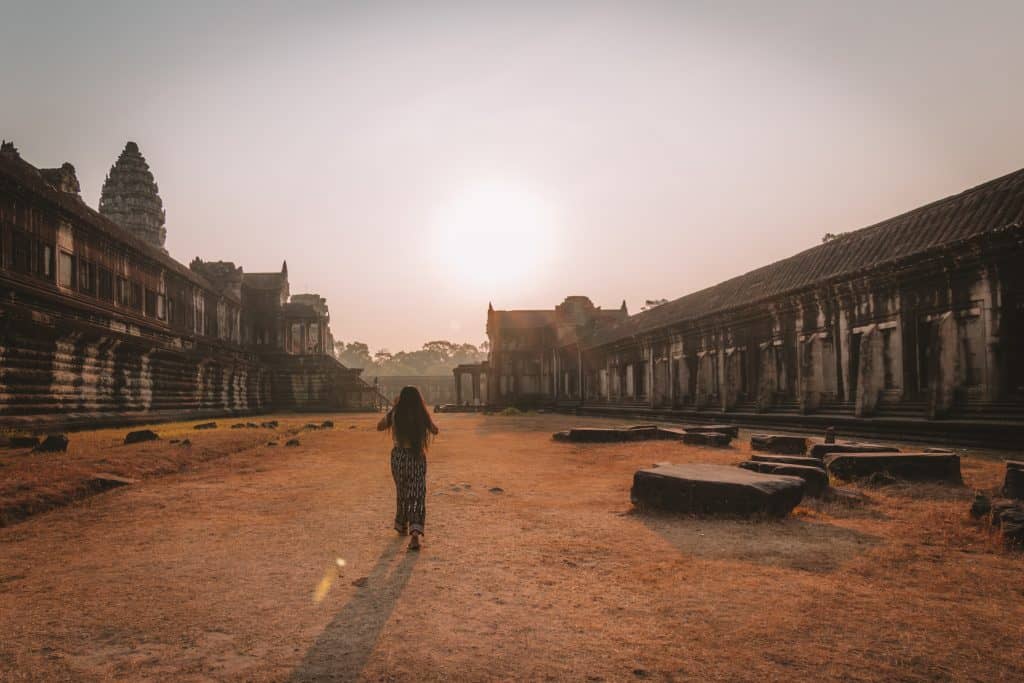
You can see the main Angkor highlights in one day, but extra days give you room to go beyond the usual route and slow the pace down.
| Time | What to focus on | Good for |
|---|---|---|
| 1 day | Angkor Wat, Angkor Thom, Bayon, Ta Prohm and Banteay Kdei | First-timers with limited time |
| 2 days | The main temples plus the Grand Circuit | Seeing more without rushing |
| 3 days | Main temples, Grand Circuit and Banteay Srei or other outer temples | A slower Angkor trip |
Is One Day Enough for Angkor Wat?
Yes. One day is enough if you want to see Angkor Wat and the main temples without going too far beyond the usual first-timer route.
Start early with Angkor Wat, then continue to Angkor Thom, Bayon, Ta Prohm, and Banteay Kdei. This covers the main sights around the Small Circuit without turning the day into a race between temples.
From March to May, aim for your main temples before lunch, then head back to Siem Reap when the heat is at its worst. Come back out later if you still want more temples.
Is Three Days Too Long for Angkor Wat?
Not at all. Three days lets you move beyond the main Angkor route, spend more time at the temples that interest you, and break up the early starts with time back in Siem Reap.
After covering the main temples on your first day, use another day for the Grand Circuit, including Preah Khan, Neak Pean, Ta Som, East Mebon, and Pre Rup.
A third day gives you room for Banteay Srei and other outer temples, or simply lets you revisit somewhere you wanted more time at. You can also use the extra time to return to Siem Reap for lunch and a break instead of spending three straight days inside the park.
Give yourself two days if you want to see beyond the main temples without spending your entire Siem Reap stay inside Angkor.
Angkor Wat Sunrise vs. Sunset: Which Is Better?
If you only have time for one, choose sunrise at Angkor Wat. You get the temple reflected in the water, cooler air for the start of your temple day, and a full morning ahead once the sun comes up. Sunset is a different mood: slower, warmer light and a good way to finish the day if you still have some energy left.
Is Angkor Wat Sunrise Worth It?
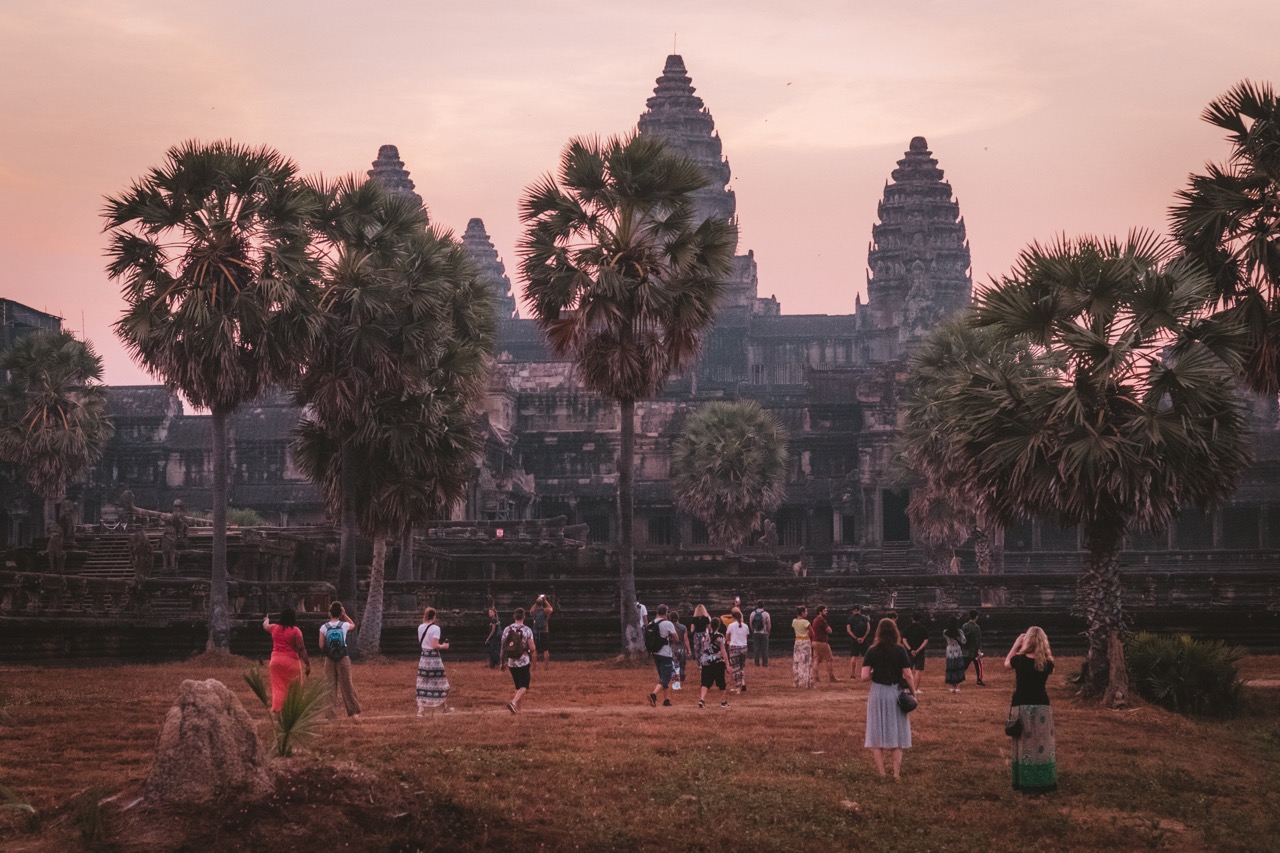
Absolutely, especially on your first visit. The famous view is from the reflecting pools, but don’t stop there. Once the sky starts getting brighter, head into Angkor Wat and watch the temple change as the morning light moves across the galleries and towers.
The sunrise crowd can be busy, so treat the reflection shot as the starting point rather than the whole experience. Once you’ve had your moment by the water, move on and explore.
If you’d rather share that early start with other travelers, Mad Monkey Siem Reap’s Sunrise Angkor Wat Temple Tour gives you a social way to experience one of the big moments of an Angkor trip.
Where Should You Watch Sunset Around Angkor?
Phnom Bakheng is the classic sunset choice, with a climb to reach the hilltop. Pre Rup is another option and works well if you’re already exploring the Grand Circuit.
Sunrise and sunset make for very different Angkor experiences, but you don’t need both. If you’re already at the temples before dawn, use the evening to slow down in Siem Reap instead of squeezing in one more viewpoint.
How Do You Get Around Angkor Wat?
Angkor is spread across a large area, so walking between the main temples isn’t realistic. For most backpackers, the choice comes down to tuk-tuk, scooter, or bicycle.
Is a Tuk-Tuk the Best Way to Visit Angkor Wat?
For a first visit, a tuk-tuk is the one I’d pick. Your driver stays with you between temples, so you can leave your bag in the vehicle, walk around each site, and come back when you’re ready to move on.
A full-day tuk-tuk driver in Siem Reap typically costs around ៛82,000–៛102,500 ($20–$25 USD), although the exact rate depends on your route and arrangement. The draft currently flags this price for confirmation with the property team before publishing.
Arrange your tuk-tuk ride through your hostel, hotel, a local driver, or a trusted booking platform. If you’re staying at Mad Monkey Siem Reap, reception can arrange a driver the night before, which is useful when you’re leaving at sunrise.
Before your ride: Confirm your pickup time, temples on the route, whether the driver waits while you explore, and the total price.
Can You Ride a Scooter Around Angkor Wat?
Yes. Angkor Enterprise allows visitors to rent and ride scooters around the temples.
A scooter gives confident riders more room to shape the day around their own route. Leave when you’ve had enough of a temple, take a different road to the next one, or stop when something catches your eye.
For a rental option in Siem Reap, Siem Reap Scooter Rental lists Honda Click and Scoopy scooters from around ៛40,500 ($10 USD) per day, with larger models at around ៛60,700 ($15 USD) to ៛68,800 ($17 USD) per day. Check the available bikes and rental dates before booking.
Before you ride: Confirm the pickup time, rental period, helmet, and any required documents.
Can You Cycle Around Angkor Wat?
Yes, and cycling is a good fit if you actually want the ride to be part of your Angkor day. The main temples are spread across several kilometres, so you’re adding plenty of time in the saddle before you even start climbing temple steps.
For a rental option in Siem Reap, The Smiling Frog Bike Rental lists city bikes from ៛12,100 ($3 USD) per day, geared city bikes at ៛16,200 ($4 USD), and mountain bikes from ៛20,200 ($5 USD). Helmets and locks are included, and the shop offers city pickup and drop-off.
Start early, bring enough water, and don’t build a massive temple list around the bike.
What Should You Wear to Angkor Wat?
Angkor’s visitor code asks travelers to avoid revealing clothing, including shorts or skirts above the knees and tops that leave the shoulders bare in sacred areas.
Pack clothes you can actually walk in for hours:
- Loose, lightweight trousers or knee-covering shorts
- A T-shirt or top that covers your shoulders
- Comfortable walking shoes or sandals with a secure strap
- Hat or cap
- Sunglasses
- Sunscreen
- Light rain layer if you’re visiting during the wet season
Mad Monkey team tip: Keep a lightweight cover-up in your day bag. It takes up almost no space and gives you an easy option if your outfit doesn’t meet the dress rules at a particular temple.
Where to Stay in Siem Reap for an Angkor Wat Visit
Staying in central Siem Reap puts you close to the city while keeping the early Angkor start manageable.
Mad Monkey Siem Reap is on Rose Apple Road, close to restaurants, bars, markets, and the places travelers head to in the evening.
That matters after an Angkor morning. You can leave before sunrise, spend the morning at the temples, then get back to the hostel for a shower and food without adding another long ride to your day.
For backpackers who want to make the sunrise part of the Siem Reap experience, Mad Monkey Siem Reap’s Sunrise Angkor Wat Temple Tour starts with a 4:15 AM lobby meet-up and takes the group to Angkor Wat, Bayon, and Ta Prohm with a guide. You get the early temple run, some history along the way, and lunch and a drink back at Mad Monkey afterward.

How to Plan Your Angkor Wat Visit
Angkor Wat is worth giving a proper day to, but you don’t need to turn the temples into a numbers game. Pick the temples you want to see, start early, and leave enough space in the day to enjoy Siem Reap when you’re done.
Start with sunrise, explore while the air is cooler, take a proper break around midday, then decide whether you still have the legs for another temple run. With two or three days, you can go beyond the main route and see more of what the Angkor Archaeological Park has to offer.
See the big temples, wander a little off your planned route, and give yourself enough time to enjoy the day instead of racing to the next stop.
FAQs: Angkor Wat
An Angkor Pass costs ៛151,700 ($37 USD) for one day, ៛254,200 ($62 USD) for three days, and ៛295,200 ($72 USD) for seven days. The official prices are set in US dollars by Angkor Enterprise.
Yes. A 3-day Angkor Pass can be used within a 7-day validity window, so your three temple days don’t have to be consecutive.
Yes. Buy a 1-day pass after 4:45 PM for the following day, and you can use it for sunset that evening, then return for your full temple day the next morning.
Angkor Wat opens at 5:00 AM. The wider Angkor Archaeological Park has general hours of 5:00 AM to 6:30 PM, although individual temples have different hours.
Yes, if you’re focused on the major highlights. Angkor Wat, Angkor Thom, Bayon, Ta Prohm, and Banteay Kdei can fit into a one-day route. Two to three days gives you more breathing room.
If you’re staying in central Siem Reap, aim to leave around 4:15 to 4:30 AM for a 5:00 AM opening. The exact time depends on your transport and how early you want to arrive at the temple.
Pin Now. Read Later.


