





Contents
TL;DR
- Learn basic Khmer greetings to start conversations politely.
- Use restaurant phrases when ordering food and drinks.
- Pick up directions and transport phrases for getting around Cambodia.
- Know a few shopping phrases for markets and local stores.
- Use simple social phrases when meeting locals and other travelers.
- Follow the phonetic spellings if you don’t read Khmer script. Keep these phrases handy while exploring Phnom Penh, Siem Reap, Kampot, and beyond.
What Language Do They Speak in Cambodia
Cambodia’s official language is Khmer, pronounced like “Khe-my.” You don’t need to learn the Khmer script before your trip, though. A few spoken phrases can go a long way when you’re ordering lunch, negotiating at a market, asking for directions, or chatting with locals.
Khmer changes a little depending on who you’re talking to and how formal the situation is, so we’ve kept this guide to useful, everyday phrases you’re actually likely to use on the road.
And when you’re unsure, be polite. Adding “please” and making a genuine attempt at Khmer can go a long way, even if your pronunciation is still a work in progress.
Local Tip: Don’t worry about getting every sound perfect. A genuine attempt at a Khmer phrase can be a good way to start a conversation with locals.

How Do You Pronounce Khmer Phrases
You don’t need to learn Khmer script before landing in Cambodia. We’ve written the phrases phonetically, so you can read them, give them a go, and start using them as you travel.
Pronunciation can vary between English-language guides because Khmer sounds do not always have an exact English equivalent. Treat the phonetic spellings as a practical guide rather than a precise pronunciation system.
How to read the phonetic spellings:
- “uo” is somewhere between a short “u” as in “gun” and a long “o” as in “go.”
- “ai” is similar to the sound in “tie,” with a slight “ee” sound.
- “aa” is similar to the “a” in “father,” held a little longer.
- “dt” falls somewhere between a “d” and “t” sound.
- “ch” and “j” can sound very similar, depending on the word.
- The “r” may be lightly rolled.
- Knyohm, meaning “I,” can sound much quicker when spoken naturally than the spelling suggests.

What Are the Most Useful Khmer Phrases for Travelers
| English | Khmer | Pronunciation |
|---|---|---|
| Hello (formal) | ជំរាបសួរ | Chom reap suor (it’s also good to bring your hands together and bow – the higher your hands, the more formal/respectful) |
| Hello (informal) | សួស្តី | Suosdei |
| How are you? | សុខសប្បាយទេ? | Suok suobai? (The inflection at the end is important!) |
| I’m fine | សុខសប្បាយ | Suok suobai (The same as “How are you?” but without inflection!) |
| Goodbye | លាហើយ | Leah haey |
| Yes | បាទ / ចាស | For males: Baat or Baa. For females: Chaa |
| No | អត់ទេ | Aw dteh |
| Thank you | អរគុណ | Aw kun |
| Thank you very much | អរគុណច្រើន | Aw kun chraen |
|
Please | សូម |
Suom |
| Sorry / Excuse me | សុំទោស | Suom dtoh |
| I don’t understand | ខ្ញុំមិនយល់ | Knyohm min yohl |
| I don’t know | ខ្ញុំមិនដឹង | Knyohm min deung |
| Do you speak English? | អ្នកនិយាយភាសាអង់គ្លេសទេ? | Neak niyeay pheasa Anglais te? |
| Bathroom | បន្ទប់ទឹក | Banh-tup tuk |
| How much is this? | នេះថ្លៃប៉ុន្មាន? | Nih tlai puon maan? |
| What’s your name? | អ្នកឈ្មោះអ្វី? | Neak chhmoh ey? |
| My name is _ | ខ្ញុំឈ្មោះ _ | Knyohm chhmoh _ |
Aw kun means “thank you” in Khmer and is one of the easiest phrases to remember. For “thank you very much,” you can say aw kun chraen.
Use it after receiving help, paying for something, or simply chatting with locals. It is a small phrase, but one you’ll have plenty of reasons to use.

How Do You Order Food in Khmer
Put your Khmer to use the next time you sit down for a meal. These phrases cover the basics for ordering a meal, asking what’s in a dish, and getting your food exactly how you want it.
| Restaurant | Puo-ja-nee-tahn |
| Delicious | Chnang |
| Spicy | Haal |
| I am hungry | Knyohm klee-en |
| I am a vegetarian | Knyohm ot cheh nyam sach teh (literally, I’m not able to eat meat) |
| One water, please | Suom tuk muy |
| One beer, please |
Suom beer muy |
|
The check, please |
Suom ket loy |
At markets and local eateries, a little pointing and a well-timed “Nih tlai puon maan?” (How much is this?) can take you a long way. Don’t overthink the pronunciation. Give the phrase a go, see what comes back, and keep the conversation moving.
Other useful phrases include:
- Expensive — Tlai
- Please — Suom
- I’ll take it — [use a simple gesture if you’re unsure]
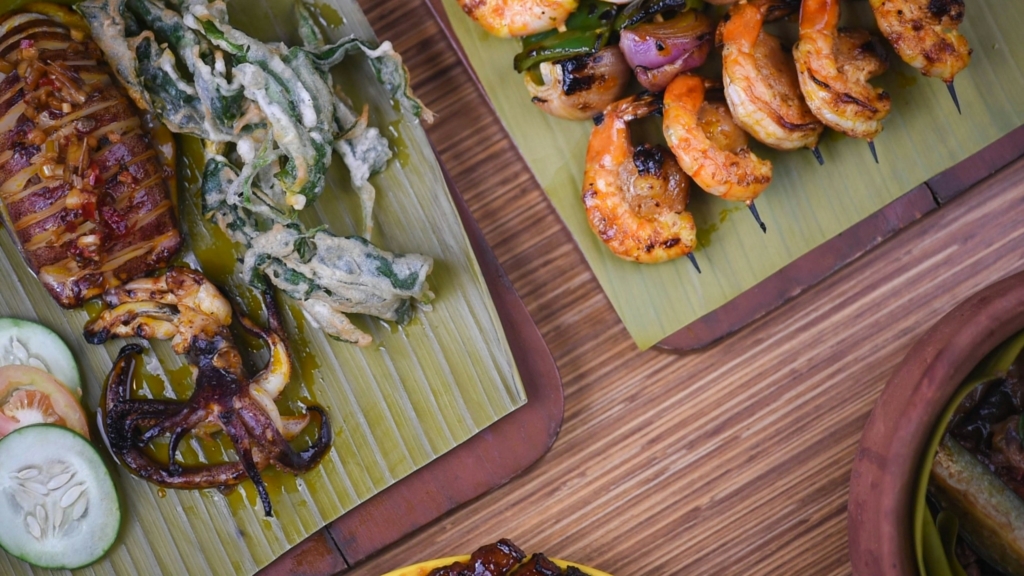
From lok lak in Phnom Penh to noodles in Siem Reap and Kampot pepper crab, these phrases are handy wherever your next meal takes you.
How Do You Ask for Directions in Khmer
Getting around Cambodia often means combining walking, tuk-tuks, buses, and local transport. These phrases can help when you need to find a street, landmark, or destination.
| Where is…? | … noh ai nah? |
| I want to go to… | Knyohm jang toh… |
| Go straight | Tao trahng |
| Turn left | Bot chwaing |
| Turn right | Bot sdam |
| Stop here, please | Suom chuop teenee |
| I’m lost | Knyohm vohng vang |
Traveler Tip: Keep your destination written on your phone or saved on a map. If pronunciation gets complicated, showing a driver the exact location is often easier than repeating a street name.

What Khmer Phrases Are Useful When Dating
Got a little chemistry going on in Cambodia? Khmer has a few simple phrases worth keeping in your notes, whether you’re flirting over a drink, chatting after dinner, or trying to tell your Mad Monkey dorm mate you like them.
| I am single | Khnohm aht mee-en suongsah |
| I have a boyfriend/girlfriend | Knyohm mee-en suongsah |
| I’m married | Knyohm reap kah |
| What’s your number? | Tahl too-roh-sahp nyek leh puon maan? |
| You are beautiful | Nyek saat |
| I love you | Knyohm sra laing nyek (gender-neutral). If you are addressing a male: Knyohm sralaing bahng. If you are addressing a female: Knyohm sralaing ahwn. |
| I miss you | Knyohm nuok nyek |
| Term of endearment for a male | bahng (sohm laim) |
| Term of endearment for a female | ahwn (sohm laim) |
Save These Before You Head Out
You don’t need to speak fluent Khmer to make your way around Cambodia. A few words can help when you’re ordering breakfast, asking a tuk-tuk driver for directions, browsing a market, or introducing yourself to someone new.
Keep your favorites saved on your phone, give the pronunciation a go, and don’t be too precious about getting every sound right. The effort is part of the exchange.
And if you’re staying at Mad Monkey Cambodia, you’ll have plenty of chances to put those phrases to work. Grab a meal, head out with new travel friends, and see how many suosdei, aw kun, and suom you can fit into a day.
FAQs About English to Khmer Phrases
Khmer is the official language of Cambodia. English is also widely used in tourist areas, hotels, restaurants, and other businesses, particularly in destinations such as Phnom Penh and Siem Reap.
For a formal greeting, say “Chom reap suor.” A more casual greeting is “Suosdei.”
“Aw kun” means “thank you” in Khmer. You can say “Aw kun chraen” to express “thank you very much.”
You don’t need to learn Khmer fluently to travel around Cambodia. Start with practical phrases for greetings, food, directions, shopping, and transportation. The phonetic spellings in this guide can help you use them without learning the Khmer script.
Want a few more Khmer tips? Then watch this video!
More English to Khmer Resources
Did this article get you excited to learn Khmer? If you’re heading to Cambodia soon or already here, check out these articles, and you’ll be speaking basic Khmer in no time!
- Basic Khmer for Travellers: Essential Phrases You Need to Know by Becky Rogers from Adventure in You
- 12 Useful Khmer Phrases For Traveling in Cambodia by Marissa Carruthers from The Culture Trip
- Cambodia: Useful Phrases in Khmer from Insight Guide
- Cambodia Travel Guide: Khmer Phrasebook from World Interpreting
- 6 Reasons to Bother Learning Khmer from Move to Cambodia
Pin Now. Read Later

